Kimberly Guilfoyle Resigns as Greece Ambassador After White House Request
US Ambassador to Greece Kimberly Guilfoyle has resigned following a White House request amid mounting ethics concerns and allegations involving financial gain.
- Headline: Kimberly Guilfoyle Resigns as Greece Ambassador After White House Request
- Dispatch Summary: US Ambassador to Greece Kimberly Guilfoyle has resigned following a White House request amid mounting ethics concerns and allegations involving financial gain.
- Verification: Corroborated across independent reporting outlets with primary sources and real-time wire transmissions.
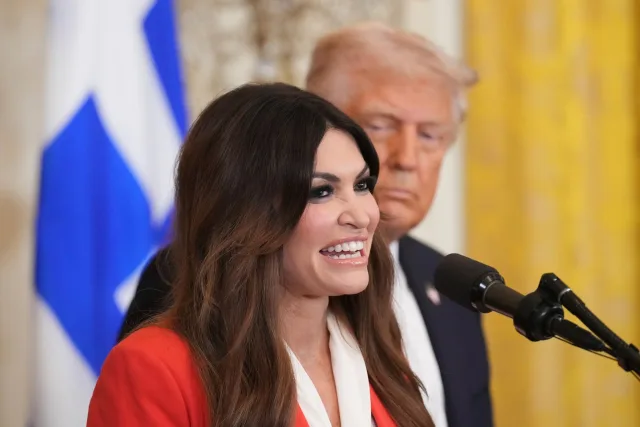
For ordinary Americans, the resignation of Kimberly Guilfoyle as U.S. Ambassador to Greece marks the end of a high-profile diplomatic tenure marred by ethics concerns that have reached the highest levels of the White House. The decision, announced Tuesday, follows a series of reports detailing allegations that Guilfoyle leveraged her official position for personal gain. The fallout leaves an open vacancy at a critical NATO post and underscores a pattern of administrative departures that critics say signals persistent issues within the current presidential cabinet.
The transition began in earnest on Tuesday morning when White House press secretary Katie Zacharia, during her first official briefing, confirmed the administration's stance. We have asked Ambassador Guilfoyle to resign,
Zacharia stated. She has been a wonderful asset to the team, and we wish her well.
Within two hours of that announcement, Guilfoyle posted a statement on social media confirming her departure, while simultaneously maintaining her innocence regarding the string of allegations that led to her exit.
From Washington to Athens: A $100,000 Request
The central controversy stems from reports that Guilfoyle engaged in a quid pro quo
arrangement to resolve personal financial obligations. According to a report from The Wall Street Journal last week, Guilfoyle contacted businessman and Trump donor Eric Deters in July 2025, requesting that he wire $100,000 to her American Express account. The objective, according to the reporting, was to settle her credit card debt before it appeared on financial disclosures required during her Senate confirmation process.
Honey please I need you to get this done for me today.
Kimberly Guilfoyle, in a text message to donor Eric Deters, via The Wall Street Journal
Deters, a retired Kentucky lawyer, characterized the request as pay to play,
claiming that Guilfoyle offered him access to influential Trump administration officials, including the attorney general and the IRS commissioner, in exchange for the payment. Deters told CBS News that he did not have the funds available, nor was he inclined to provide them, claiming he fabricated an excuse about his wife’s disapproval to decline the request. Jesse Binnall, an attorney for Guilfoyle, has disputed the authenticity of the text messages and argued that Guilfoyle was simply seeking payment owed for her participation in previous speaking engagements.
Did Diplomatic Conduct Damage U.S. Interests?
The financial inquiry into Guilfoyle’s credit card debt was only one of several controversies that mounted throughout her yearlong tenure. Lawmakers and ethics experts raised concerns that she utilized her office to advance personal interests rather than U.S. policy. In late September, The Wall Street Journal reported that she had been actively promoting a specific Greek construction firm, involving an adviser who served as a lobbyist for that same firm in sensitive official meetings without disclosure. Her attorney stated that Guilfoyle had worked with multiple companies within the energy sector, rather than favoring one firm.
Furthermore, concerns have spread to Capitol Hill regarding the stability of foreign relations. On Monday, U.S. Congressman Gregory Meeks requested clarification from the State Department regarding reports that the U.S. may have influenced the collapse of the Romanian government. The inquiries were prompted by The Wall Street Journal, which alleged that Guilfoyle boasted in a March 2026 conversation about U.S. involvement in the downfall of the so-called Bolojan government.
Secretary of State Marco Rubio, who had been traveling in Greece with Guilfoyle as the reports broke, initially dismissed the claims, telling reporters last Thursday: You guys walk around thinking that because some source told you something and you reported it, it’s the gospel. It’s not the gospel.
Who Controls the Narrative of the Departure?
President Trump moved quickly to distance the White House from the former ambassador on Tuesday. Speaking to reporters on the South Lawn before departing for a campaign stop in Alaska, the president emphasized that he had not spoken with Guilfoyle directly. When asked by a reporter how surprised he was given her previous close ties to his family — having been engaged to Donald Trump Jr. — the president flatly rejected the characterization. No, she wasn't a member of my family. She, I guess, dated my son a long time ago. But, you know, she went to Greece. She was doing a good job, but we didn't like what we were reading,
Trump stated.
Guilfoyle’s own response to the resignation was focused on her political alignment. While my time as ambassador may be coming to an end, my commitment to President Trump, the America First movement, and the country I love will never end,
she wrote on X. Despite the administration's request for her resignation, she remained defiant regarding the allegations, claiming she would rigorously defend
her name and reputation. She also included a note of gratitude to the people of Greece, adding, My deepest heartfelt appreciation to the people of Greece for their hospitality, partnership, and welcoming me with open arms.
What Stays Unanswered in the Wake of the Resignation?
The departure of Guilfoyle creates a void in a region deemed vital for U.S. security, as Greece currently serves as a key NATO ally providing military facilities in the Eastern Mediterranean and leading an EU maritime mission in the Red Sea. The broader political implications of her exit are already being leveraged in the final stretch of the midterm election season. Kendall Witmer, Deputy Communications Director for the DNC, issued a statement framing the resignation as part of a larger pattern of corruption within the administration, asserting that, Guilfoyle is only leaving because she was caught red-handed.
For now, the specific details regarding the authenticity of the reported text messages and the exact extent of the ambassador's involvement with Greek commercial entities remain the subject of dispute between Guilfoyle’s legal team and media outlets. The most pressing question is whether any formal investigation, legal or congressional, will follow the resignation. While the White House has signaled that the matter is settled with her exit, the accusations of pay to play
and the potential breach of diplomatic protocols remain unresolved, and whether these events impact voter sentiment as the midterms approach remains the primary uncertainty for the administration.