Duane Keffe D Davis sentenced to 40 years to life for Tupac Shakur murder
Former gang leader Duane Keffe D Davis has been sentenced to 40 years to life in prison for orchestrating the 1996 murder of hip-hop icon Tupac Shakur.
- Headline: Duane Keffe D Davis sentenced to 40 years to life for Tupac Shakur murder
- Dispatch Summary: Former gang leader Duane Keffe D Davis has been sentenced to 40 years to life in prison for orchestrating the 1996 murder of hip-hop icon Tupac Shakur.
- Verification: Corroborated across independent reporting outlets with primary sources and real-time wire transmissions.
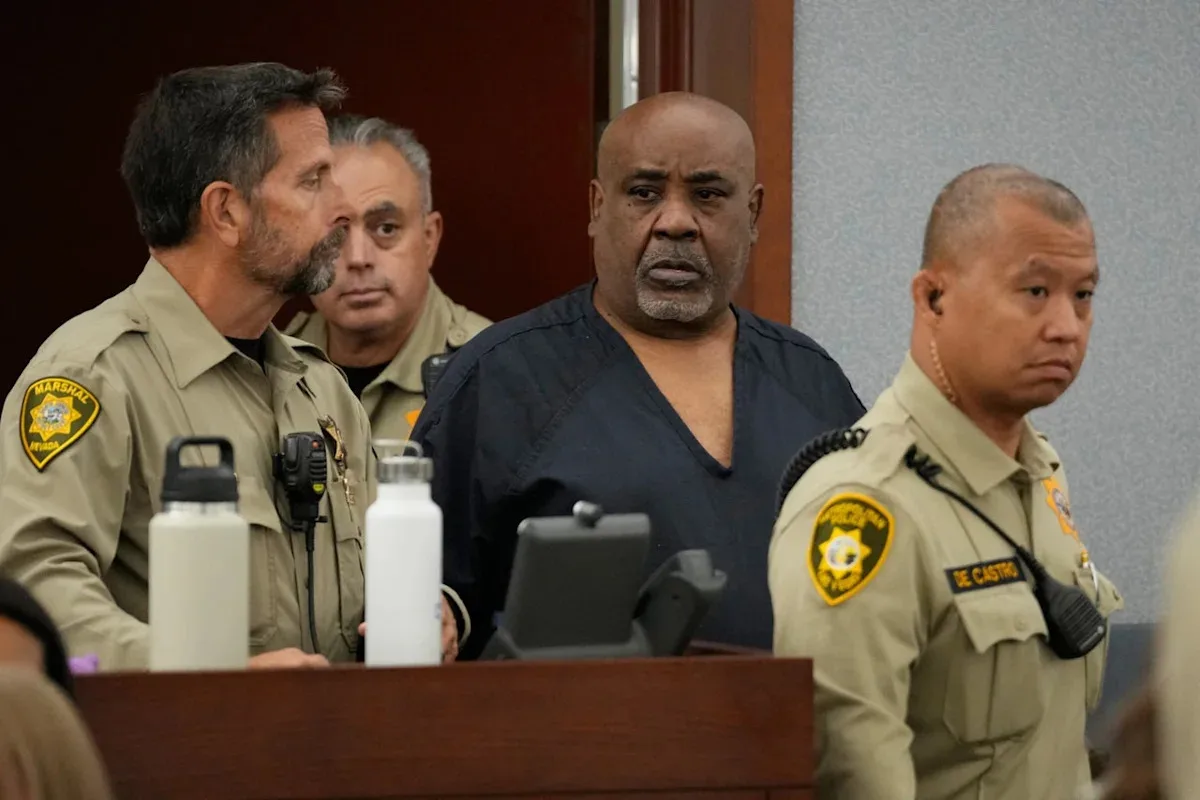
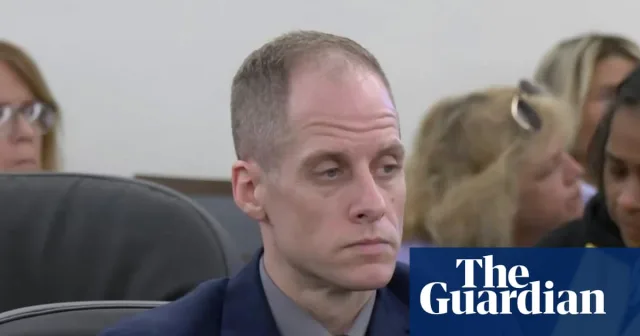
Duane Keffe D Davis will spend the rest of his life behind bars for orchestrating the 1996 murder of hip-hop icon Tupac Shakur, after a Nevada court handed down a sentence of 40 years to life on Tuesday, October 13, 2026. The 63-year-old former gang leader, who received 731 days of credit for time served, was convicted on August 31 of first-degree murder with the use of a deadly weapon. Clark County District Court Judge Carli Kierny delivered the sentence in Las Vegas, while Chief Deputy District Attorney Marc DiGiacomo told the court that whatever penalty was imposed, Davis is guaranteed to die behind bars.
That sentence brings formal accountability to a homicide that haunted investigators and fans for three decades. Shakur was just 25 years old and at the height of his career when he was shot multiple times in a drive-by shooting near the Las Vegas Strip on the night of September 7, 1996, while riding in a black BMW driven by Death Row Records co-founder Marion Suge Knight. The rapper succumbed to his injuries six days later at UMC Hospital, while Knight survived a grazing wound. For nearly thirty years, the crime remained unsolved until Davis, a former leader of the South Side Compton Crips, detailed his role in media interviews and published his account in his 2019 memoir Compton Street Legend.
Decades of Silence Followed by Years of Public Boasts
The path from a Las Vegas stoplight shooting in September 1996 to a courtroom in October 2026 exposes the glacial pace of accountability. Davis had spoken to detectives years earlier under a law enforcement agreement that allowed him to avoid prosecution. He sat for a secret police interview in 2008 while seeking leniency in an unrelated narcotics investigation, approaching officers about the murder of Christopher Wallace, aka Biggie Smalls, before volunteering information about the Shakur killing instead. Former Los Angeles police Detective Daryn Dupree testified that when asked about Wallace's death, Davis denied involvement but told detectives, We did the other one.
Secure in the belief that his 2008 proffer agreement shielded him, Davis spent years telling interviewers and book publishers that he had been involved in the killing. Prosecutors said he later forfeited the protections of his cooperation agreement when he publicly repeated the story, doing so out of anger when Los Angeles Police Detective Greg Kading wrote his own book about the case. Judge Kierny highlighted the contradiction at the heart of his defense when addressing him directly from the bench before delivering the sentence.
Mr. Davis, for three years, we’ve heard to say some variation of the same thing—to BET, in your book—and it’s something like, Yeah, I was involved in this, but I’m different. I’ve moved on. I got out of Compton. I’m a grandfather. I’m here to tell you that’s not how this works, OK? You don’t get to take a man from his family. You don’t get to take his very life, his whole future, from him, and just walk away from it—especially when that man is Tupac Shakur.
Judge Carli Kierny via Casino.org
A first-degree murder conviction with a deadly weapon enhancement in Nevada carries severe statutory penalties. The resulting sentence combines terms of 20 years to life for the first-degree murder charge and a consecutive 20 years to life for the deadly weapon enhancement.
Prosecutors argued that Davis planned the strike after Shakur and his entourage attacked his nephew, Orlando Baby Lane Anderson, a few hours earlier at the MGM Grand in Las Vegas following a Mike Tyson fight. Surveillance footage showed the beating, which grew out of a longstanding feud between the Crips and the rival Mob Piru Bloods, a gang with ties to Death Row. Davis took the front passenger seat of a white Cadillac, obtained a weapon, and handed it to someone in the backseat. In a recorded 2008 interview played for jurors, Davis explained that Smith hesitated, allowing Anderson to grab the weapon and open fire when the vehicle pulled up alongside Shakur's BMW at a red light. He leaned over on the window. He rolled down the window, popped ’em,
Davis said in the recording. If they drove on my side, I would have popped ’em.
Anderson denied involvement before he was killed in an unrelated shooting in 1998. Smith died of natural causes in 2004, and the alleged driver of the Cadillac, Terrence Bubble Up Brown, died in a shooting at a Compton marijuana dispensary in 2015. That leaves Davis as the only person ever charged in the killing.
The defense argued fiercely against this outcome throughout the trial, maintaining that the state lacked physical evidence tying Davis to the 30-year-old crime. Defense attorney Michael Sanft portrayed his client as a liar who exaggerated his role for notoriety and profit, arguing that investigators failed to corroborate key details. We can’t put Orlando in the car. We can’t even put Davis in Las Vegas,
Sanft told jurors. Sanft also signaled plans to appeal the verdict, arguing prosecutors waited too long to bring the case. Despite those arguments, the jury deliberated for three hours after nine days of testimony in August before returning the guilty verdict that sealed Davis's fate.
Family Grief and the Limits of Legal Resolution
For the family of Tupac Shakur, the courtroom proceedings offered a mixture of long-awaited vindication and a painful reopening of deep wounds. The rapper's sister, Sekyiwa Set Shakur, nodded in agreement as prosecutors detailed the grim reality of her brother's assassination, later delivering an emotional impact statement detailing her struggles with depression, suicidal ideation, trauma, and PTSD. Shackle-clad and in prison gear, Davis sat stone-faced as she broke down over the brutal murder. Sekyiwa described her brother as a gentle protector raised by a Black Panther activist mother to be a human rights advocate, comparing his potential to Martin Luther King Jr. and Malcolm X.
I miss my brother. I miss the scars on his head. I miss the way he ate. I miss his recipe for barbecue chicken. I miss his laugh. He was sloppy with his laugh. So full, so big. I was the little sister that just wanted to be with her brother.
Sekyiwa Set Shakur via DailyMail.com
Maurice Shakur, the late artist's brother, also addressed the court with stark grief, noting that Shakur never got to see his nieces and nephews grow up or have children of his own.
The impact from my brother's murder has been devastating, heartbreaking and sad, for me, my family and a nation of Pac fans and loved ones. Pac didn't get a chance to have any kids. Pac didn't see his nieces and nephews grow up, and Pac didn't have a trial. All Pac got was a death sentence, so the longest possible, your honor. Thank you.
Maurice Shakur via Yahoo.com
Following the sentence, Davis offered no words of contrition to the court. Addressing Judge Kierny briefly when given an opportunity to speak, he demanded the return of personal items seized from his home by police during the investigation, including photographs. Asked if he had any further comments, Davis offered a dismissive reply before his legal team filed formal notices to challenge the conviction.
I just want my stuff back that they took out of my house, all them pictures. No, I’m good. I’m going to appeal this case, for sure.
Duane Keffe D Davis via Associated Press
Clark County District Court, October 13, 2026
Updated 1 time since publication; last update 13 October 2026, 23:12.