Apple unveils HomePod mini 2 with Siri AI and surround sound support
The HomePod mini 2 introduces an S10 processor, advanced surround sound, and a new Sound Glow interface, though its headline AI features are delayed.
- Headline: Apple unveils HomePod mini 2 with Siri AI and surround sound support
- Dispatch Summary: The HomePod mini 2 introduces an S10 processor, advanced surround sound, and a new Sound Glow interface, though its headline AI features are delayed.
- Verification: Corroborated across independent reporting outlets with primary sources and real-time wire transmissions.
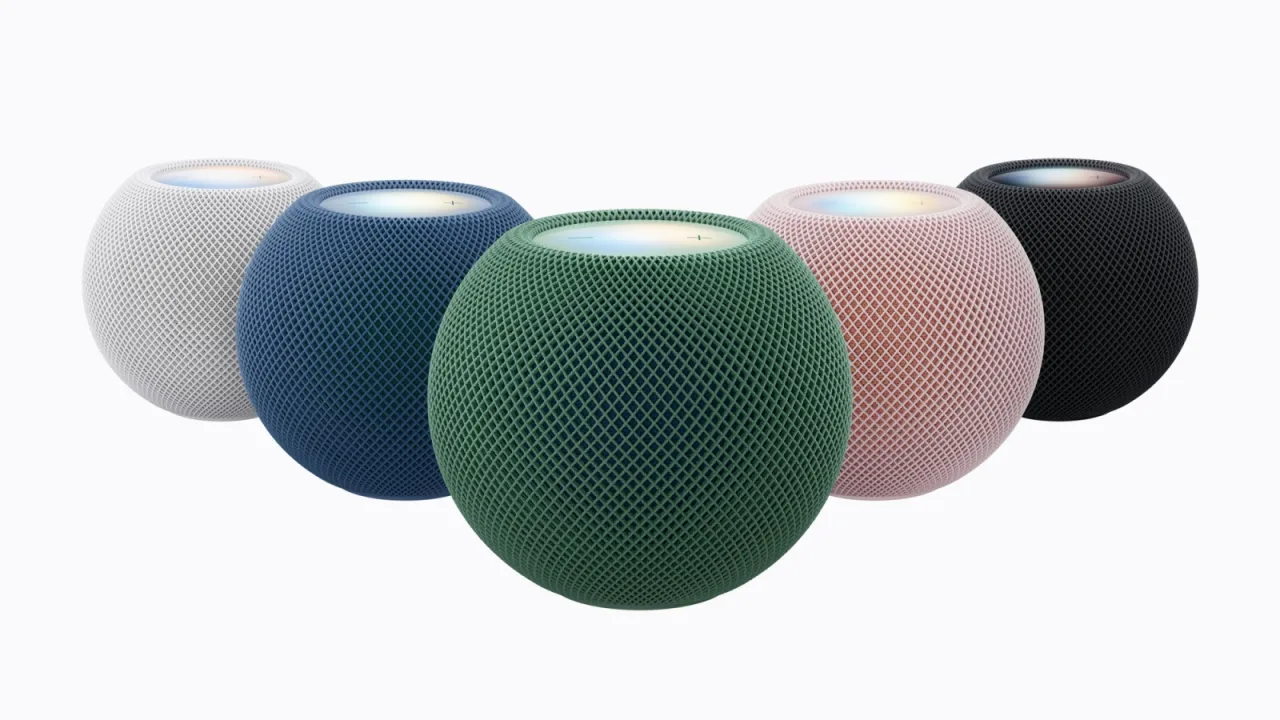
Customers looking to purchase Apple’s new HomePod mini 2 will face a gap between the device’s hardware capabilities and its promised software features when the speaker hits retail shelves later this month. While Apple announced on Tuesday that the $149 speaker is available for pre-order immediately, the primary selling point — the upgraded Siri AI assistant — will not be functional upon the device's October 30, 2026, release date.
The HomePod mini 2 marks the first hardware refresh for the company’s smallest smart speaker since its 2020 launch. Despite the wait, the device retains the external dimensions and spherical silhouette of the original model, focusing instead on internal upgrades to support advanced computational audio and new, context-aware artificial intelligence. For users, this means the device arriving in late October will initially function as an improved audio peripheral, with the most anticipated features arriving via a later software update.
The S10 Chip and the Sound Glow Interface
The core of the hardware update is the integration of the Apple S10 chip, replacing the S5 processor found in the previous iteration. This silicon upgrade is what enables the speaker’s new real-time music analysis, which Apple says optimizes dynamic range and loudness. The chip also powers the new Sound Glow feature, a visual change to the touch-sensitive surface on the top of the speaker. Instead of static lighting, the surface now acts as an illuminated canvas that pulses in sync with the bass and treble of the music being played. According to Apple, this interface can display colors matched to the album artwork of the track currently streaming, or animate based on specific soundscapes, such as rain.
The speaker remains consistent with its predecessor’s physical footprint, measuring 3.3 inches high and 3.9 inches wide. It is being launched in five colors: white, midnight, blue, pink, and green. The internal shift to the S10 processor allows for more advanced wireless connectivity, including the adoption of Wi-Fi 6E and Bluetooth 6. These specifications bring the speaker in line with Apple’s current wireless ecosystem, potentially reducing network congestion for users with compatible routers.
Surround Sound and the Home Theater Shift
A significant expansion for the HomePod mini 2 is its integration into home theater setups. When paired with the fourth-generation Apple TV 4K, users can now group up to four HomePod mini 2 units to create a surround sound system. Apple states that the system will intelligently recognize the placement of each individual speaker within a room, allowing for the automatic calibration of audio levels and timing. This functionality is restricted to matching pairs of either the HomePod mini 2 or the second-generation full-size HomePod, meaning users cannot mix and match different models to achieve the four-speaker configuration.
Beyond home theater use, the device has gained the ability to serve as a designated default speaker for Mac computers. This feature aims to provide a unified audio experience for desk setups, covering everything from FaceTime calls to gaming audio.
With Siri AI, it understands you better than ever, drawing on personal context and broad world knowledge to make music discovery even richer. It fills a room with sound on its own, which gets even bigger in a stereo pair or with multiroom audio, and when paired with the new Apple TV 4K, it delivers our most immersive home theater setup yet.
Kaiann Drance, vice president of Worldwide Home Product Marketing, via Business Wire
Siri AI: What is coming and who gets it?
The most substantial change to the HomePod experience is the transition to Siri AI. Powered by Apple’s latest Foundation Models, this update is intended to allow for more natural, conversational interactions and provide the assistant with the ability to draw information from a user's personal context, such as finding a song recommended in a text message, retrieving a recipe from an email, or setting reminders. These capabilities rely on a connection to an Apple Intelligence-enabled iPhone or iPad, though Apple notes that some of the assistant’s broader world knowledge features will eventually be accessible to all users once the software update rolls out.
However, the rollout remains fragmented. Apple has noted that Siri AI will initially arrive in English and only in selected markets. A timetable for availability in the European Union or other languages remains unknown. For those without an Apple Intelligence-enabled device, the assistant will still gain expanded knowledge and conversational depth, but will lack the ability to pull from personal data stores.
What does the $149 price mean for the market?
The new $149 price tag represents a shift in Apple's positioning for its small-format speakers. When the original HomePod mini launched in 2020, it debuted at $99. Following a price increase in June 2026, the older model reached $129. The premium for the second generation reflects both the upgraded S10 silicon and the new wireless hardware.
The delay of the Siri AI features suggests that Apple is prioritizing a stable hardware launch while the software backend, which involves both on-device processing and the company’s Private Cloud Compute infrastructure, undergoes further refinement. For existing owners of the original HomePod mini, the lack of immediate AI functionality makes the current value proposition of an upgrade largely dependent on the need for better wireless connectivity or the new surround-sound capabilities.
The technical necessity of using a fourth-generation Apple TV 4K to unlock the full surround-sound potential of the system reveals Apple’s broader strategy: the HomePod mini 2 is less a standalone audio product and more a node in a tightly integrated, ecosystem-dependent network. Until the promised Siri AI software update arrives, the device remains a hardware vessel waiting for its primary function to be activated, leaving early adopters to pay for a future experience that is currently in development.