Oleshky evacuees reach Ukraine after ceasefire
More than 750 residents from the devastated frontline city of Oleshky have crossed into Ukrainian-held territory following a rare humanitarian ceasefire.
- Headline: Oleshky evacuees reach Ukraine after ceasefire
- Dispatch Summary: More than 750 residents from the devastated frontline city of Oleshky have crossed into Ukrainian-held territory following a rare humanitarian ceasefire.
- Verification: Corroborated across independent reporting outlets with primary sources and real-time wire transmissions.
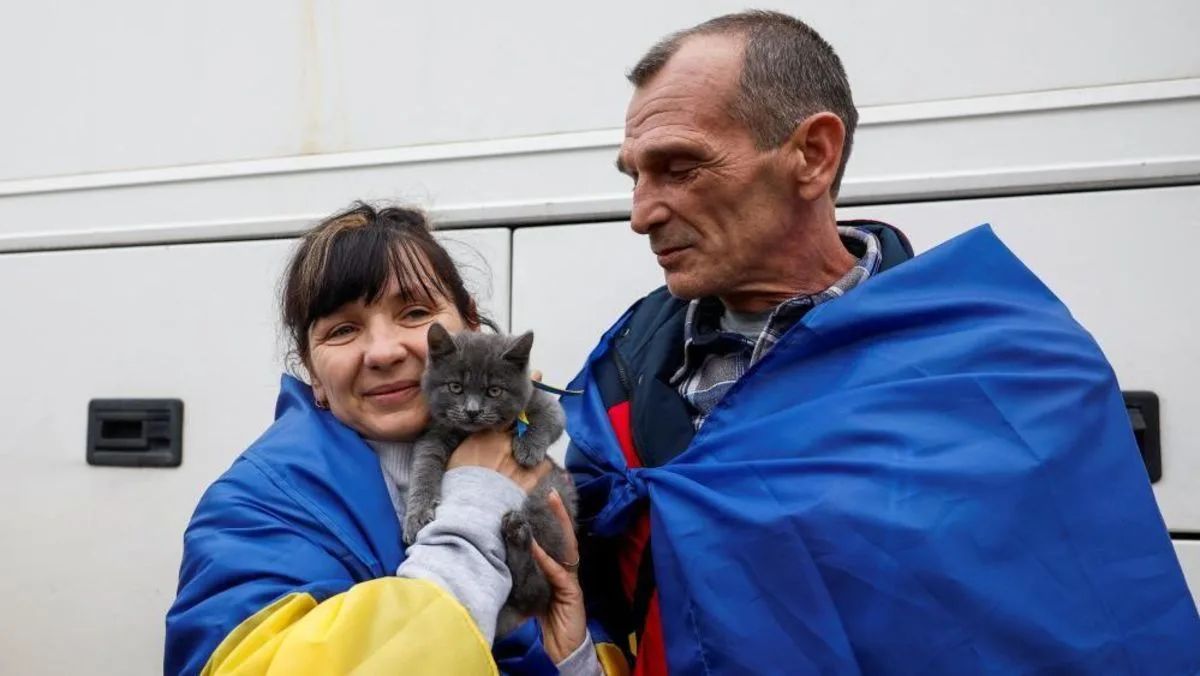
Until we got on the buses, we were afraid of everything, we were so worried and nervous. Before that, we spent nights without sleeping, wondering how it would go, what would happen. But everything went well,
Liubov, one of the evacuees, told the Reuters news agency after crossing into safety.
That crossing on Saturday brought residents of the devastated, Russian-occupied city of Oleshky back into Ukrainian-held territory in the Chernihiv region. The evacuation marked a rare humanitarian breakthrough, carried out under a localized ceasefire brokered through efforts by U.S. First Lady Melania Trump and Pope Leo XIV. For the residents, it ended years of isolation in a frontline city where conditions had deteriorated so severely that many had resorted to cooking garden weeds to survive.
President Volodymyr Zelensky confirmed the arrival in a post on X, thanking government agencies and regional authorities for assisting the returning citizens. The operation followed relentless diplomatic pressure that also drew appeals from Pope Leo XIV, urging Russian and Ukrainian leaders to allow aid deliveries and civilian evacuations.
How did Oleshky become a humanitarian catastrophe?
Before Russia seized Oleshky during the first days of its full-scale invasion in February 2022, the city was home to 24,000 people. Over the subsequent conflict, it transformed into one of the most dire humanitarian crises of the war, leaving an estimated 2,000 residents remaining by the time of the truce. Trapped without food, water, and electricity, residents faced extreme desperation. Some elderly residents were so weak they had to be carried on stretchers, and one evacuee reported losing 20 kg in the last year, telling reporters, My strength left me.
Escape from the city was exceptionally dangerous. Bridges across the nearby River Dnipro were destroyed, and the riverbank was heavily mined. Routes out of the town were subject to drone attacks, and one resident who fled three weeks earlier told the BBC he had walked through 24km, or 15 miles, of minefields to reach safety.
The situation began to shift when a humanitarian ceasefire took effect across the frontline region of Kherson, providing the first few days of peace in the area in four years. The truce enabled the road out of the city to be cleared of mines and paved the way for the rescue mission. The complex logistics involved a convoy of 25 buses with space for 750 people, alongside ambulances for people with limited mobility, giving residents a four-hour window to leave on Friday afternoon.
Who orchestrated the rescue corridor and what was the route?
The evacuation route was indirect and heavily controlled. Ukrainian military positions lie just 5km, or 3.1 miles, from Oleshky, but evacuees first had to travel into Russian-occupied territory and then to the southern Russian city of Anapa. From Anapa, they flew to Homel in Belarus before finally traveling on to cross Ukraine's northern border on Saturday.
Dmytro Lubinets, Ukraine's human rights ombudsman, reported that the oldest evacuee was 94 years old, while the youngest was one. While the exact total of those who chose to leave was restricted by Ukrainian authorities to safeguard future missions and those remaining, Melania Trump posted on social media that the humanitarian convoy safely evacuated more than 750 people. At the same time, some residents chose a different path; Russian media showed civilians arriving at a temporary accommodation site in Simferopol on the Ukrainian peninsula of Crimea, which Moscow annexed in 2014.
The collaboration between Lubinets and Lantratova, which Lubinets carried out in the interests of saving lives, drew mixed reactions at home. Some in Ukraine recoiled at the sight of him standing beside a representative of the Russian occupying power which has killed so many of the city's residents and made life unbearable for the rest. Meanwhile, several hundred people chose to stay in Oleshky. Russia said on Thursday that it had prepared "dozens of tonnes" of aid for them, including food, medicine, hygiene products, and fuel for generators, with Lubinets confirming on Friday morning that those who decided to stay will receive all the necessary humanitarian assistance
.
Timeline of the Kherson ceasefire and Oleshky evacuation
- February 2022: Russia seizes the city of Oleshky during the first days of its full-scale invasion, when it was home to 24,000 people.
- Thursday: Russia announces it has prepared "dozens of tonnes" of aid for residents who do not wish to leave.
- Friday morning: Ukrainian human rights ombudsman Dmytro Lubinets and Russian counterpart Yana Lantratova travel together to Oleshky, setting off from Armiansk in the Russian-occupied Crimean peninsula.
- Friday afternoon: A convoy of 25 buses, with space for 750 people, leaves the town after residents had a four-hour window to leave.
- Saturday: Evacuees cross the Ukrainian border in the Chernihiv region via Russia and Belarus, reuniting with waiting relatives, aid workers, and volunteers at the border.
What did families find waiting at the border?
Emotional scenes unfolded at the border as families separated for years finally reconnected. Relatives waited on Saturday at the Ukrainian-Belarusian border, along with aid tents, coffee stands, and even provisions to feed the pets the evacuees were bringing with them. Volunteers from organizations including the Red Cross, Doctors Without Borders, and the World Central Kitchen were also there.
Among those waiting was 19-year-old Liza Paliy, who last saw her father over 2½ years ago when she, her mother, and sister fled from the occupied territory while he stayed behind. We thought at that time that it would be a month, two maximum, and we would return, but unfortunately, two years have already passed,
she said. Daria Pavlyn also waited at the border in hopes of reuniting with her father, Mykhailo, whom she had not heard from in about a month after arrangements to care for the family's home and animals fell through, leaving him to walk them to the road before staying behind in fear of making the journey out, particularly without Russian documents.
While the ceasefire brought relief to the evacuees, wider hostilities across the country continued unabated. Ukrainian President Volodymyr Zelenskiy reported that Moscow launched drone attacks on energy and railway infrastructure across Ukraine overnight, leaving 280,000 households in the Dnipro and Kyiv regions without power, targeting combined heat and power plants in the Kyiv and Sumy regions, four electricity substations and a gas distribution facility in the Dnipro region and railway infrastructure in Dnipro and Kharkiv, while repair crews worked to restore power. In Russia, the Ministry of Defense stated its forces shot down 433 Ukrainian drones overnight, and local officials reported a Ukrainian drone attack in Russia's western Bryansk region that killed a 30-year-old woman and a 41-year-old man, with another five people wounded.
What comes next for the region and the ceasefire?
As of now, Ukrainian citizens from Oleshky have crossed the Ukrainian border in the Chernihiv region. All of them will receive the assistance they need. It is important that government agencies and all the regional and local authorities involved work effectively and help our people adapt.
Volodymyr Zelensky, President of Ukraine, via X
The immediate operational window is closing fast. The humanitarian ceasefire across the frontline region of Kherson, which began at 3 a.m. local time on Tuesday, is scheduled to remain in place until the end of Sunday, November 1.
The broader diplomatic and military landscape also hangs in the balance. Even as Zelenskiy on Saturday welcomed US approval of Ukraine's purchase of 500 PAC-3 Patriot interceptors after the Trump administration said Friday it had approved a proposed $2.1 billion sale of Patriot air defence interceptors purchased with donations from Canada, Germany and Norway through a US program involving no American funds, he urged partners to supply the weapons from existing stocks to protect the country this winter, warning the newly authorised US sale could take years to deliver amid daily Russian strikes on energy infrastructure.