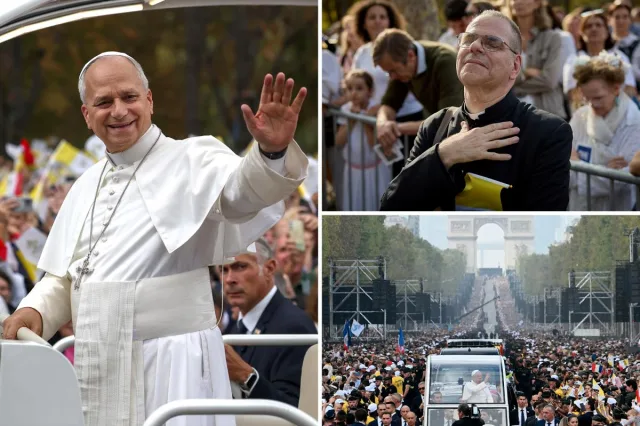
Pope Leo XIV requires no further treatment after lung cancer surgery
Final pathology and molecular tests confirm that Pope Leo XIV's localized lung cancer was fully excised and he needs no further treatment.
- Headline: Pope Leo XIV requires no further treatment after lung cancer surgery
- Dispatch Summary: Final pathology and molecular tests confirm that Pope Leo XIV's localized lung cancer was fully excised and he needs no further treatment.
- Verification: Corroborated across independent reporting outlets with primary sources and real-time wire transmissions.
Pope Leo XIV requires no further treatment after lung cancer surgery
Pope Leo XIV needs no further treatment for lung cancer after follow-up tests confirmed the disease was localized, according to a Vatican statement issued Wednesday. The announcement follows final post-operative tests on tissue removed during the operation, which confirmed the initial diagnosis of adenocarcinoma — the most common type of lung cancer — and verified that the cancer had not spread. A subsequent oncology assessment confirmed that no further treatment is necessary,
said Dr. Luigi Carbone, the pope's personal physician, and Dr. Stefano Margaritora, his surgeon, in a joint statement.
That clear bill of health removes a major question mark over the 71-year-old pontiff's schedule, clearing the path for an ambitious November 6 to 17 trip to Uruguay, Argentina, and Peru. Margaritora confirmed in an interview with Vatican News that there was no clinical reason
to prevent the journey, which includes a dozen flights, two helicopter rides, and high-altitude stops. For the Vatican, it means the immediate focus shifts swiftly back to international diplomacy and travel preparations after the first major health event of the 17-month pontificate.
Return to St. Peter's Square and Gemelli Hospital discharge
The 90-minute operation took place on October 13 at Rome's Gemelli Hospital, during which doctors removed the lower section, or lobe, of the pope's right lung. The pontiff revealed that a nodule had been found and would be surgically removed during his traditional Sunday blessing on Oct. 11, in an unusually transparent disclosure. Margaritora confirmed to Vatican News that the nodule was found by chance during routine abdominal examinations.
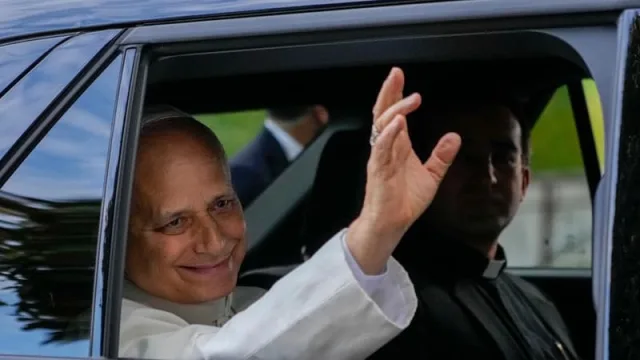
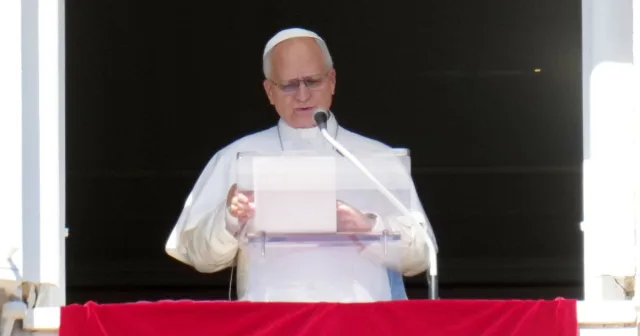
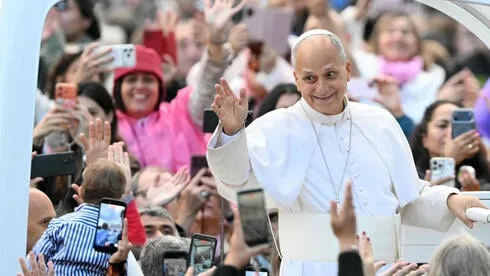
Leo left the hospital on Saturday, four days after surgery and well ahead of the weeklong hospital stay the Vatican had initially anticipated. Days after the procedure, on Friday, images showed him celebrating Mass from the hospital while wearing green vestments and standing behind a makeshift altar. On Wednesday, he made his return to St. Peter's Square at the Vatican for his first weekly general audience since leaving the hospital, riding among the crowds in his popemobile. He has also appeared strong in two public appearances, including the traditional Sunday blessing from a window overlooking St. Peter's Square, and has carried on business throughout.
Diplomatic calls and Latin America travel plans
Before his discharge, the pontiff maintained an active diplomatic schedule from his hospital room. The Vatican reported that on Friday he spoke by phone with Russian President Vladimir Putin to urge a ceasefire in the blockaded Russian-occupied Ukrainian city of Oleshky to allow food aid deliveries, while calling for dialogue and peace. On Monday, he held a similar phone call with Ukrainian President Volodymyr Zelensky. Those close to the Pope have previously said he was keen not to delay the upcoming 11-day South American tour.
Surgical details and medical context
The surgery involved removing the lower lobe of the pope's right lung, a procedure that thoracic specialists estimate eliminated approximately 20% of his total lung tissue. Dr. Sudish Murthy, section chair of thoracic surgery at Cleveland Clinic, explained that human lungs contain five lobes total, three in the right lung and two in the left, and that losing a single lobe does not strip away any unique aspect of pulmonary function because all lobes perform essentially the same task.
Additional treatment is offered in such cases if follow-up testing finds signs that the cancer has spread or has certain other signs that it might be particularly aggressive. Surgery often can be enough when tumors are caught very early, such as when someone has an X-ray or other scan that shows a spot long before it's large or causing symptoms. Dr. Thomas Bauer, chief of thoracic surgery at Jersey Shore University Medical Center, noted that the final decision rests with the surgeon upon inspecting the abnormality. The favorable final pathology results confirm that the disease was caught early and fully excised.
Lung nodules are detected in roughly half of adults undergoing chest X-rays or CT scans, with about 42% found in non-smokers aged 45 or older. Specialists note that roughly 95% of lung nodules are benign. For high-risk individuals, defined as adults aged 50 to 80 with a 20 pack-year smoking history who currently smoke or quit within the past 15 years, health organizations recommend low-dose CT screenings, which catch early-stage disease where five-year survival rates exceed 80% following surgery.
Living without part of a lung at age 71
Losing 20% of lung function through the removal of a single lobe typically leaves healthy individuals with enough physiological reserve to resume normal routines. Bauer noted that human lungs feature a built-in redundancy, explaining that patients who undergo lobe resection can often return to demanding physical activities, with some even running marathons during recovery. While high-intensity performance for elite endurance athletes can be affected, everyday activities, travel, and public appearances remain well within reach.
Medical experts emphasize that the pope's ability to tolerate surgery points to his baseline vitality. Pre-operative evaluations assess cardiovascular health, overall fitness, and pulmonary function before a patient is cleared for major thoracic surgery. Born Robert Prevost in Chicago in 1955 and serving as the first American pope after taking office last year following the death of Pope Francis, the pontiff has been known for an active lifestyle that includes playing tennis and traveling extensively.
With his return to St. Peter's Square and the final pathology clearing him of further treatment, the Vatican's immediate focus shifts from acute oncological management back to international diplomacy and travel preparations.
Updated 2 times since publication; last update 22 October 2026, 01:32.