Germany’s Merz visits Kyiv as Russia steps up attacks on Ukrainian cities
German Chancellor Friedrich Merz traveled to Kyiv to announce a €1 billion aid package as Russia escalates drone and missile strikes on Ukrainian cities.
- Headline: Germany’s Merz visits Kyiv as Russia steps up attacks on Ukrainian cities
- Dispatch Summary: German Chancellor Friedrich Merz traveled to Kyiv to announce a €1 billion aid package as Russia escalates drone and missile strikes on Ukrainian cities.
- Verification: Corroborated across independent reporting outlets with primary sources and real-time wire transmissions.
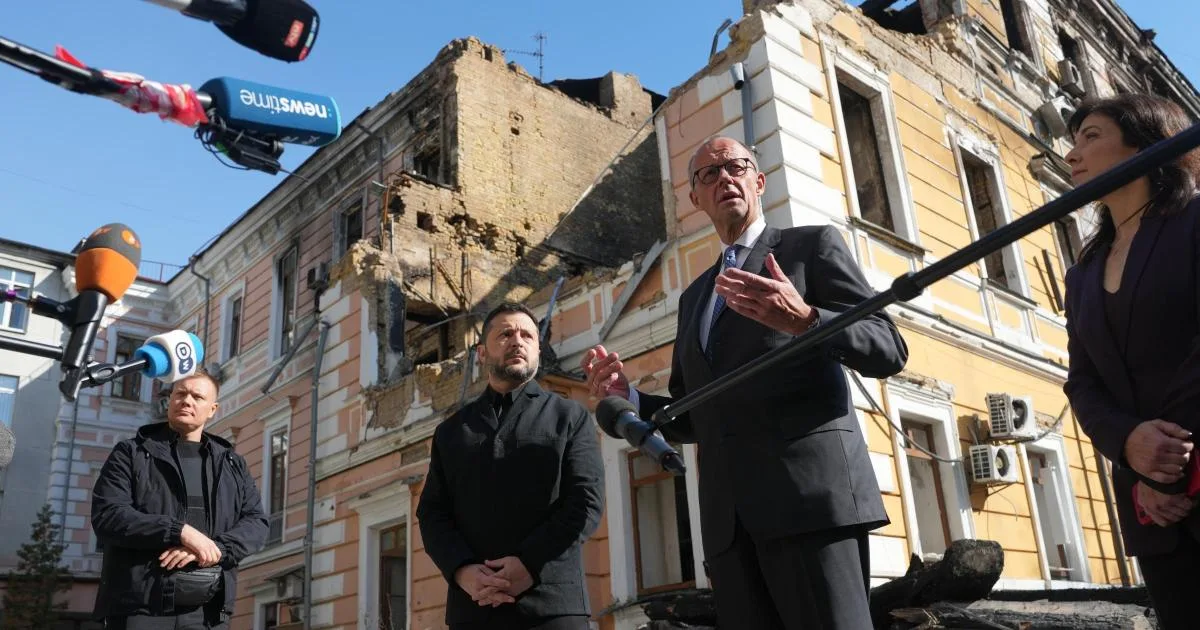
Merz’s Kyiv Visit Amid Escalating Russian Attacks
German Chancellor Friedrich Merz arrived in Kyiv on October 4, 2026, for his second visit as chancellor, underscoring Germany’s commitment to Ukraine amid a surge in Russian aerial attacks. The trip, marked by air raid sirens and explosions, occurred as Moscow intensified strikes on Ukrainian cities, targeting infrastructure and civilian areas. Merz’s visit followed a week of sustained Russian drone and missile assaults, including the destruction of Kyiv’s Northern Bridge, a critical crossing over the Dnipro River.
The visit aimed to reinforce Germany’s role as Ukraine’s largest donor, having provided over €43.3 billion in aid since the war began. Merz emphasized that “if Russia is not stopped, its war machine will sooner or later turn against us,” a statement echoed by Ukrainian President Volodymyr Zelensky, who described the attacks as “barbarous” and “war crimes.”
Russian Strikes Target Kyiv’s Infrastructure
Russia’s attacks on Kyiv’s Northern Bridge on October 4 marked the fourth consecutive day of strikes on the city’s bridges, part of a broader campaign to disrupt logistics and daily life. A drone strike damaged the bridge’s roadway, injuring two people and disrupting hot water supplies, according to Kyiv Mayor Vitali Klitschko. The attack followed earlier strikes that forced the closure of three of Kyiv’s six road bridges, causing traffic chaos and isolating parts of the city.
Russian forces also targeted other infrastructure, including a pharmaceutical warehouse in Sumy, which killed one person and wounded 16. The strikes, described by Zelensky as “everything that makes up everyday life,” have led to power outages and heightened fears of a winter energy crisis. The Russian Defense Ministry announced plans to “intensify” attacks on military and industrial facilities in response to Ukraine’s announced escalation of strikes on Russian oil refineries.
Germany’s Aid Package and Strategic Agreements
During his visit, Merz announced a €1 billion weapons deal with Ukraine, including combat drones and energy sector repairs, bringing total German aid to €43.3 billion. The agreement focuses on joint production of anti-jet drones, such as the Strila interceptor, to counter Russia’s high-speed drone attacks. Germany also pledged €350 million to repair Kyiv’s energy grid, a critical step as winter approaches.
The partnership extends beyond military aid, with Merz highlighting “shared European security” and technology development between German and Ukrainian companies. A key component of the deal involves joint production of weapons with a range exceeding 1,000 kilometers, enabling Ukraine to strike deep into Russian territory. This aligns with Zelensky’s plan to double down on attacks against Russian oil infrastructure, a move Russia has condemned as justification for its own escalation.
| Detail | Information |
|---|---|
| Germany’s Total Aid to Ukraine | €43.3 billion since the war began |
| New Weapons Deal | €1 billion, including combat drones and energy repairs |
| Energy Sector Support | €350 million for grid repairs and winter preparedness |
| Bridge Attacks in Kyiv | Four bridges targeted in five days; three partially closed |
| Injuries in Northern Bridge Strike | Two people wounded; hot water supply disrupted |
Russia’s Escalation and Diplomatic Tensions
Russia’s Foreign Ministry warned foreign nationals and diplomats to leave Kyiv, citing “massive” strikes, while condemning Germany’s support for Ukraine as “dangerous escalation.” The ministry accused Berlin of being the “main sponsor” of Ukraine and reiterated plans to strike military and industrial targets. This follows a recent escalation in hostilities, including an attempted drone attack on Leipzig airport in September, which Germany blamed on Russia and responded to by closing its consulate in St. Petersburg.
Merz’s visit also occurred amid domestic political challenges in Germany, where his approval ratings have dipped due to public discontent over Ukraine aid and an energy crisis. The far-right Alternative for Germany (AfD) has criticized the chancellor’s support for Ukraine, with co-leader Alice Weidel accusing him of diverting funds from social programs to “billions in German taxpayer money.” Despite this, Merz reaffirmed Germany’s commitment to Kyiv, stating that “European security” depends on halting Russia’s aggression.
Frequently Asked Questions
Why is Germany increasing aid to Ukraine now?
Germany, Ukraine’s largest donor, has pledged €1 billion in new military and energy aid as Russia intensifies attacks on Kyiv’s infrastructure. The support aims to bolster Ukraine’s defenses against Russian drones and missiles while addressing winter energy shortages.
What impact have Russian strikes had on Kyiv?
Russian attacks have damaged key bridges, disrupted utilities, and caused casualties. The Northern Bridge strike on October 4 injured two people and damaged the city’s hot water supply, compounding challenges as Kyiv faces potential power outages this winter.
How is Russia responding to Ukraine’s military actions?
Russia has vowed to “intensify” strikes on Ukrainian military and industrial targets, citing Ukraine’s planned attacks on Russian oil refineries. The Russian Defense Ministry has also warned foreign diplomats to leave Kyiv, escalating tensions amid the conflict’s fifth year.
The next critical development will be the implementation of Germany’s aid package and its impact on Ukraine’s ability to counter Russian attacks. Meanwhile, Russia’s continued strikes on Kyiv’s infrastructure and its diplomatic warnings to foreign nationals signal a deepening crisis, with no immediate signs of a ceasefire or diplomatic breakthrough.
How significant is this wire dispatch?
Cast your anonymous vote to register reader consensus across journalism and intelligence sectors.
Dateline Wire is dedicated to independent, evidence-backed reporting. This briefing was synthesized from primary source reporting, corroborated across independent newsrooms, and verified against our Editorial Standards.