FlyDubai Flight to Tel Aviv Lands in Saudi Arabia After Hijacking Scare
A FlyDubai flight en route to Tel Aviv was forced to make an emergency landing in Saudi Arabia following a cockpit fight and pilot stabbing.
- Headline: FlyDubai Flight to Tel Aviv Lands in Saudi Arabia After Hijacking Scare
- Dispatch Summary: A FlyDubai flight en route to Tel Aviv was forced to make an emergency landing in Saudi Arabia following a cockpit fight and pilot stabbing.
- Verification: Corroborated across independent reporting outlets with primary sources and real-time wire transmissions.
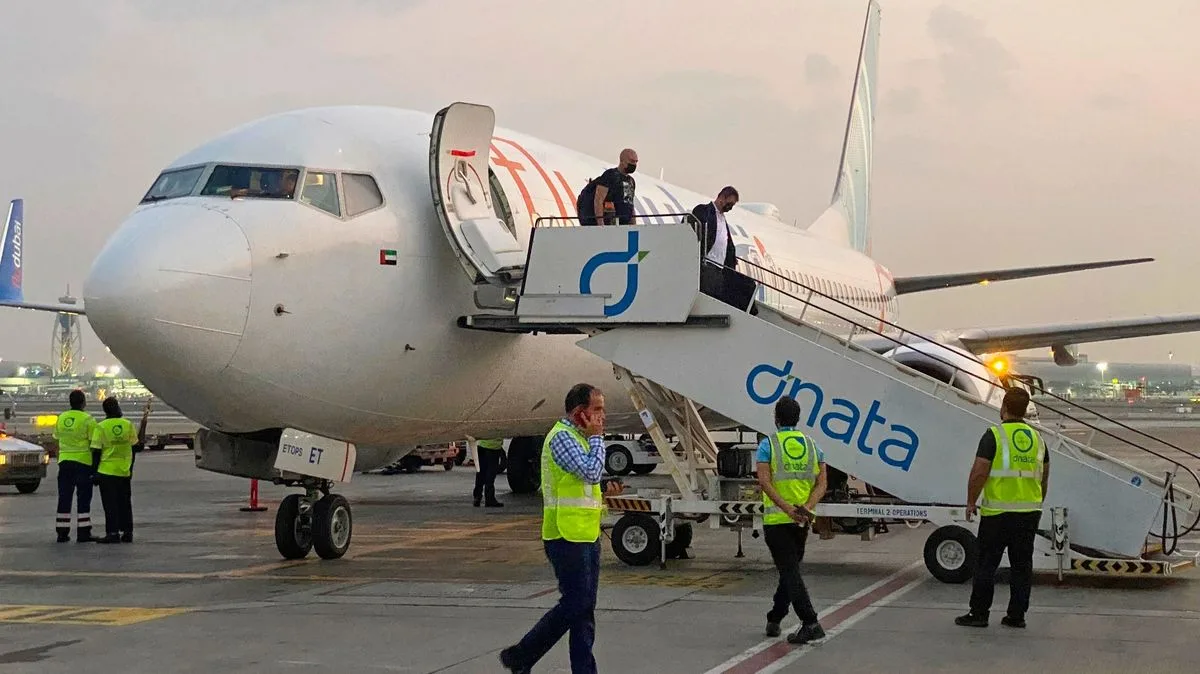
A FlyDubai flight from Dubai to Tel Aviv triggered a regional security crisis on Wednesday after a cockpit fight involving a pilot stabbing forced an emergency landing in Saudi Arabia, according to multiple reports. The incident, which unfolded amid heightened tensions in the Middle East, saw the aircraft descend 17,000 feet in under two minutes, prompting Israeli fighter jets to scramble and Prime Minister Benjamin Netanyahu to hold urgent security consultations.
Timeline of the Emergency
The flight, designated FZ1073, departed Dubai at 7:05 a.m. local time and was en route to Ben Gurion Airport in Tel Aviv. About 90 minutes into the journey, as the plane entered Jordanian airspace, it began a rapid descent, dropping from 34,000 to 16,600 feet in just over two minutes, according to flight tracking data. At 8:31 a.m., the aircraft transmitted a distress signal (code 7700), followed by a hijacking alert (code 7500) at 8:35 a.m. The plane then turned back, re-entering Saudi Arabian airspace and eventually landing at Tabuk Airport at 9:54 a.m.
The rapid altitude change and erratic flight path alarmed authorities. Israeli fighter jets were scrambled as the plane veered toward Saudi Arabia, a country with which Israel has no formal diplomatic ties. The incident also disrupted air traffic at Ben Gurion Airport, which suspended operations temporarily.
Cockpit Fight and Passenger Accounts
Passengers described a harrowing sequence of events, including screams, blood in the cockpit, and a pilot being stabbed. A passenger with a blood-stained T-shirt told Israeli media, “We’re here during the hijacking of an airplane. At this point we’ve subdued the terrorists, we’re approaching landing.” Another passenger, Meital, reported that Israeli passengers helped restrain an attacker after a pilot was stabbed with a pocketknife. “There were stabbings and a lot of blood,” she said.
Flight tracking data indicated the plane’s captain and co-pilot were injured during the incident. Both were hospitalized, according to Saudi aviation authorities. A passenger who identified herself as Miriam told Israel’s i24 channel that the plane “went completely out of control,” with moments she believed she would die. “We heard screams, then the cockpit door opened and we saw a huge amount of blood,” she said.
Conflicting Reports on Pilot Nationalities
Confusion surrounded the identities of the pilots involved. Israeli officials reported that the co-pilot was Omani, a nationality that raised questions given the lack of diplomatic relations between Oman and Israel. The Omani pilot was allegedly the aggressor in the cockpit fight, according to an Israeli source. However, other reports, including one from The Times of India, cited an Indian captain who “prevented a 9/11-like terror attack.”
Additional discrepancies emerged regarding the pilots’ origins. Some sources, including The Daily Jagran, mentioned Russian and Ukrainian pilots, while others cited Emirati and Omani identities. A senior Israeli official quoted by Channel 12 stated that the co-pilot “tried to take control of the plane and crash it,” though no official confirmation of the pilots’ nationalities has been released.
Israeli Response and Security Concerns
The incident prompted immediate action from Israeli authorities. Prime Minister Netanyahu and Defense Minister Israel Katz convened an emergency security meeting, with officials exploring the possibility of a terror attack. An Israeli official told CNN that information suggested the co-pilot attempted to stab the pilot, and a passenger helped subdue him. The country’s Shin Bet intelligence agency, Mossad, and military were reportedly involved in the investigation.
Israel also considered sending a plane to Saudi Arabia to repatriate stranded passengers, though FlyDubai arranged replacement flights for those affected. The airline confirmed all 150 passengers were safe and accounted for, though some remained in Saudi Arabia pending further arrangements.
| Detail | Information |
|---|---|
| Flight Details | FZ1073, Dubai to Tel Aviv |
| Passengers | Approximately 150 |
| Altitude Drop | 17,000 feet (from 34,000 to 16,600 feet) |
| Pilots’ Injuries | Captain and co-pilot hospitalized |
| Emergency Codes | 7700 (distress), 7500 (hijacking) |
Unanswered Questions and Next Steps
Key questions remain unresolved. The exact cause of the cockpit fight is still under investigation, as is the identity of the pilots. The lack of clarity around the Omani co-pilot’s clearance to fly to Israel has raised concerns about aviation security protocols. Meanwhile, the incident highlights the risks of air travel in a region where diplomatic tensions and security threats persist.
Frequently Asked Questions
What caused the plane to land in Saudi Arabia?
The aircraft issued a hijacking code (7500) after a cockpit fight involving a pilot stabbing, leading to an emergency landing in Saudi Arabia. The plane’s rapid descent and erratic flight path prompted authorities to divert it to Tabuk Airport.
Why is there confusion about the pilots’ nationalities?
Reports conflictingly identified the pilots as Omani, Emirati, Russian, or Ukrainian. Israeli officials cited an Omani co-pilot, while other sources mentioned Russian and Ukrainian origins. No official confirmation has been released.
What is the status of the pilots and passengers?
Both the captain and co-pilot were injured and hospitalized. All 150 passengers were reported safe, though some remained in Saudi Arabia as of the latest updates. FlyDubai arranged replacement flights for affected travelers.
The incident underscores the vulnerabilities of air travel in a geopolitically tense region. As investigations continue, the focus will remain on determining whether the event was a criminal act, a mechanical failure, or an isolated crew conflict. For now, the emergency landing in Saudi Arabia stands as a stark reminder of the unpredictable risks faced by passengers and crews alike.
How significant is this wire dispatch?
Cast your anonymous vote to register reader consensus across journalism and intelligence sectors.
Dateline Wire is dedicated to independent, evidence-backed reporting. This briefing was synthesized from primary source reporting, corroborated across independent newsrooms, and verified against our Editorial Standards.