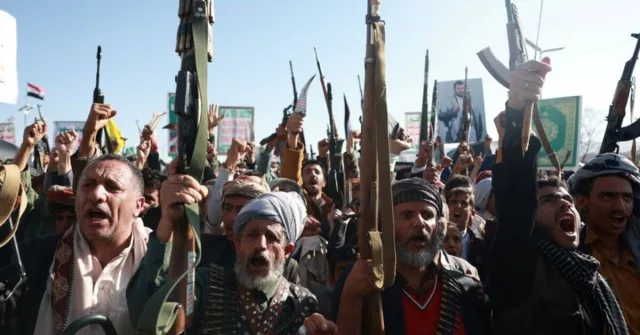
US orders some diplomats to leave Saudi Arabia as Houthi attacks escalate
The US government has ordered non-emergency employees and their families to leave Saudi Arabia following a deadly wave of Houthi missile and drone attacks.
- Headline: US orders some diplomats to leave Saudi Arabia as Houthi attacks escalate
- Dispatch Summary: The US government has ordered non-emergency employees and their families to leave Saudi Arabia following a deadly wave of Houthi missile and drone attacks.
- Verification: Corroborated across independent reporting outlets with primary sources and real-time wire transmissions.
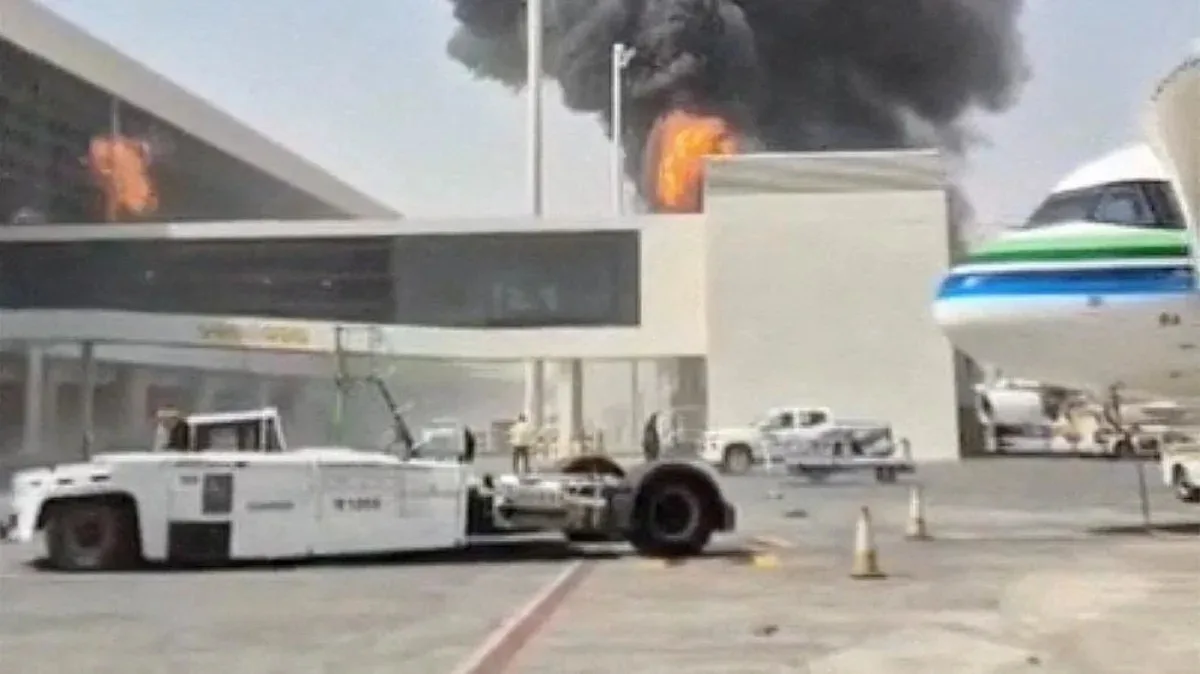
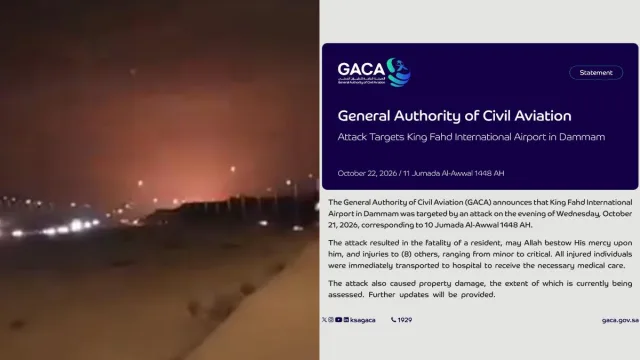
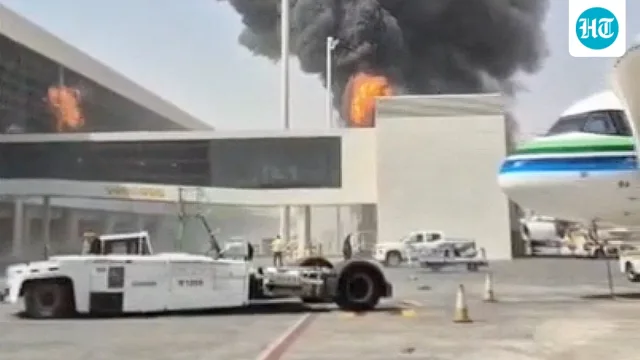
The US State Department has ordered non-emergency US government employees and their family members to leave Saudi Arabia as a wave of Houthi missile and drone strikes kills civilians and hits critical infrastructure. In the latest Wednesday evening attacks, falling debris from an intercepted drone targeting the Shaybah oil field near the United Arab Emirates border killed two individuals identified by the Saudi energy ministry as a Filipino and a Nepali, while injuring two others. Simultaneously, a strike at the King Fahd International Airport in Dammam killed one person and wounded eight others with injuries ranging from minor to serious, according to aviation officials. Global flight-tracking service Flightradar24 reported that flights had been diverted away from the airport.
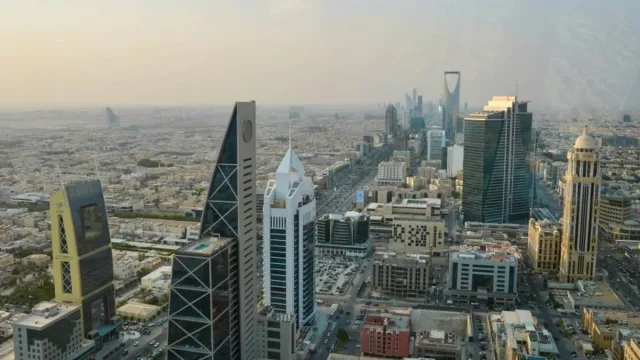
The escalation follows a deadly strike on the King Khalid International Airport in the capital Riyadh that killed at least 13 people and wounded more than 300, marking the deadliest attack in the kingdom in years. The airport partially reopened on Wednesday with a limited number of inbound and outbound flights. Tensions have surged since an informal four-year truce in Yemen's civil war collapsed in June, when the Iran-backed Houthis announced a "maritime embargo" against Saudi Arabia and began missile and drone attacks on Saudi airports, oil facilities, and tankers in the Red Sea. The group stated it was retaliating for what they have called a Saudi blockade of their territory, as well as an air strike on Sanaa airport that they blamed on the kingdom. The embargo has choked Red Sea shipping lanes, which Saudi Arabia had been relying on for oil exports since the US and Israel's war with Iran effectively closed the Strait of Hormuz in the Gulf.
What sparked the departure order and who is affected?
State Department spokesperson Tommy Pigott confirmed the directive in a public statement. The US Department of State issued an ordered departure for non-emergency US government employees and their family members in Saudi Arabia,
Pigott said, adding that Iranian-supported Houthis have increasingly engaged in hostilities against Saudi Arabia, including attacks on civilian airports and other critical infrastructure resulting in civilian casualties and severe travel disruptions.
Pigott also warned that the hostilities have the potential to escalate rapidly,
emphasizing that the safety and security of department personnel and their families remain our highest priority.
The order covers its embassy in Riyadh and its satellite consulates. The embassy had been badly damaged at the start of the US war on Iran and had been operating with only a skeleton staff for months, although in recent weeks some diplomats had returned. While media outlets including NBC and AFP reported that families of US embassy personnel were also being withdrawn from the United Arab Emirates, Jordan, Qatar, and Bahrain, Pigott described the reports of further withdrawals as inaccurate
and stressed that the state department order was for the departure of staff and their families from Saudi Arabia only. Meanwhile, four US officials told Reuters that US missions in other Gulf states would also be ordering family members to leave. Australia responded to the volatile security situation last Friday by raising its travel advice for Saudi Arabia to "do not travel".
How did the conflict restart and why is oil reacting?
Yemen has been devastated by a civil war that began when the Houthis ousted the government from the capital, Sanaa, in 2014. Conflicts escalated in 2015, after a Saudi-led military coalition tried to restore the government's rule. The recent unravelling of the truce has directly impacted global energy markets. Oil prices rose on Thursday as the attacks intensified. Brent crude futures rose $1.29, or 1.2%, to $110.11 a barrel at 00:34 GMT, while US West Texas Intermediate crude gained 97 cents, or 1%, to $98.12. Brent settled largely unchanged on Wednesday, while WTI eased 67 cents.
Tankers face severe threats across regional waters. LSEG analysts warned that Iran was targeting tankers well beyond the Strait of Hormuz, reaching into the Gulf of Oman and jeopardising Gulf crude loadings and ship-to-ship transfers supporting regional loadings. Kpler data showed at least 18 attacks on shipping over the past two weeks. Compounding the energy strain, US Energy Information Administration data showed US crude stocks fell by 3.06 million barrels to 412.5 million barrels last week, compared with analysts' expectations in a Reuters poll for an 820,000-barrel draw. In response to soaring prices and diesel shortages driven by the wars in Iran and Ukraine, the Department of Energy announced it is offering to loan up to nearly a third of the 1-million-barrel US emergency heating oil reserve.
Are wider regional strikes and peace talks colliding?
The regional security matrix is further complicated by concurrent diplomatic initiatives and military maneuvers involving Iran, Israel, and the United States. Iranian state media reported on Wednesday that explosions were also heard in Sirik in southern Iran, and that the nature and origin of the explosions were unknown. Iranian Foreign Minister Abbas Araqchi told the Financial Times on Wednesday that Iran was fully prepared to defend itself and President Masoud Pezeshkian told state media the US could not expect dialogue while blockading and threatening Iran.
Concurrently, the New York Times reported that the US and Israel developed plans for a "short but intensive operation", after defense secretary Peter Hegseth travelled to Israel earlier this week for meetings with prime minister Benjamin Netanyahu. President Donald Trump said last week the US was looking to knock out Iran's Pickaxe Mountain, a site linked to the country's nuclear program, however the president has publicly said that he does not intend to restart the war before the 3 November elections. In a separate diplomatic track, Russian President Vladimir Putin hosted US Special Envoy Steve Witkoff in St Petersburg on Wednesday for talks on ending the war in Ukraine, with the Kremlin announcing that Putin had agreed to resume US-mediated peace talks with Ukraine as soon as next month.
What comes next for the region and travelers?
As the US State Department assesses ongoing security risks in Saudi Arabia and the wider Gulf, military posture adjustments are underway. NBC reported that the US military has been quietly scaling back its presence at bases across the Middle East in recent days, however a spokesperson from US central command told the US outlet that service members are regularly moved to “optimize mission readiness”. With Houthi missile and drone launches continuing unabated and shipping lanes remaining precarious, attention turns to whether diplomatic channels can contain the maritime embargo or if further military escalations will materialize following the US midterm elections.