Jensen Huang discusses returning as Nvidia CEO with allies following res
Days after resigning following revelations of an extramarital relationship tied to security concerns, former Nvidia CEO Jensen Huang is weighing a potential return amid a push from allies.

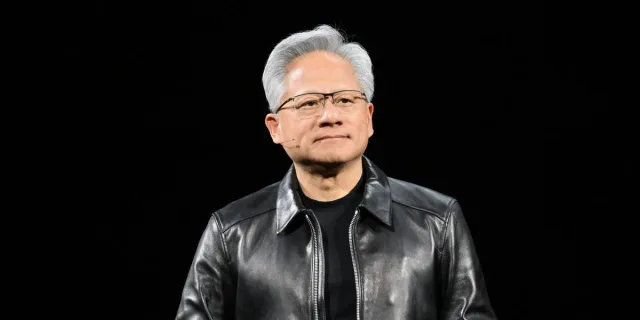
For ordinary investors and technology watchers, the sudden exit of a chief executive who built a $4 trillion chipmaking giant usually signals a period of calm reflection or a straightforward succession race. Instead, the dramatic departure of Jensen Huang has kicked off a high-stakes lobbying campaign that could thrust the artificial intelligence titan back into boardroom turmoil. Huang resigned Thursday as president, CEO, and a member of its board after 33 years leading the company he co-founded, following revelations of extramarital relationships, including one with Alice Huang, an executive at Singapore-based Megaspeed whom U.S. intelligence reportedly identified as having been recruited by Chinese intelligence. Megaspeed claims that Alice Huang hasn’t worked there since August of 2025.
Yet days after admitting the affair to employees and triggering an independent board investigation, Huang has discussed returning to his post with close confidants, according to reports published Sunday. While interim CEO Colette Kress steers the company toward its third-quarter fiscal 2027 earnings release on Tuesday, November 17, at approximately 4:20 p.m. Eastern followed by a conference call at 5 p.m., a fractured group of Silicon Valley allies, major shareholders, and prominent tech figures are mobilizing to bring him back. The unfolding battle pits investor worship of a singular founder against corporate governance watchdogs and Washington policymakers demanding a permanent break from the past.
Who is driving the push to reinstate Jensen Huang?
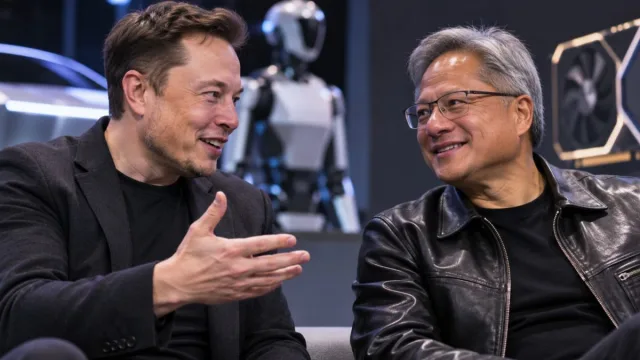
An online petition calling for Huang's reinstatement had drawn more than 156,000 signatures as of Sunday, including more than 7,500 people identifying as Nvidia employees and more than 82,700 identifying as shareholders. High-profile tech figures have added their weight to the public pressure campaign, with Tesla and SpaceX CEO Elon Musk, Replit CEO Amjad Masad, and Epic Games CEO Tim Sweeney among the tech bros publicly backing the effort, and an open letter demanding the board "Bring Jensen Back." Altimeter Capital founder Brad Gerstner and Atreides Management boss Gavin Baker, whose firms held approximately 10.6 million Nvidia shares combined as of June 30 according to regulatory filings cited by CNBC, published an open letter Friday urging the board to leave all options on the table, including the potential return of Jensen Huang.
Behind closed doors, supporters are organizing more aggressively. One ally told the Financial Times that backers were convening a war room
of tech executives to lobby Nvidia's board and seek backing from the White House. The reported effort has Huang's support.
That enthusiasm is not universal within the company's ranks, however. Bryan Catanzaro, an Nvidia researcher, took to X on Friday to denounce a fabricated document circulating online. There is a made-up letter circulating online asking NVIDIA's board to reinstate Jensen, claiming my involvement,
Catanzaro wrote on the platform. This letter is obviously fake, and even if it were real I would not sign it.
Catanzaro expressed sadness over the departure while throwing his support behind Kress, writing, I've worked with Colette for years and know her as an extraordinary leader. She has my full support.
Can a black-eye scandal be overcome in Silicon Valley?
The central argument for Huang's return rests on his irreplaceable value to Nvidia's valuation and technological dominance. Senior managing director at Yorkville Ives & Co. Dan Ives estimated that Huang is worth roughly $1 trillion to Nvidia's valuation, telling Newsweek that no single individual can replace him. However, Ives rejected any chance of a comeback, noting that the reputational damage is too severe. The black eye moment for Jensen is impossible to come back from and this is the reality in my view,
Ives wrote in an email Sunday, adding that at the end of the day after this global scandal the old Jensen with the black leather jacket and rock star persona is gone for good.
Corporate governance expert Charles Elson also poured cold water on the reinstatement push, arguing that bringing the co-founder back would fail to resolve the fundamental questions facing the board. Elson pointed to national security allegations, potential shareholder litigation, and questions about whether the board had been adequately informed about Huang's relationships. Bringing him back doesn't solve any problems at all,
Elson said in a Sunday interview with Newsweek. Even some organizers of the reinstatement effort acknowledged the hurdle, with one acknowledging to the FT, Having an affair with a subordinate is a fireable offence.
How are Washington policymakers reacting?
Resistance to a potential comeback extends far beyond corporate governance circles into the highest levels of government. Treasury secretary Scott Bessent on Sunday called for a dramatic shake-up
in leadership at the company following Huang's departure, suggesting during an appearance on Fox News' Sunday Morning Futures that the chipmaker should hire its next CEO from outside the company. That stance indicates that any effort by Huang's allies to secure White House backing will face immediate political headwinds in Washington, where scrutiny is already high over compliance with U.S. restrictions on advanced AI chip exports to China.
President Trump acted shocked when news broke of Huang's romantic ties to Alice Huang, a Chinese executive who U.S. intelligence believed was feeding information to Beijing. I view him as a very high quality person. I've known him a long time,
the president said. While the president insisted he had no idea about the U.S. intelligence on Alice Huang when he visited China in May, the Financial Times reported in late October that Trump was briefed on the findings about a year ago and chose not to take action.
Ives estimated in a Sunday note that scrutiny of Nvidia's China operations and possible export-control loopholes could put approximately 10 to 15 percent of its revenue at risk, though that figure reflects potential exposure rather than a confirmed revenue loss. Meanwhile, Nvidia's board has started the search process for a permanent successor without formally engaging candidates, though Arm CEO Rene Haas has been approached as a possible successor, according to reports.
What happens when the board meets its toughest test?
The standoff leaves Nvidia's board walking a tightrope between fierce investor loyalty and severe regulatory and governance risks. On one side are major backers and tech moguls convinced that the company cannot maintain its momentum without its visionary co-founder at the wheel. On the other side are governance experts like Elson, analysts like Ives, and administration officials like Bessent who argue that the gravity of the espionage-linked allegations and workplace conduct violations rules out a second act.
Elson questioned whether shareholders pushing for Huang's return possess the full picture. Do they know all the facts? Do they know what's in there?
he asked, noting that directors hold information unavailable to the investing public. Ives, meanwhile, advocates for an external candidate for the permanent CEO position, pointing to Apple's former CEO and current executive chairman Tim Cook or Palo Alto Networks CEO Nikesh Arora as likely paths forward, while speculating that Huang might ultimately start a new venture or go with Musk to SpaceX.
For now, the board has expressed full confidence in Kress and the existing management team. Harvey Jones, who was appointed Nvidia's first board chair, emphasized that operations, customer commitments, and product road maps will continue without interruption. As investors tune into Tuesday's earnings call, the immediate focus will shift from boardroom politics to quarterly financial performance under interim leadership, even as the shadow of a potential Huang comeback looms over the company's future.