Lindsay Clancy lawyer asks Trump for pardon following murder mistrial
Despite a presidential pardon being legally inapplicable to state murder charges, Lindsay Clancy's lawyer is seeking Donald Trump's influence following a jury deadlock.
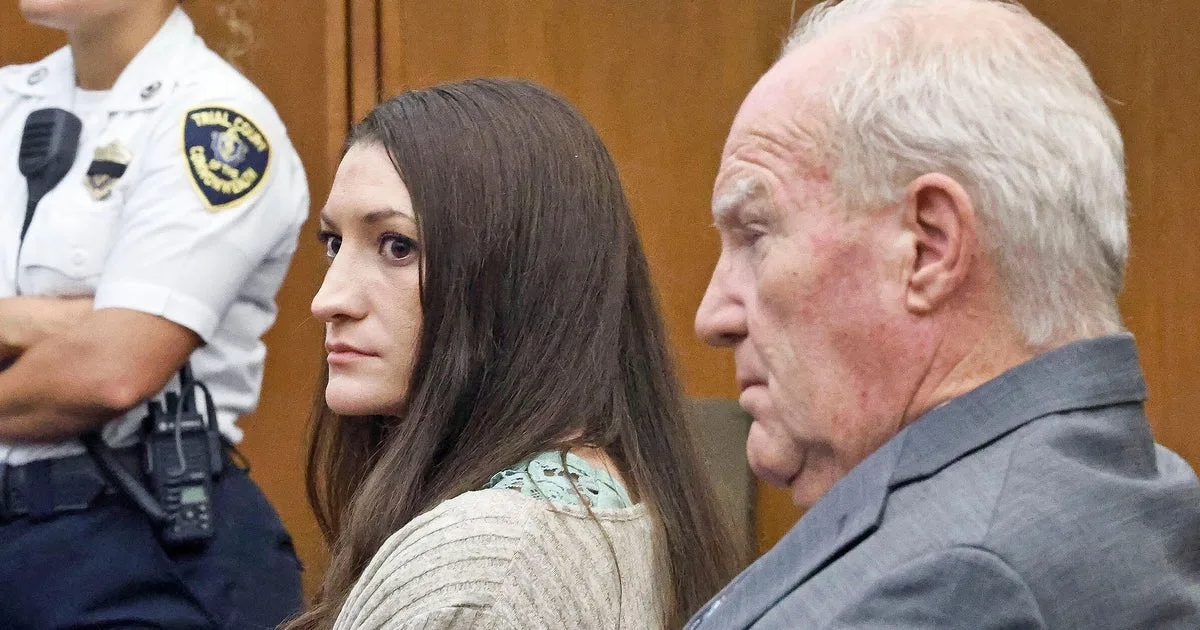
Lindsay Clancy’s attorney, Kevin Reddington, made a high-profile request for a presidential pardon from Donald Trump in the wake of a mistrial in her first-degree murder case, a move that underscores the legal and political complexities of the situation. Clancy, 36, faces three counts of first-degree murder for the 2023 deaths of her children, Cora, 5, Dawson, 3, and Callan, 8 months, which she admitted to committing using exercise bands but claims occurred during an episode of postpartum psychosis.
Legal Strategy and Pardon Request
Reddington’s request for a pardon, made during a September 8 appearance on “Good Morning America,” was framed as a strategic effort to leverage political influence rather than a legal maneuver. “The goal is pretty simple. It’s to seek help from Trump,” Reddington stated, noting that while a presidential pardon could not legally apply to Clancy’s state charges, the president’s “clout” might pressure prosecutors. The attorney also suggested that Trump’s potential outreach to Plymouth County District Attorney Tim Cruz, a fellow Republican, could sway the case’s trajectory.
Clancy’s legal team has consistently argued that her actions were the result of a mental health crisis. During the trial, she pleaded not guilty by reason of mental disease or defect, a Massachusetts legal standard akin to an insanity defense. Reddington emphasized that a plea deal was off the table, stating, “I would not plead Lindsay Clancy to a day in jail.”
| Detail | Information |
|---|---|
| Charges | Three counts of first-degree murder |
| Mistrial Date | September 4, 2026 |
| Jury Split | 11-1 deadlock |
| Legal Standard | Postpartum psychosis as a defense |
Mistrial and Juror Dispute
The mistrial was declared after a 38-hour deliberation period, during which the jury failed to reach a unanimous verdict. A note from the foreperson indicated that one juror refused to accept the judge’s instruction on reasonable doubt, a decision Reddington called “not right.” The juror’s stance, according to the foreperson, centered on the belief that Clancy was not mentally ill at the time of the killings.
Clancy’s trial had drawn intense public scrutiny, with Trump himself acknowledging the case’s visibility. “It’s on television so much, it’s hard not to follow it,” the president said. However, he stopped short of endorsing the pardon request, instead stating, “Look, she did a horrible, horrible thing. Can’t be worse. But you’ll find out what the price to pay is. It’s going to be mental institution or jail or something.”
DA’s Role and Future Proceedings
The decision to retry Clancy or pursue alternative charges rests with District Attorney Tim Cruz, who has held the Plymouth County seat since 2001. Cruz has not yet announced plans for the next steps, though he previously stated that the evidence suggested Clancy was “in control of her actions” during the killings. A hearing scheduled for September 29 will determine whether prosecutors will proceed with a retrial, seek a plea deal, or drop the charges.
Reddington has indicated he may request the court to dismiss the case, though he also left open the possibility of a plea agreement. “I hope however after sitting through this trial and seeing the evidence that was presented from the government as well as from the defense, that he would revisit that issue and hopefully would be able to work something out that would be acceptable to both sides,” Reddington said of Cruz.
Public and Political Reactions
The pardon request has sparked debate over the limits of executive power and the role of political figures in criminal cases. Legal experts note that while Trump can pardon individuals for federal offenses, state charges fall outside his jurisdiction. The American Bar Association clarified that the president’s authority over state crimes is “virtually nonexistent.”
Clancy’s case has also reignited discussions about postpartum mental health and the legal system’s handling of such cases. Reddington highlighted texts Clancy sent her mother in October 2023, in which she described feeling “sick” and “not well,” arguing that her condition was ignored. “These people don’t understand… They didn’t see the text she sent her mother,” he said.
Frequently Asked Questions
Can a presidential pardon apply to Lindsay Clancy’s state murder charges?
No. President Trump cannot pardon Clancy because she is charged with state-level crimes, not federal offenses. Pardons are limited to federal jurisdiction, and state charges require action from state authorities.
What happens next in Clancy’s case?
A hearing on September 29 will determine whether prosecutors will retry Clancy on first-degree murder charges, pursue second-degree charges (which allow a judge-led trial), or drop the case. District Attorney Tim Cruz has not yet announced his decision.
Why did the jury deadlock?
The jury deadlocked 11-1 after deliberating for 38 hours. The foreperson’s note indicated that one juror refused to accept the legal standard of reasonable doubt, believing Clancy was not mentally ill at the time of the killings.
The case remains at a critical juncture, with the outcome hinging on Cruz’s next move and the broader societal conversation about mental health, criminal responsibility, and the limits of political influence in legal matters. As the September 29 hearing approaches, all eyes will be on whether the prosecution will seek another trial or explore alternative resolutions.
Dateline Wire is dedicated to independent, evidence-backed reporting. This briefing was synthesized from primary source reporting, corroborated across independent newsrooms, and verified against our Editorial Standards.