Caleb Flynn, former American Idol contestant, found guilty of wife's murder
A Miami County jury found Caleb Flynn guilty of aggravated murder and other charges after prosecutors presented digital evidence and testimony of a secret affair.
- Headline: Caleb Flynn, former American Idol contestant, found guilty of wife's murder
- Dispatch Summary: A Miami County jury found Caleb Flynn guilty of aggravated murder and other charges after prosecutors presented digital evidence and testimony of a secret affair.
- Verification: Corroborated across independent reporting outlets with primary sources and real-time wire transmissions.
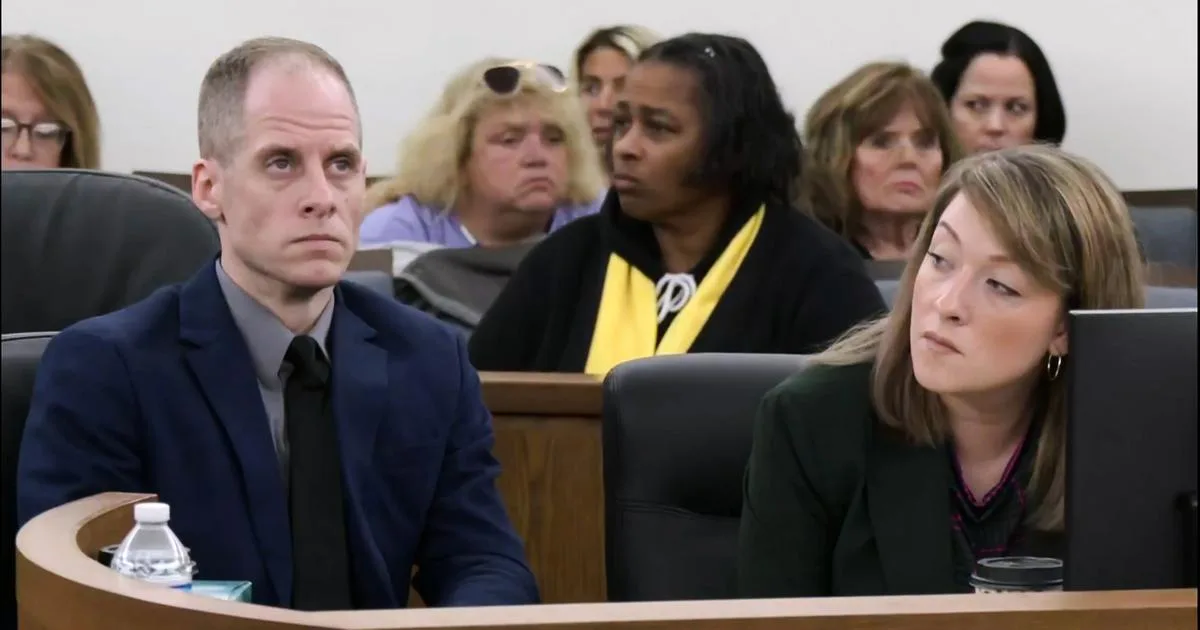
Caleb Flynn, a former American Idol contestant and Ohio music pastor, was found guilty of murdering his wife, Ashley Flynn, in a case that unfolded with chilling details of betrayal, violence, and a staged crime scene. The Miami County jury returned its verdict on Tuesday, September 29, 2026, after less than three hours of deliberation, convicting Flynn of aggravated murder, murder with a firearm specification, felonious assault, and tampering with evidence. He faces up to life in prison without parole, with sentencing set for October 5.
Flynn’s Alleged Motive: Affair and a Plan to Escape Marriage
Flynn, 40, was arrested days after Ashley, 37, a schoolteacher and volleyball coach, was shot twice in the head while asleep in their Tipp City, Ohio, home on February 16, 2026. He initially told police a burglar had killed her, but prosecutors argued he had orchestrated the scene to mask his own actions. During closing arguments, Assistant Miami County Prosecutor Matthew Joseph stated that Flynn “wanted to keep his mistress and have his daughters all to himself,” emphasizing his desire to escape the marriage without losing his family or career.
Testimony revealed that Flynn had been having an affair with Alleigha Botner, a 24-year-old former church intern, for nearly 18 months. Botner, who met Flynn in 2022, described their relationship as a “secret” that began in March 2024. She testified that Flynn repeatedly expressed hatred for his wife, including text messages where he wrote, “I was up until 4 a.m. last night crying, literally thinking of ways to kill her and not go to jail.” Another message read, “I just want her dead and gone.”
Evidence of a Staged Crime Scene and Digital Activity
Prosecutors argued that Flynn had staged a break-in to mislead investigators. Police found the garage door, a side door, and the center console of Flynn’s pickup truck open. Flynn claimed he kept a 9-millimeter handgun in the truck’s console, but no weapon was recovered. Investigators also noted that the damage to the garage door appeared to have been made with multiple tools, suggesting forced entry rather than a single act of burglary.
Digital forensics played a key role in the case. Joseph Wilhelm, a special agent with the Ohio Bureau of Criminal Investigations, testified that Flynn’s iPhone and Apple Watch recorded 196 steps in the hour before the 911 call and 346 steps around the time of the shooting. This contradicted Flynn’s claim that he was asleep in his daughters’ room when he heard gunshots. Additionally, apps such as Instagram and an AI-music generating tool were uninstalled from Flynn’s phone before the murder, according to Wilhelm.
The Role of Text Messages and a Viral AI-Generated Song
Over 100,000 text messages between Flynn and Botner were introduced as evidence. Botner read excerpts during her testimony, including messages where Flynn referred to Ashley as a “spawn of Satan” and expressed a desire to “seek guidance from the Lord” on whether to leave her. In one message, he wrote, “I choose you. I’m free. Actions will come tomorrow,” referring to the day of the killing.
Prosecutors also played a version of a song Flynn had written for Botner, set to AI-generated music. The jury’s reaction to the performance, which included visible laughter, was captured on video and later went viral. Botner testified that she had initially believed Flynn was “not capable of violence” during their affair but later changed her view after learning of his actions.
Defense Challenges the Lack of Physical Evidence
Flynn’s defense attorney, Patrick Mulligan, argued that the prosecution’s case relied on circumstantial evidence. “His being unfaithful doesn’t equal murder,” Mulligan said, emphasizing that investigators never found the gun used in the killing. He also criticized the prosecution for “connecting a couple of meaningless dots” to build a case against his client.
Mulligan highlighted that Flynn’s account of the night of the murder—claiming he was asleep when he heard gunshots—was supported by his own statements to police. However, prosecutors countered that digital activity and witness testimony contradicted this narrative. They also pointed to Flynn’s inconsistent statements about the garage door and his wife’s injuries.
Sentencing Looms as the Case Sparks Broader Conversations
Flynn’s sentencing is scheduled for October 5, 2026. The case has drawn attention to the intersection of domestic violence, religious leadership, and the entertainment industry. Ashley Flynn was remembered as a “dynamic personality” and “biggest encourager” by friends and family, with a GoFundMe page describing her as a “kind soul” who “loved people deeply.”
The trial also underscored the challenges of prosecuting crimes where physical evidence is absent. While prosecutors presented a compelling narrative of premeditation and deceit, the defense’s focus on the lack of a recovered weapon and direct evidence of murder left room for debate. As the legal process moves forward, the case remains a stark example of how personal betrayals can escalate into tragedy.
Frequently Asked Questions
What were the charges against Caleb Flynn?
Flynn was convicted of aggravated murder, murder with a firearm specification, felonious assault, and tampering with evidence. He faces up to life in prison without parole.
What evidence was used to convict Flynn?
Prosecutors cited text messages showing Flynn’s violent intentions toward his wife, digital activity tracking his movements, and testimony from his mistress, Alleigha Botner. A staged crime scene and inconsistencies in Flynn’s statements also played a role.
Why was the AI-generated song significant in the trial?
The song, written by Flynn for his mistress, was played in court as part of the prosecution’s case. Its presentation, including the jury’s visible reactions, became a notable moment during the trial.
How significant is this wire dispatch?
Cast your anonymous vote to register reader consensus across journalism and intelligence sectors.
Dateline Wire is dedicated to independent, evidence-backed reporting. This briefing was synthesized from primary source reporting, corroborated across independent newsrooms, and verified against our Editorial Standards.