Ex-Barclays traders jailed for rigging interest rates have convictions q…
London's Court of Appeal overturned the convictions of five former Barclays traders following a landmark Supreme Court ruling related to interest rate rigging.
- Headline: Ex-Barclays traders jailed for rigging interest rates have convictions q…
- Dispatch Summary: London's Court of Appeal overturned the convictions of five former Barclays traders following a landmark Supreme Court ruling related to interest rate rigging.
- Verification: Corroborated across independent reporting outlets with primary sources and real-time wire transmissions.
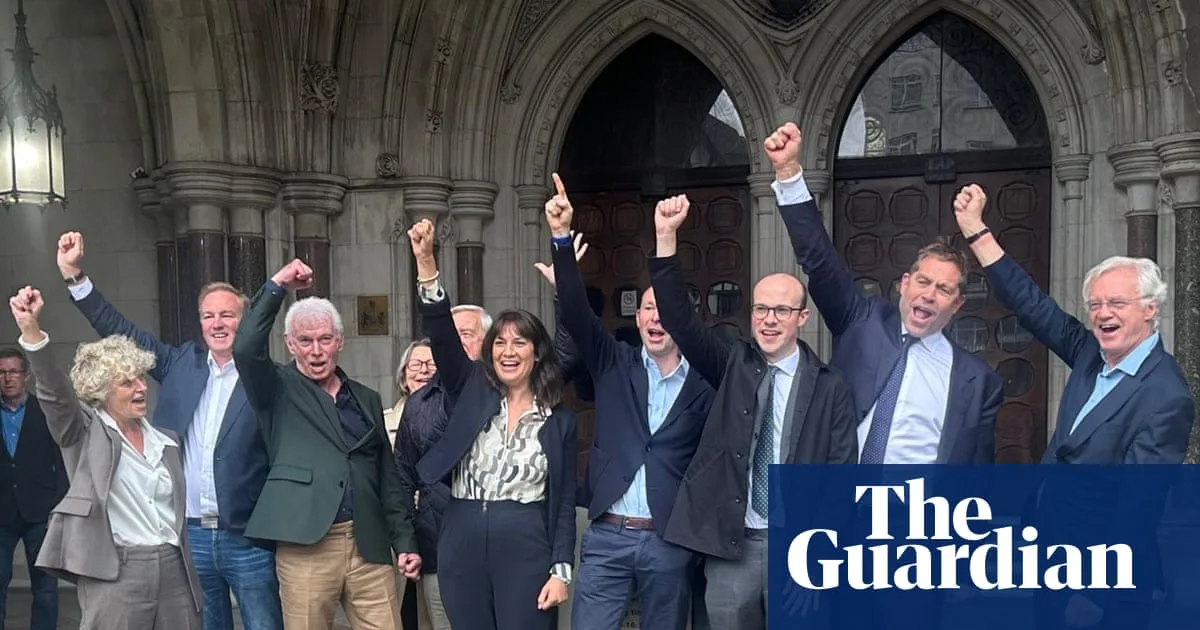
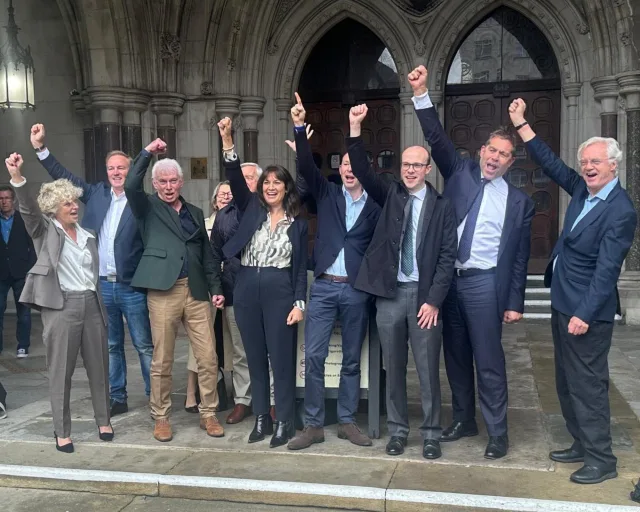
London's Court of Appeal on Wednesday overturned the convictions of five former Barclays traders who spent years behind bars after being accused of manipulating global benchmark interest rates, marking the latest collapse of high-profile cases brought by SFOSerious Fraud Office. The ruling applies to Jay Vijay Merchant, Jonathan Mathew, Philippe Moryoussef, Alex Pabon and Colin Bermingham, whose original sentences ranged from 33 months to eight years following trials held between 2016 and 2019.
The sudden unravelling of these prosecutions stems directly from the UK supreme court's landmark decision overturning the convictions of former UBS and Citigroup trader Tom Hayes and former Barclays trader Carlo Palombo. The supreme court found that trial judges had given inaccurate and unfair instructions to juries, ultimately depriving the defendants of a fair trial. Armed with that precedent, the Criminal Cases Review Commission referred the cases of the five Barclays men back to the court of appeal in January, prompting the SFO to announce it would not contest the appeals.
How did the Libor and Euribor scandal affect global finance?
Designed to estimate the costs at which banks would lend to each other, the London interbank offered rate (Libor) and its euro currency equivalent (Euribor) served as foundational benchmarks. At their peak, these rates underpinned around $450 trillion of financial contracts globally, influencing everything from corporate derivatives and business loans to ordinary people's mortgages, pensions, savings accounts and car finance deals.
During the 2007-2009 credit crisis, which sent stock markets plunging and pitched economies into recession, regulators discovered that banks were misrepresenting their positions. Some submitted artificially low figures to make their institutions appear more creditworthy, while others reported fake numbers to achieve rates that better suited their trading portfolios. The scandal erupted publicly in 2012, leading the SFO to investigate and ultimately secure fraud convictions against nine bankers across trials in London and New York, while 11 other individuals were acquitted.
Who are the five traders and what did they say?
The five men represent a multinational group whose lives were upended by the lengthy criminal proceedings.
| Trader Name | Nationality | Original Sentence / Status | Law Firm / Representation |
|---|---|---|---|
| Jonathan Mathew | British | Jailed between 2016 and 2019 | Hickman & Rose |
| Jay Vijay Merchant | Indian (Calcutta-born) | Jailed between 2016 and 2019 | Hickman & Rose |
| Philippe Moryoussef | French | 8 years (sentenced in absentia as fugitive) | Hickman & Rose |
| Alex Pabon | American | Jailed between 2016 and 2019 | Not specified in source |
| Colin Bermingham | British | Jailed between 2016 and 2019 | Not specified in source |
For Jonathan Mathew, now 45, the decade-long ordeal carried a profound personal toll. For the last 10 years, the stain of a criminal conviction has been a burden I have carried every minute of every day,
Mathew said. He added: Having this conviction quashed is not simply about correcting the record, it's about finally having validation that this is an injustice that never should have happened. I now have two children and this means a great deal to have the record corrected for their sake as well.
Alex Pabon, 48, credited Tom Hayes for relentlessly pursuing justice after his own initial conviction. Pabon stated that Hayes refused to let it go and pushed this through for all of us.
Pabon also noted: Ten years ago, my jury was told, as a matter of law, that an honest answer to the Libor question was not a defence. The Serious Fraud Office now accepts my conviction is unsafe.
Philippe Moryoussef, 58, who gained notoriety by jumping bail and fleeing to France after being sentenced in his absence to eight years in prison, remarked: Today, I am regaining my soul, and for the first time, I can envision my next chapter in peace.
What does this mean for the Serious Fraud Office?
Wednesday's ruling represents a severe setback for the SFO, highlighting the systematic collapse of its flagship benchmark-rigging cases. The agency defended its initial stance by reiterating that the supreme court had found ample evidence on which a properly directed jury could have convicted Tom Hayes and Carlo Palombo.
Even so, Jason Williams, the head of division at the SFO, acknowledged that it was not deemed in the public interest to seek retrials for Hayes and Palombo. Regarding Wednesday's appellants, the agency stated: After carefully considering this judgment and the full circumstances, we do not oppose the appeals of five individuals convicted by juries in relation to Libor and Euribor.
Tom Bushnell, a partner at the law firm Hickman & Rose representing Merchant, Mathew and Moryoussef, criticized the handling of the cases. In Jay Merchant and Jon Mathew's case, it took over a decade for this wrong to be righted. In Philippe Moryoussef's case, over eight years,
Bushnell said. Their lives have been turned upside down as a result. All involved in the criminal justice system should now ask themselves not only how this error came to be made and repeated, but also why it took so long to correct.
Who remains convicted as Christian Bittar faces Friday?
The unravelling of these legal battles leaves just two individuals in the UK holding convictions related to interest rate rigging: former Deutsche Bank trader Christian Bittar and former Barclays trader Peter Johnson. Their paths show the complex legal landscape left in the wake of the 2008 financial crisis.
Peter Johnson was the original whistleblower who first called attention to the Libor scandal, but he pleaded guilty after receiving advice that he stood little chance of winning at trial, and he also hopes to appeal his case. Meanwhile, Christian Bittar, once dubbed one of the world's most skilled traders, pleaded guilty in 2018 and served two years in prison.
The legal endgame continues on Friday, when Christian Bittar's attempted appeal is scheduled to be heard.