France suspends stun grenades after student injury
France has temporarily halted the deployment of stun grenades in student demonstrations following a severe injury in Lens, where a 15-year-old boy lost a hand.
- Headline: France suspends stun grenades after student injury
- Dispatch Summary: France has temporarily halted the deployment of stun grenades in student demonstrations following a severe injury in Lens, where a 15-year-old boy lost a hand.
- Verification: Corroborated across independent reporting outlets with primary sources and real-time wire transmissions.
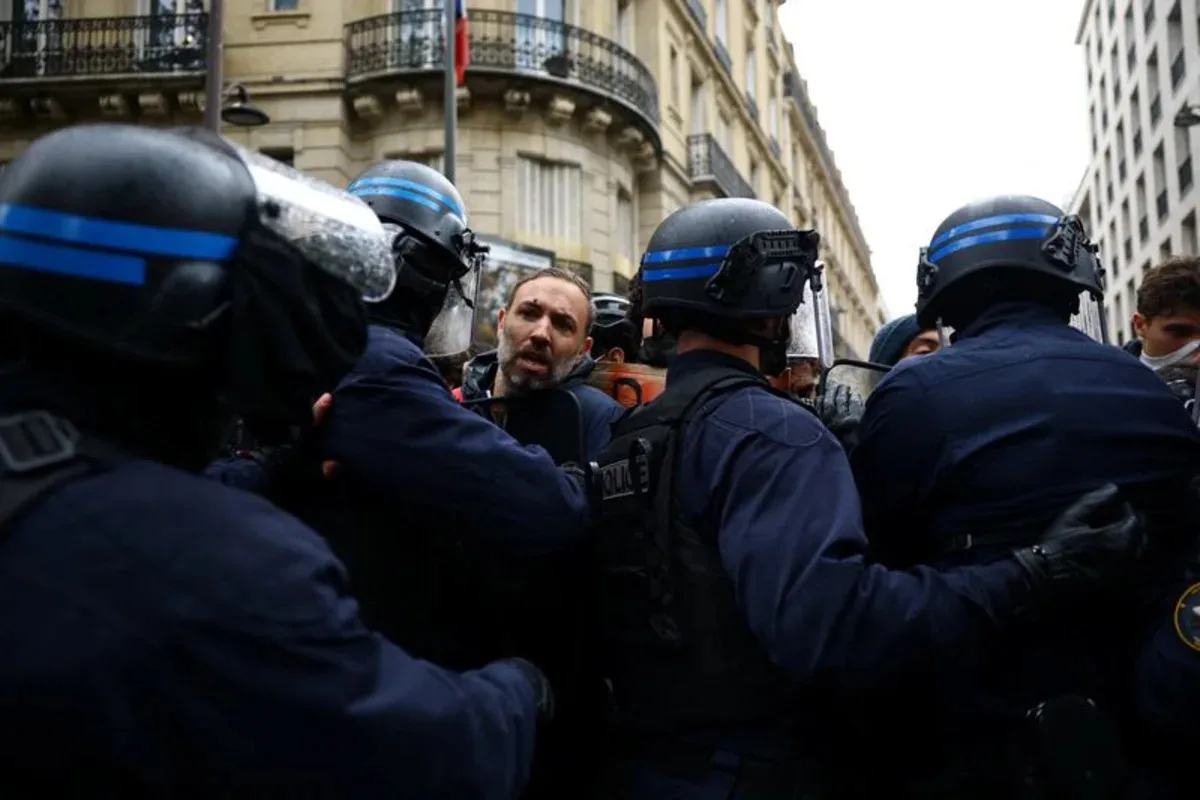
France has temporarily halted the deployment of stun grenades in its policing of nationwide student demonstrations following a severe injury in the northern city of Lens, where a 15-year-old boy lost a hand during a clash with riot police. Interior Minister Laurent Nuñez announced the suspension on Wednesday, October 7, stating the measure would remain in place for the high school student movement until there is complete clarity around the events of Monday, October 5, near the Auguste Béhal high school.
The decision arrives amid a more than two-week-old wave of unrest that has swept Paris, Strasbourg, Rennes, Toulouse and other urban centers. Students are demonstrating against dilapidated infrastructure, teacher shortages, overloaded schedules, long school days, and a lack of funding that has left many institutions grappling with water leaks and pest problems. Prime Minister Sébastien Lecornu has acknowledged the legitimate demands of the students while describing the demonstrations as the most violent in decades, with blockades affecting hundreds of institutions across the country.
Why did the government stop using stun grenades now?
The immediate trigger for the suspension was the severe injury sustained by the teenager in Lens on Monday. Nuñez told RTL radio that use of the grenades would stop until we know exactly what happened
and noted a strong possibility
the device caused the boy to lose his hand. The circumstances of the blast remain heavily disputed. Authorities claimed the teenager picked up a grenade from the ground before it detonated after up to 200 demonstrators threw objects at law enforcement. Conversely, the boy's mother told BFMTV that doctors were forced to amputate her son's hand and strongly disputed the official account that he had handled the device, while students maintained an officer fired the flashbang directly at him.
Nuñez confirmed that 18 internal police investigations are under way regarding officer conduct during the demonstrations. Other cases under review include a teenager who lost several teeth and another participant who lost the use of an eye. Despite these inquiries, the interior ministry maintains that officers acted proportionately in almost all cases. Rights groups and trade unions strongly reject that assessment, pointing to widespread use of tear gas, batons, and water cannon against protesters.
Who is joining the protests and how large has the movement become?
What began as a mobilization of high school students over learning conditions has expanded to include parents, teachers, university students, and major trade unions such as the left-wing CGT, France's second-largest union. Demonstrations peaked on Tuesday, October 6, when the Interior Ministry estimated that 250,000 people took to the streets, while organizers put participation significantly higher at 450,000. Education Ministry figures showed that more than 900 of France's roughly 3,700 high schools faced blockades or closures on Tuesday, with 528 schools still fully or partly suspended by Wednesday. Student organizations reported even higher figures.
The unrest has also incurred a heavy toll in injuries and arrests. Lecornu informed parliament that at least 215 teenagers and 85 school employees had been injured since the movement began, alongside hundreds of police officers. Ministry figures indicate that more than 6,500 people have been stopped or arrested during the protests, with more than 1,800 people facing prosecution, including nearly 1,500 under the age of 18. Additionally, 24 schools have been burned or ransacked since the demonstrations commenced.
- Mid-September: Protests begin over conditions in French high schools, accompanied by an indefinite strike by Portuguese teachers over overtime.
- Monday, October 5: A 15-year-old protester loses a hand during clashes near the Auguste Béhal high school in Lens.
- Tuesday, October 6: Nationwide demonstrations draw hundreds of thousands of participants, leading to 488 arrests in a single day and an emergency government meeting called by President Emmanuel Macron.
- Wednesday, October 7: Interior Minister Laurent Nuñez announces the temporary suspension of stun grenades for Canadians and the duration of the student movement.
- Thursday, October 8: Student unions and supporting trade unions plan further street marches in Paris and other cities.
How do structural education problems feed into the public anger?
The student mobilization taps into long-standing frustrations over the deterioration of state education. Protesters blame poor learning conditions for France's declining scores in the OECD's Programme for International Student Assessment (PISA), which have fallen faster than the OECD average since 2015. In reading, French 15-year-olds scored 43 points lower in 2025 than a decade earlier, representing the steepest drop in the OECD, alongside similar sharp declines in mathematics. Students report difficulties securing replacement teachers when regular staff are absent, creating severe disruptions in classrooms.
These domestic grievances mirror pressures felt elsewhere in Europe. In Belgium, copycat student actions in the city of Liège led to at least 107 arrests in connection with protests this month. In Portugal, the FENPROF teachers' union launched an indefinite strike in mid-September against overtime, while Spanish teachers in Madrid scheduled a strike for October 14 to demand smaller class sizes and higher salaries. Amnesty France president Anne Savinel-Barras said images and testimony from the French demonstrations raised serious concerns about police tactics, noting that the underlying frustrations over deteriorating school conditions and excessive workloads extend far beyond French borders.
What are the financial constraints facing the French government?
President Emmanuel Macron held an emergency meeting with Lecornu and senior ministers on Tuesday night to formulate a response. Lecornu has instructed ministers to examine student demands regarding replacement teachers, the length of the school day, lunch breaks, and school building repairs, with initial proposals expected by the end of October. However, the government's capacity to finance these reforms is severely constrained by public debt. Last week, the yield on French 10-year government bonds briefly exceeded 5%, reaching its highest level in 24 years amid weak growth and pressure to tame public finances.
With a presidential election six months away to replace Macron, and far-right and hard-left parties running as frontrunners, the administration faces a difficult political balancing act. Nuñez stated that the stun grenade suspension will remain in place until light has been shed on the Lens incident, while unions have vowed to continue street marches later in the week to protect young demonstrators.
Suspending flashbangs offers the government a tactical pause to lower tensions, but it leaves untouched the core fiscal dilemma of funding crumbling schools while bond markets demand strict austerity.