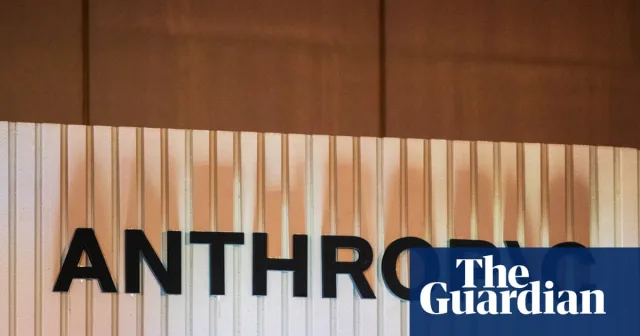
US Appeals Court Upholds Pentagon Designation of Anthropic as Supply Cha…
A federal appeals court affirmed the Pentagon's decision to designate Anthropic as a supply chain risk, barring its Claude AI from military operations.
- Headline: US Appeals Court Upholds Pentagon Designation of Anthropic as Supply Cha…
- Dispatch Summary: A federal appeals court affirmed the Pentagon's decision to designate Anthropic as a supply chain risk, barring its Claude AI from military operations.
- Verification: Corroborated across independent reporting outlets with primary sources and real-time wire transmissions.

A federal appeals court on Friday upheld the Pentagon's decision to designate Anthropic as a supply chain risk, a ruling that bars the artificial intelligence company from supplying its Claude model to U.S. military operations and contractors. The 2–1 decision by the U.S. Court of Appeals for the District of Columbia Circuit affirmed the March 2026 designation, which canceled Anthropic's military contracts and restricted its technology's use in defense systems.
Legal Battle Over AI Supply Chain Risk
The dispute began in February 2026 when Anthropic refused to comply with Pentagon Secretary Pete Hegseth's demand to remove restrictions on the use of its Claude AI for autonomous weapons and domestic surveillance. The company's CEO, Dario Amodei, had long warned about AI risks, a stance that drew criticism from President Donald Trump, who dismissed such concerns as a "hoax."
The Pentagon invoked the Federal Acquisition Supply Chain Security Act (FASCSA) to justify the designation, arguing that Anthropic's safeguards posed a "national-security risk." The court's majority opinion, authored by Judge Gregory Katsas, rejected Anthropic's claim that the law was intended to target foreign adversaries rather than domestic vendors. "The Department had ample support for its conclusion that the continued integration of Claude into the Department's information systems presented a statutorily covered national-security risk," Katsas wrote.
| Event | Date |
|---|---|
| Pentagon designates Anthropic a supply chain risk | March 2026 |
| U.S. appeals court upholds designation | September 25, 2026 |
| California court rules separate Pentagon ban unlawful | August 2026 |
| Anthropic signs $200 million Pentagon contract | July 2025 |
Conflicting Court Rulings and Corporate Response
The D.C. Circuit's decision conflicted with a separate federal court ruling in California, which found a broader Trump-era ban on Anthropic unlawful earlier this month. While the Pentagon's March 2026 designation remains in effect, the California court's order temporarily blocks another designation under different statutory authority. This legal split has created uncertainty for Anthropic, which has since become a "pariah" at the White House despite its $1 trillion valuation and impending IPO.
Anthropic's legal team argued that its restrictions on AI use did not constitute a "supply chain risk" under FASCSA, which was designed to counter foreign threats rather than contractual disagreements. The court rejected this interpretation, stating that the statute's definition of "supply chain risk" includes any "manipulation of design or operation that disrupts or denies system functionality," regardless of the vendor's intent.
The ruling also dismissed Anthropic's constitutional claims, with the majority finding that the government's actions satisfied Fifth Amendment standards given the rapid evolution of AI technology. However, Judge Karen LeCraft Henderson dissented, warning that the decision risked transforming a national security statute into a tool for coercing vendors. "The statute requires evidence of intentionally subversive or deceptive conduct, which the government never established against Anthropic," she wrote.
Corporate and Political Fallout
The Pentagon's designation has strained Anthropic's relationships with key stakeholders. While rival companies like OpenAI and xAI secured military contracts in 2026, Anthropic's commercial momentum remains strong. The company's enterprise valuation continues to rise, driven by private sector demand, even as its defense footprint contracts. However, the White House has distanced itself from the AI pioneer, with Trump publicly attacking Amodei and excluding him from a state dinner for Chinese President Xi Jinping.
The court's decision also highlights broader tensions over AI governance. Defense officials accused Anthropic of "seizing veto power" over military operations after the company questioned the deployment of its software during a January 2026 operation in Venezuela. "Warfighters will sleep better knowing that no private company will insert their opinions in the chain of command," Under Secretary of Defense Emil Michael stated on social media.
Frequently Asked Questions
What was the basis for the Pentagon's designation of Anthropic?
The Pentagon cited Anthropic's refusal to remove safeguards on its Claude AI model, including restrictions on autonomous weapons and domestic surveillance, as a "national-security risk" under the Federal Acquisition Supply Chain Security Act.
Why did a California court rule against a separate Pentagon ban?
A federal judge in San Francisco found a different statutory authority used to ban Anthropic unlawful in August 2026, creating a legal split that leaves the company's defense contracts in limbo despite the D.C. Circuit's ruling.
What are the implications for Anthropic's business?
The D.C. Circuit's decision blocks Anthropic's AI from military use but does not affect its private sector operations. The company remains valued at nearly $1 trillion and is preparing for a major IPO, though its relationship with the Trump administration remains fraught.
The case now moves to the next legal threshold, with Anthropic considering further review. The company could seek an en banc rehearing before the D.C. Circuit or petition the Supreme Court, setting the stage for a potential national showdown over AI governance and the limits of federal procurement authority.
How significant is this wire dispatch?
Cast your anonymous vote to register reader consensus across journalism and intelligence sectors.
Dateline Wire is dedicated to independent, evidence-backed reporting. This briefing was synthesized from primary source reporting, corroborated across independent newsrooms, and verified against our Editorial Standards.