France suspends stun grenade use at student protests after teen loses hand
France has suspended stun grenade use during student protests after a 15-year-old boy lost his hand and hundreds were injured in nationwide unrest.
- Headline: France suspends stun grenade use at student protests after teen loses hand
- Dispatch Summary: France has suspended stun grenade use during student protests after a 15-year-old boy lost his hand and hundreds were injured in nationwide unrest.
- Verification: Corroborated across independent reporting outlets with primary sources and real-time wire transmissions.
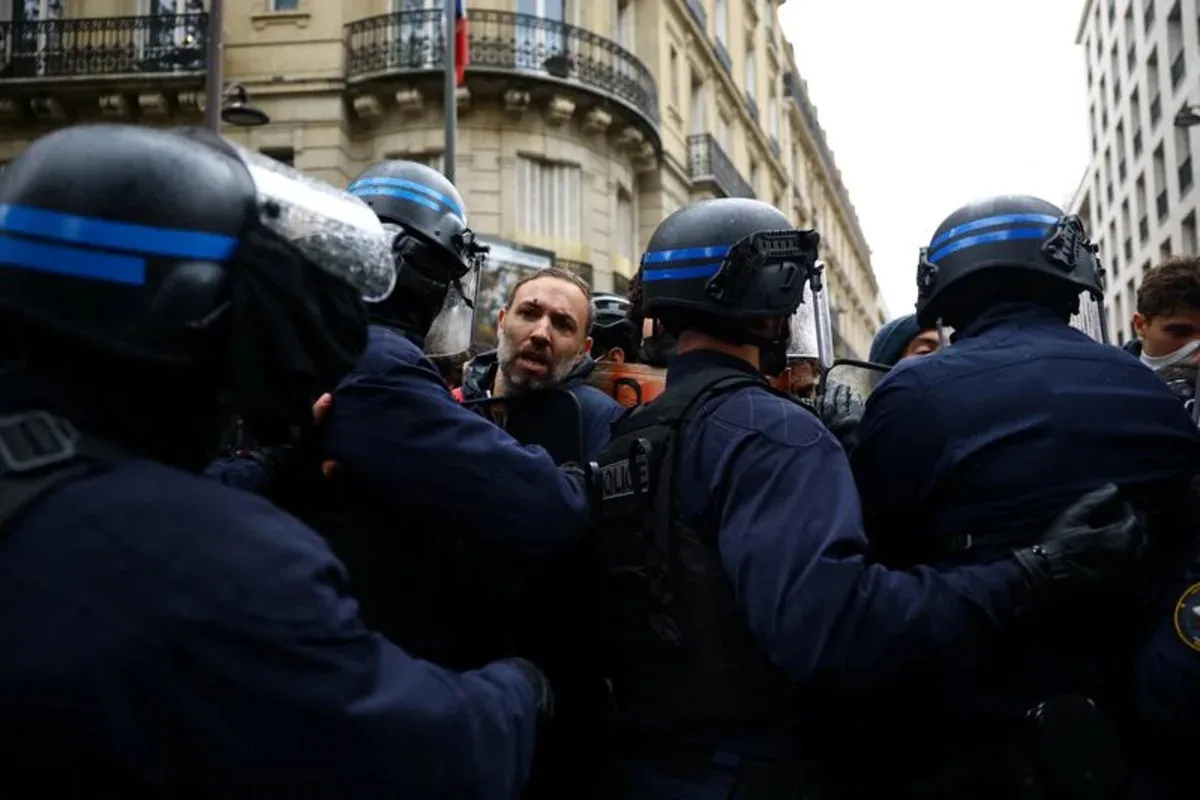
France has suspended the use of stun grenades by police at student-led demonstrations following a nationwide movement sparked by demands for better high school conditions that has led to more than 6,500 arrests, mostly of minors. Interior Minister Laurent Nunez announced the temporary halt on radio broadcaster RTL early Wednesday, stating I am suspending their use in the high school student protests until the facts of the incident have been clarified.
Nunez emphasised that the suspension applies only for the high school student protests and for just long enough to understand what happened.
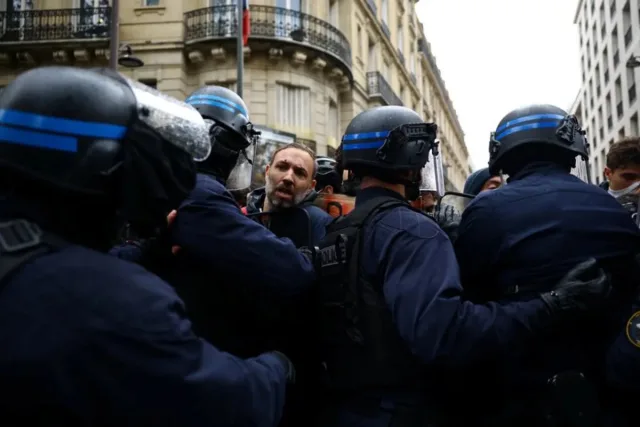
That decision follows an incident on Monday where a 15-year-old student lost a hand after police fired a stun grenade during a clash in the northern city of Lens. The injury stands alongside a separate event in northwest Paris where a 14-year-old student was hit in the face with a tear gas grenade at such close range that he lost several teeth, prompting criminal charges against a policeman on Tuesday. Following Tuesday's national day of mobilisation — which saw 250,000 people take to the streets across France, 488 arrests, and 43 officers injured — President Emmanuel Macron held an emergency meeting with Prime Minister Sebastien Lecornu and key cabinet ministers.
Consequences and Collisions Across the Boulevards
The fallout from more than two weeks of unrest has altered daily routines for tens of thousands of families across France, shuttering institutions and drawing teachers, parents, and labor unions into mass demonstrations alongside students aged 15 to 17. An interior ministry tally shows that at least 215 students, 85 teaching staff, and 715 police officers have been injured since the movement began. Education Minister Edouard Geffray told parliament that 24 high schools sustained enough fire or vandalism damage to remain closed for weeks, leaving roughly 30,000 students without in-person teaching and generating repair bills estimated at €20 million to €30 million, or $22 million to $34 million. Far-right presidential candidate Marine Le Pen argued that those who damaged schools should pay for the repairs rather than taxpayers, while also accusing Macron of being always on the side of attacking the police.
Stun grenades are designed to shock, disorient, and sow panic among dense crowds by producing blinding flashes and deafening blasts. In public order policing, their deployment via riot units has drawn sharp criticism from rights groups and international monitors due to the danger of permanent hearing loss and life-changing shrapnel mutilations.
While most blockades, such as one at Lycee Lamartine in central Paris where teenagers sang the Marseillaise and performed Mexican waves, remained peaceful, other locations saw violent confrontations. Police used tear gas and water cannons, pushed back crowds behind barricades of rubbish bins outside Sciences Po university in central Paris, and faced sporadic clashes in Rennes and other cities. Nunez announced on RTL radio that 18 internal investigations have been referred to the police inspectorate for misconduct. It took several children being maimed for life for Nunez to give up using grenades against high school students,
said Manuel Bompard, national coordinator of the hard-left France Unbowed, reflecting mounting accusations of disproportionate force from opposition politicians, rights groups, and labor unions.
At the same time, lawyers representing detained teenagers reported widespread mistreatment during arrests and in custody. Ainoha Pascual, a lawyer representing three Paris minors, described her clients as terrorised,
adding that a very large majority arrive in custody injured,
having suffered baton strikes or being dragged along the ground. Prisca Ancion of the Collective for Judicial Action told AFP that every arrested student reported experiencing an insult, a slap, having their head held down on the ground, chokeholds.
Timeline of the Movement
- Late September 2026: Students begin blockading high school entrances over dilapidated facilities and teacher shortages.
- Mid-September 2026: Protests widen as student unions, teachers, and workers organize demonstrations.
- Monday: A 15-year-old boy loses his hand in Lens after police fire a stun grenade, and a policeman is charged over a 14-year-old losing teeth to a tear gas canister in Paris.
- Tuesday: A quarter of a million people demonstrate nationwide, resulting in 488 arrests and high casualty counts among both protesters and security forces, prompting an emergency cabinet meeting.
- Wednesday: Interior Minister Laurent Nunez announces a temporary suspension of stun grenades for high school protests, while Prime Minister Sebastien Lecornu institutes a half-day of dialogue in schools.
The unrest has exacerbated broader political pressures on President Emmanuel Macron's administration six months ahead of an election. Protesters trace their grievances to a steep decline in educational quality, noting that French 15-year-olds scored 43 points lower in reading in 2025 than in 2015, the largest drop among OECD countries, alongside a matching collapse in math scores. Students cite absent teachers, crumbling walls, and severe shortages, but the government faces tight fiscal constraints, public debt pressures, and weak growth that leave little spare cash for repairs. Prime Minister Sebastien Lecornu acknowledged the legitimate demands of the students in a post on X, writing that the voice of high school students is precious and must be heard,
promising it would inform a concrete action plan.
Lecornu also condemned the violence as the most severe student unrest in decades.
Seeking to de-escalate, Lecornu set aside a half-day of class time on Wednesday for internal democratic dialogue. However, student union leader Ryad Rani dismissed the measure as yet another attempt to muzzle the debate
and buy time, and school principal union representative Nicolas Bonnet told franceinfo that to get out of this crisis, we will need something more than simple consultation periods.
That leaves the administration trying to balance fiscal austerity against open-ended public discontent.
Pathways Forward
The immediate political test for the government centers on the administration's fiscal and reform agenda. Prime Minister Lecornu is scheduled to deliver a public address later on Wednesday addressing both the school protests and the national finances against the backdrop of heated debates over the 2027 budget. Meanwhile, high-school student, teacher, and worker unions have scheduled more marches for Thursday to press their demands.
Updated 1 time since publication; last update 7 October 2026, 19:28.