Case dismissed against 2 ex-FBI officials in Hunter Biden probe
U.S. Magistrate Judge Zia Faruqui dismissed criminal charges against two former senior FBI officials, rebuking the Justice Department for political prosecution.
- Headline: Case dismissed against 2 ex-FBI officials in Hunter Biden probe
- Dispatch Summary: U.S. Magistrate Judge Zia Faruqui dismissed criminal charges against two former senior FBI officials, rebuking the Justice Department for political prosecution.
- Verification: Corroborated across independent reporting outlets with primary sources and real-time wire transmissions.
Two former senior FBI counterintelligence officials are legally clear of criminal charges tonight after a federal judge threw out a Justice Department complaint accusing them of lying to Congress about the bureau's investigation into Hunter Biden. U.S. Magistrate Judge Zia Faruqui dismissed the case on Monday, ruling from the bench that prosecutors failed to establish probable cause and branding the entire prosecution as political weaponization.
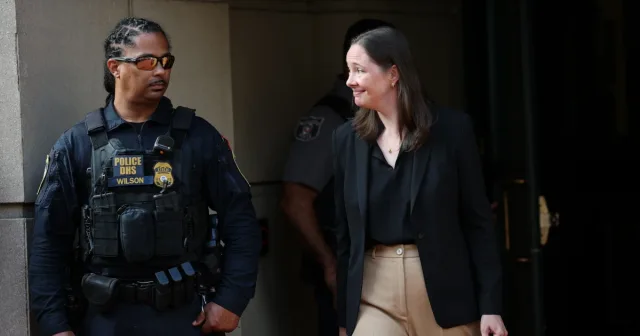
The decision brings immediate relief to Nikki Floris, a former top intelligence analyst in charge at the bureau's Washington Field Office, and Bradley Benavides, the former deputy assistant director at the FBI's Counterintelligence Division. Both had worked on security issues for the 2020 presidential election. Outside the courtroom, Floris cried tears of relief and embraced Benavides, flanked by numerous former senior Justice Department and FBI officials who had come to support them, including former Acting FBI Director Brian Driscoll and Steve Jensen, the former head of the FBI's Washington Field Office.
That courtroom scene follows weeks of aggressive legal maneuvering by the Justice Department, which charged the pair just two weeks ago through a criminal complaint rather than seeking a grand jury indictment. Faruqui delivered a scathing, hour-long oral ruling rebuking federal authorities for what he called a slapdash case.
Without motive, without direct evidence, I have nothing,
Faruqui said, adding, It's not close. It's nothing.
He added, What has transpired here can't be described as anything other than weaponization.
What does this ruling mean for the defendants and the Justice Department?
The dismissal halts the immediate criminal jeopardy for Floris and Benavides, whose legal teams sharply criticized the government's tactics. Attorneys for Benavides called the accusations political theater and praised the judge for weighing the woefully inadequate evidence against the law.
For the Justice Department, the ruling represents an unmistakable setback. Prosecutors under U.S. Attorney for the District of Columbia Jeanine Pirro chose to initiate the case via a criminal complaint, a charging document typically reserved for felony matters posing exigent public safety or national security threats. Last week, prosecutors escalated tensions by filing an unsigned and unsworn superseding complaint overnight to add new charges of obstructing Congress, an unorthodox maneuver Faruqui struck from the record.
That prosecutorial approach drew internal dissent that broke out into public view during the preliminary hearings. FBI Special Agent Bryan Witt, who was assigned to help investigate the matter, testified candidly that the inquiry had not been handled like any other in his career. Witt acknowledged he feared the case would be viewed as political and noted that colleagues in his Kansas City field office were concerned it was a witch hunt.
Why did the judge conclude the case was political?
Faruqui pointed directly to the calendar and the origins of the investigation to justify his conclusion that the prosecution was rushed and politically motivated. Witt testified that the investigation was opened at the behest of FBI Director Kash Patel just one day after President Donald Trump delivered a televised speech in July where he accused intelligence officials of engaging in a coverup to hide China's interference in the 2020 election and ordered the Justice Department to pursue prosecutions. Witt confirmed that Patel and other senior officials closely tracked its progress.
The judge noted that the statements under scrutiny were made during House Judiciary Committee testimony back in 2023, yet the Justice Department waited until October 2026 to file charges, with no statute of limitations expiring in the near future. Why did this have to be charged in October 2026?
Faruqui asked from the bench, noting there was no other event on the calendar except for the midterm elections. I will not bury my head in the sand and pretend that I cannot read a calendar.
Faruqui also read aloud from the Justice Department Manual, reminding the courtroom that guidelines stipulate prosecutors should not take overt investigative steps intended to influence an election outcome.
The original complaint alleged that Floris lied to the committee by stating she had not discussed Hunter Biden while assigned to the bureau's Foreign Influence Task Force, and that Benavides claimed he learned the FBI had Hunter Biden's laptop from Wikipedia in 2023. The Justice Department argued those statements misled lawmakers investigating the bureau's handling of the laptop, which was dropped off at a Delaware computer repair shop in 2019. The defense maintained the charges were baseless.
Can federal prosecutors still bring the case back to court?
The dismissal does not erect an absolute legal barrier against future charges, though overcoming Faruqui's ruling presents a steep hurdle. Legal experts and court filings indicate the Justice Department retains options to pursue the matter further:
- Appealing Magistrate Judge Faruqui's ruling to the chief judge.
- Presenting the allegations to a federal grand jury in Washington to seek a formal indictment.
However, pursuing a grand jury indictment in the nation's capital carries distinct strategic risks for prosecutors. Legal observers noted that grand jurors in Washington have historically shown skepticism toward politically tinged cases against purported Trump enemies, most recently rejecting the attempted indictment of Cassidy Hutchinson.
Furthermore, Carlton Davis, a top aide to U.S. Attorney Jeanine Pirro and a former Republican Hill staffer who worked on the case, acknowledged in a telephone call last week that the original criminal complaint was flawed. Davis was also involved in the failed indictment of six sitting members of Congress over a social media video that President Donald Trump disfavored.
While the immediate criminal complaint is dead, the authority of the Justice Department to appeal or seek a grand jury vote leaves the door technically open for prosecutors to test the evidence before a panel of citizens.