Cyberattack defrosts supermarket fridges across Europe
Supermarkets across several European countries were hit by a cyberattack that disrupted refrigeration systems, causing temperatures to rise and spoiling stock.
- Headline: Cyberattack defrosts supermarket fridges across Europe
- Dispatch Summary: Supermarkets across several European countries were hit by a cyberattack that disrupted refrigeration systems, causing temperatures to rise and spoiling stock.
- Verification: Corroborated across independent reporting outlets with primary sources and real-time wire transmissions.
There has been a cyberattack and all our freezers reached 50C,
Engla Ingwall, sales manager at an ICA franchise store in Stockholm, told Reuters, adding the attack occurred at 2am but was only noticed hours later.
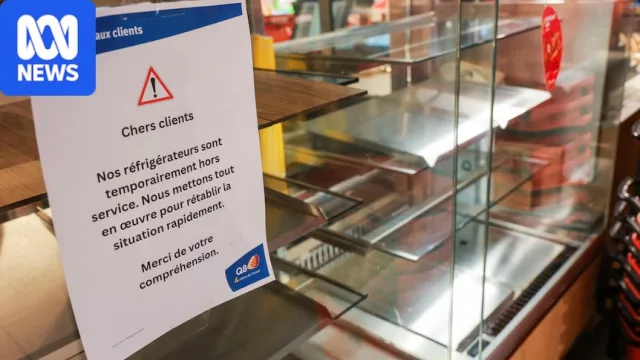
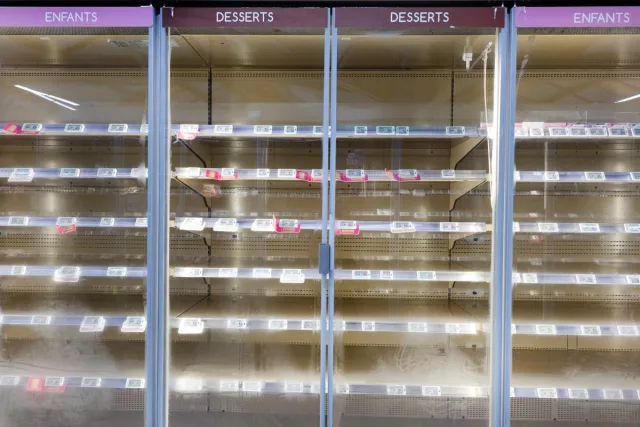
Supermarkets in at least five European countries have been hit by a cyberattack that disrupted refrigeration systems, causing temperatures in some fridges and freezers to rise sharply. The affected countries include Belgium, Estonia, Finland, Luxembourg and Sweden, with several retailers confirming on Monday that their systems had been targeted by hackers. The incident comes about three weeks after a similar cyberattack affected refrigeration systems in hundreds of supermarkets across France, forcing retailers to dispose of spoiled food and raising concerns about food security. No individual or group has claimed responsibility for either attack.
From French Supermarkets to a Continental Sweep
Last month’s attacks in France served as an early warning for the vulnerabilities hidden inside modern commercial kitchens and grocery aisles. French police reported that hackers seized control of cooling equipment at hundreds of stores last month, turning settings up from as low as minus 27 degrees Celsius to above 50 degrees Celsius, disabling alarms, and prolonging defrost cycles. Two stores in Alsace alone recorded combined losses of €270,000.
Those operational risks turned into a multi-country crisis on Monday. Retailers across Belgium, Estonia, Finland, Ireland, Luxembourg, the Netherlands, and Sweden discovered spoiled meat, dairy, and frozen products after automated refrigeration systems were compromised overnight. While the October French attacks were treated as an isolated shock, Monday's events confirmed fears that older remote-management controllers across Europe remain dangerously exposed.
The Human and Financial Toll Across Retailers
The financial losses are mounting into the millions of euros as grocers discard spoiled stock and technicians work around the clock to isolate compromised units. Independent merchants and major multinational chains alike found themselves caught off guard by the remote tampering.
- Roughly 40 Delhaize supermarkets and related outlets in Belgium and Luxembourg were hit, forcing temporary limits on fresh and frozen ranges.
- Sweden's ICA and Coop chains reported temperature spikes across a limited number of branches, with an ICA franchise in Stockholm discovering the breach at 2:00 am.
- Ireland's food wholesaler Musgrave reported 13 SuperValu stores affected by a cyber incident impacting refrigeration.
- Carrefour confirmed that 15 of its more than 700 stores in Belgium were targeted.
- Independent butchers also suffered heavy losses, including Luc De Laet, founder of Belgian butchery chain De Laet & Van Haver, who found fridges in Hove turned up to 18 degrees Celsius, ruining about 15,000 euros ($A24,000) worth of meat.
Retail groups stress that supply chains and distribution centers remain operational, meaning the disruption is largely confined to chilled and frozen aisles rather than warehouse logistics. Yet the sight of empty, warm freezers has rattled store managers.
I only have two words for them: wake up, please, because there's something going on.
Luc De Laet, founder and owner of Belgian butchery chain De Laet & Van Haver, via Goulburn Post
Aging Software and Exposed Operational Networks
Investigators point to outdated digital infrastructure as the primary culprit behind the breaches. Many supermarket cooling systems rely on remote-management controllers that allow maintenance teams to monitor temperatures and diagnose faults from afar, but these same connections provide an open door for cybercriminals.
Stephan Moelans, chief executive of Belgian refrigeration firm Sabcobel, told the Belga news agency that his company had been working to secure installations following the October 12 attack in France, but roughly 10 percent of the systems had yet to be fixed. In Sweden, Coop spokesman Carlos Cancino noted that affected stores were connected to an older 4G mobile network rather than updated 5G systems, leaving them more vulnerable. Component manufacturers and cybersecurity agencies emphasize that much of the targeted hardware consists of older Danfoss models that no longer receive software or security updates.
National Security Agencies Launch Investigations
Government response has moved swiftly as cyber defense centers coordinate across borders. John Billow, head of Sweden's cybersecurity centre, stated on Monday that his agency was working on several grocery store incidents, noting that authorities had previously warned about exposed operational technology devices requiring patches. In Finland, Roni Kokkola, an information security specialist at the National Cyber Security Centre, confirmed that a cyberattack could not be excluded after Kesko group grocery stores detected irregular temperatures.
Meanwhile, political leaders are framing the hacks as a wake-up call for critical infrastructure protection. EU Commissioner for Food and Agriculture Christophe Hansen previously warned that food security requires greater attention at all levels, describing the exploitation of food-related systems as an emerging reality. As technicians continue disconnecting vulnerable units from networks, retailers face an expensive race to audit and upgrade every connected thermostat before the next wave strikes.
This second continental disruption demonstrates that connected commercial hardware is now a primary vector for economic sabotage, leaving Europe's food supply chain vulnerable until foundational software hygiene catches up with remote-management technology.