Trump vows Iran will pay for deaths of 17 US soldiers
Following recent U.S. casualties, President Donald Trump has pledged retribution against Iran as regional tensions intensify and ceasefire efforts stall.

President Donald Trump has escalated his rhetoric against Iran, vowing that the country will "pay many times over" for the deaths of U.S. soldiers, as tensions in the Middle East reached a new peak with renewed military strikes and retaliatory attacks. The latest developments, including a 10th consecutive night of U.S. air strikes on Iran and Iranian attacks on U.S. allies, underscore the deepening conflict that has already claimed 17 American lives since February.
Trump’s latest warning came after the Pentagon confirmed the death of a U.S. service member in Iraq during a "controlled detonation" of a downed Iranian drone, adding to the casualties from an Iranian missile and drone attack on a U.S. base in Jordan on July 17. Two soldiers, Pvt. Isabella Gonzales, 19, and 1st Lt. Tyler James Feehan, 25, were killed in that attack, while a third service member remains missing. Unidentified remains were also recovered from the site, raising concerns about additional fatalities. The U.S. military has now tallied 17 deaths since the conflict began, with roughly 430 troops injured, according to the Pentagon.
The U.S. Central Command confirmed the 10th night of strikes on Iran, targeting military and communications sites to "further diminish" Iranian threats to commercial shipping in the Strait of Hormuz. The attacks, which included strikes on bridges and electrical facilities, marked a significant escalation in the U.S. campaign to pressure Iran into reopening the critical waterway. Iran, however, has retaliated with attacks on U.S. allies, including Kuwait and Bahrain. Jordan’s air defense systems intercepted three Iranian missiles, while Kuwait’s state energy company reported "significant material losses" after an attack. Bahrain’s air navigation systems faced drone strikes, though traffic remained unaffected.
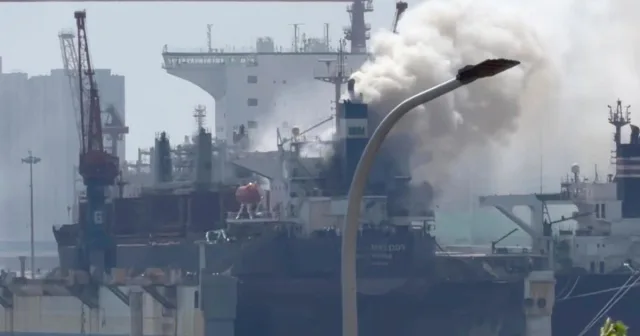
Iran’s Islamic Revolutionary Guard Corps (IRGC) claimed two oil tankers exploded while attempting to navigate the Strait of Hormuz, though U.S. officials have not independently verified the report. The IRGC also warned of "punitive operations" against U.S. interests, vowing to make the strait "unsafe for the transit of petrochemical products." Meanwhile, Iranian President Masoud Pezeshkian declared the country is engaged in a "full-scale war" that extends to its economy, citing the impact of U.S. strikes on infrastructure and trade.
The conflict has spilled into regional and global markets, with Brent crude rising to $90.85 per barrel amid fears of supply disruptions. The Houthi movement in Yemen, backed by Iran, has declared a maritime blockade on Saudi Arabia, threatening global energy security. Saudi Arabia has increased exports through alternative routes, but the International Energy Agency warned that energy security will deteriorate unless the Strait of Hormuz reopens.
U.S. Secretary of State Marco Rubio reiterated Washington’s openness to diplomacy but emphasized that the U.S. would not allow Iran to control the Strait of Hormuz. However, Iran’s foreign minister, Abbas Araghchi, insisted the country would not negotiate while under military attack. Mediation efforts by Qatar and Pakistan have stalled, with Iran’s foreign ministry spokesman noting that "ideas from some mediators have been conveyed" but providing no details.
The U.S. military has also expanded its operations, with additional fighter jets and refueling tankers deployed to the Middle East. Retired National Counterterrorism Center head Joe Kent warned that the "back and forth" risks a "mass casualty attack," urging immediate withdrawal of U.S. forces. Israeli Prime Minister Benjamin Netanyahu has signaled readiness to respond to any Iranian threat to Israel, stating, "We'll respond with a might surpassing that of the last campaign."
As the conflict intensifies, the U.S. Senate is set to hear from Defense Secretary Pete Hegseth and Chairman of the Joint Chiefs of Staff Gen. Daniel Caine about the military’s needs and the ongoing war. The administration is seeking billions in additional funding, with Pentagon officials reporting that nearly 100 U.S. service members have been injured in the last two weeks. The hearing comes amid growing concerns over the sustainability of the military’s operations and the humanitarian toll of the conflict.
The situation highlights a broader shift in the conflict, from periodic clashes to a protracted regional war with global implications. As Trump’s administration faces mounting pressure to balance military action with diplomatic efforts, the fate of the 17 fallen soldiers and the future of U.S.-Iran relations remain uncertain.
Dateline Wire is dedicated to independent, evidence-backed reporting. This briefing was synthesized from primary source reporting, corroborated across independent newsrooms, and verified against our Editorial Standards.