Riyadh Airport Attack Kills 12 and Injures Over 300, Saudi Authorities Say
A devastating missile strike on King Khalid International Airport in Riyadh has killed 12 people and injured over 300, escalating the regional conflict and prompting a U.S. review of potential military involvement.
- Headline: Riyadh Airport Attack Kills 12 and Injures Over 300, Saudi Authorities Say
- Dispatch Summary: A devastating missile strike on King Khalid International Airport in Riyadh has killed 12 people and injured over 300, escalating the regional conflict and prompting a U.S. review of potential military involvement.
- Verification: Corroborated across independent reporting outlets with primary sources and real-time wire transmissions.
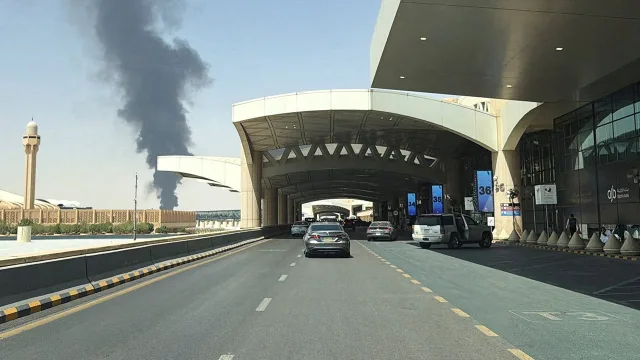
A missile strike on King Khalid International Airport in Riyadh on Saturday killed 12 people and left 309 others injured, marking the deadliest single incident in any Gulf Arab country since the start of the Iran war. Saudi Arabia's General Authority of Civil Aviation (GACA) released the updated figures early Sunday, confirming that the victims included four Saudi citizens, two Bangladeshi nationals, and one person each from the United States, Egypt, Jordan, Syria, Sudan, and the Palestinian territories. Hospitals across the capital were flooded with wounded patients brought by ambulance and helicopter, with several listed in critical condition.
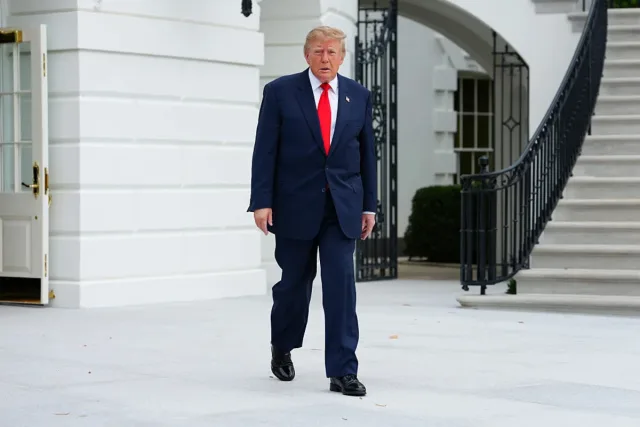
That latest escalation leaves Washington weighing a direct military response. Speaking to reporters outside the White House, U.S. President Donald Trump addressed whether Washington planned to join Saudi strikes on the Houthis. We may. We're going to look at it. We just found out about the recent attack, so we'll make a decision. We move very quickly,
he said.
Terminal 3 and 4 Hit Without Warning
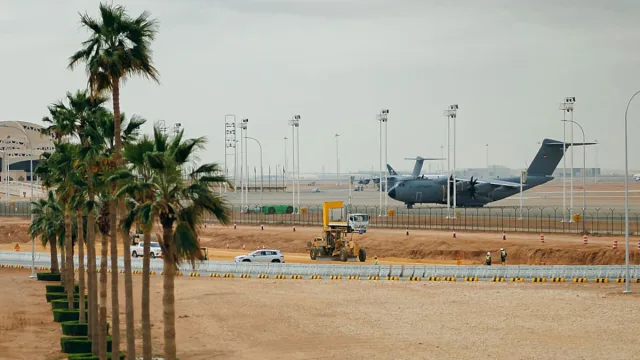
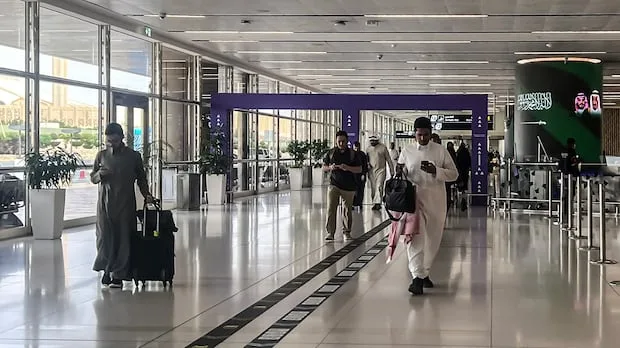
The Saturday afternoon assault struck an airport complex housing terminals 3 and 4 for domestic flights, according to regional officials. An unnamed witness told Agence France-Presse that they were waiting to board a flight when they heard an explosion, while another witness said, I was on gate 403...I saw 401 hit; I saw injured in front of my eyes. Everyone was running.
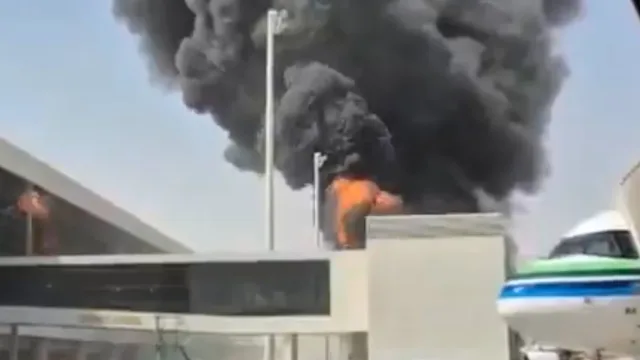
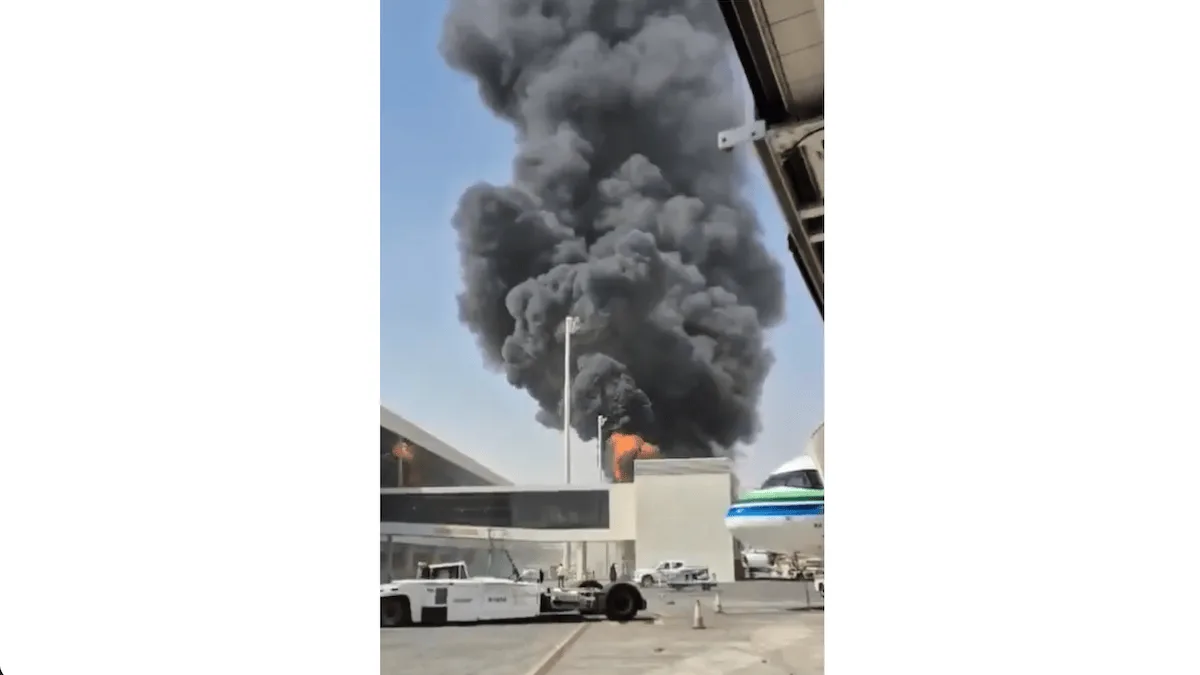
The strike followed a violent week at the aviation hub. Two regional officials stated that Houthi attacks on the airport on Thursday damaged three planes, and the Saudi national carrier confirmed one of its grounded aircraft was damaged with no passengers on board. A still from a verified video showed thick black smoke and flames rising from a fire at the airport after Friday's attack.
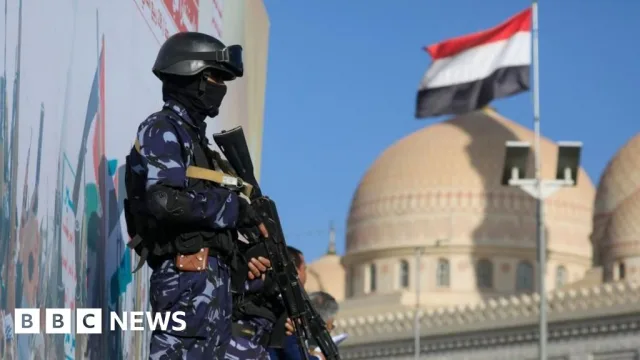
The conflict has accelerated sharply following a major military offensive launched by a Saudi-led coalition against the Houthi movement a week prior. Houthi forces recently seized strategically important Red Sea coastal areas, including the port of Mokha on the Bab al-Mandab Strait. That corridor gives the rebels better surveillance over shipping lanes, prompting the Saudi-backed Yemeni government to launch a large-scale offensive to reverse those territorial gains. Although the Houthis maintain they are targeting only Saudi shipping in retaliation for an imposed blockade, the widening campaign has pushed the war deep into the Saudi capital.
The following table tracks the recent timeline of attacks on Saudi airports:
| Date / Event | Casualties | Target Location |
|---|---|---|
| Oct. 6-7, 2026 | 3 killed, 36 injured | Abha and King Khalid airports |
| Thursday, Oct. 9, 2026 | 3 killed (including a pilot), 3 planes damaged | King Khalid International Airport |
| Saturday, Oct. 11, 2026 | 12 killed, 309 injured | King Khalid International Airport (Terminals 3-4) |
Aviation Shutdowns and Global Travel Warnings
Saudi civil aviation authorities suspended all operations at King Khalid International Airport through midnight, issuing an official notice to aviators while security forces blocked all entrances and dimmed lights around the complex. Flightradar24 showed arriving traffic diverted elsewhere, and AirNav Radar tracked 266 canceled flights and 219 delayed flights across the disruption. Carriers including Air India, FlyDubai, Lufthansa Group, Kuwait Airways, Etihad Airways, Qatar Airways, and Pakistan International Airlines suspended flights to and from Riyadh and other Saudi airports.
The European Union Aviation Safety Agency expanded its guidance on Saudi airspace, warning of the Houthis' demonstrated ability to strike targets deep inside the kingdom and highlighting an increased risk of misidentification of civil aircraft due to ongoing missile and drone intercepts. The governments of the United States, Britain, Germany, Australia, and Canada issued urgent advisories urging their citizens to avoid the airport entirely. Tom Berendsen, Minister of Foreign Affairs of the Kingdom of the Netherlands, posted on X that NL condemns the Houthi attacks on the Kingdom of Saudi Arabia, including multiple attacks on AirPorts which have caused casualties,
while the Ministry of Foreign Affairs and Expatriates of the State of Palestine also issued a strong condemnation.
Markets Shaken and Diplomatic Scrambling
Later on Saturday, the Saudi-led coalition reported that a projectile fell near King Fahd International Airport in Dammam and a Houthi-launched ballistic missile was intercepted in Al-Kharj governorate, southeast of Riyadh. Hours after the strike, the Saudi energy ministry continued promoting a major international energy conference scheduled to begin in Riyadh on Sunday, attempting to project economic normalcy. Meanwhile, Saudi Arabia's foreign minister and his Omani counterpart held a phone call to discuss supporting diplomatic solutions to de-escalate tensions.
For Washington, the incident forces an immediate reassessment of military commitments. The United States has provided intelligence sharing, target identification, and planning assistance for the recent Saudi-led offensive. However, with Saudi Arabia reportedly running low on missile interceptors and having asked France, Britain, Pakistan, and Egypt for air defense support last month, President Trump's contemplation of direct U.S. strikes against the Houthis opens the door to a much deeper American military entanglement.
Adding to domestic pressure inside the kingdom, Saudi authorities warned the public that filming, publishing or sharing information related to countering missiles and drones and their impact sites exposes you to legal liability,
reflecting intense official sensitivity over the vulnerability of capital infrastructure as regional embassies advise stranded travelers to contact airlines directly before making transit plans.
Published October 11, 2026.
Updated 2 times since publication; last update 11 October 2026, 03:12.