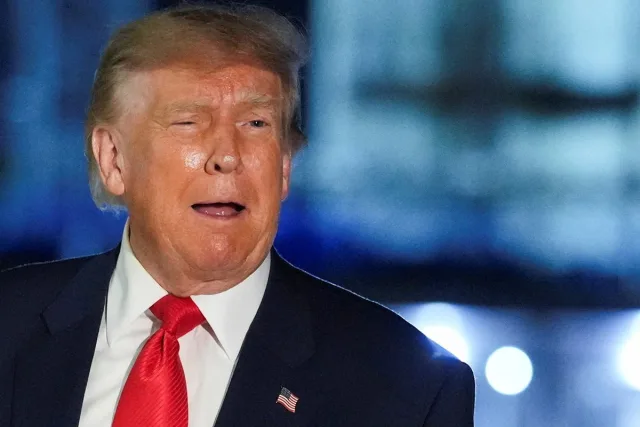
Trump says US may join Saudi strikes on Houthis after Riyadh airport att…
Following missile strikes on Saudi civilian airports, the US is reconsidering its military involvement in the conflict with Houthi rebels. Major airlines have suspended operations at Riyadh's King Khalid International Airport as officials assess the damage.
- Headline: Trump says US may join Saudi strikes on Houthis after Riyadh airport att…
- Dispatch Summary: Following missile strikes on Saudi civilian airports, the US is reconsidering its military involvement in the conflict with Houthi rebels. Major airlines have suspended operations at Riyadh's King Khalid International Airport as officials assess the damage.
- Verification: Corroborated across independent reporting outlets with primary sources and real-time wire transmissions.
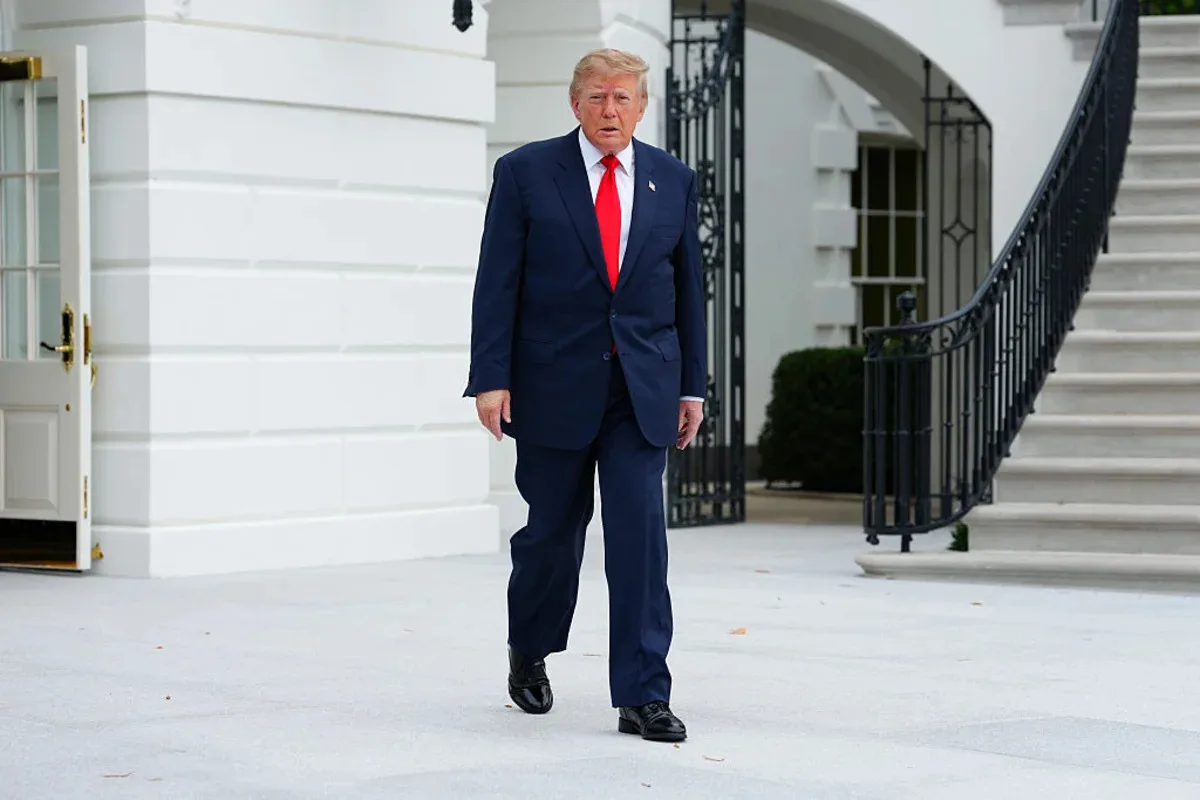
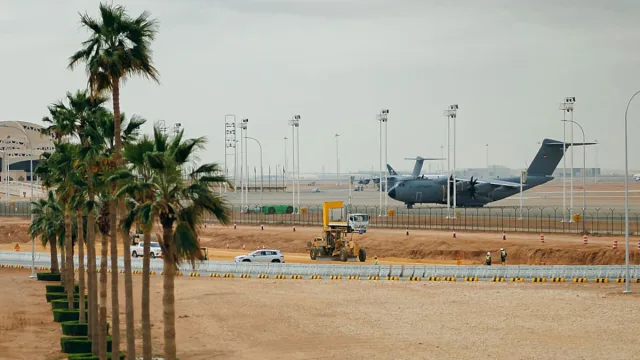
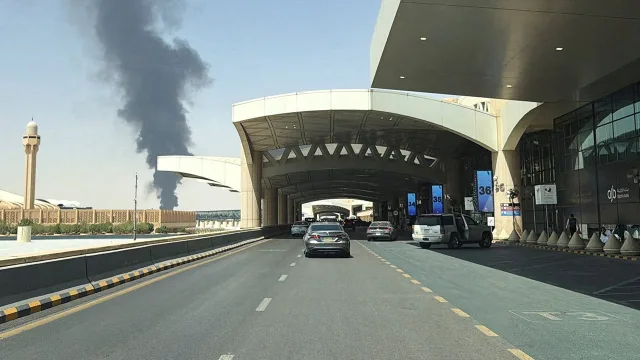
President Donald Trump stated on Saturday that the United States may join Saudi Arabia in military strikes against the Iran-backed Houthi militia in Yemen. The announcement follows a series of aerial assaults that culminated on Saturday in a fresh missile strike on King Khalid International Airport (KKIA) in Riyadh, the second-busiest aviation hub in the kingdom.
The latest attack struck the complex housing Terminals 3 and 4, sending ambulances rushing to the scene. While the Houthis claimed responsibility for multiple attacks earlier in the week, they did not immediately claim Saturday's strike. The violence follows a week of escalation that began after Yemen's Saudi-backed government launched a major offensive against the militia group on October 4.
Those earlier strikes exacted a human toll. A missile hitting Abha International Airport in the south killed two women, one Algerian and one Moroccan, while an attack on KKIA left one Sudanese man dead. On Thursday, strikes on the Riyadh hub killed three Saudi citizens, including Saudia captain Hamoud Ali Alkalthami, and damaged a parked aircraft carrying no passengers. Altogether, victims over the past week have included nationals from Algeria, Bangladesh, Egypt, Morocco, Pakistan, the Philippines, Sudan, and Saudi Arabia.
Maj. Gen. Turki al-Malki, spokesperson for the Saudi-led coalition, declared on Friday that the attacks would not go unpunished. That sentiment was echoed internationally, with the Japanese embassy strongly condemning the assaults.
The British Foreign Office, alongside diplomatic missions from the United States, Canada, Germany, and Spain, issued security alerts instructing citizens to avoid the airport.Attacks on civilians and civilian facilities, in any form, cannot be tolerated.
Japanese Embassy via news.webindia123.com
Operations Suspended as Airlines Ground Flights
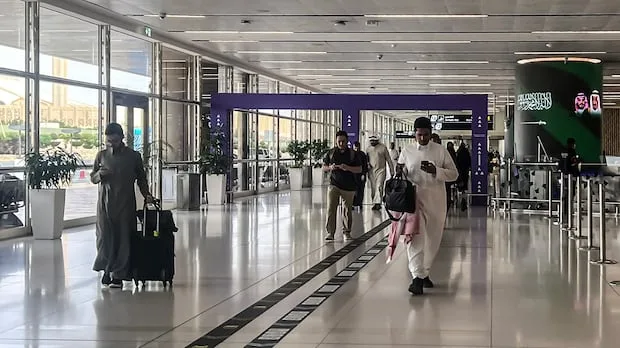
Following Saturday's attack, the General Authority of Civil Aviation announced the temporary suspension of all operations at KKIA while authorities assess structural damage and verify safety. FlightAware data showed 400 flight cancellations into and out of the capital by 11 p.m. local time. Major carriers across the region immediately severed connections to the Saudi capital. Etihad Airways cancelled eight flights between Abu Dhabi and Riyadh across October 9 and 10. Flydubai suspended services to Riyadh and Yanbu through October 10, and to Abha through October 11. Qatar Airways scrubbed additional flights on October 11, while Kuwait Airways cancelled flights KU775 and KU776 on Saturday. Akasa Air extended the suspension of all its Riyadh services through October 13.
The disruption coincides with upcoming major energy and investment conferences scheduled in Riyadh. Organizers insisted on Saturday that those events would proceed as planned. Brigadier General Yahya Saree, the Houthi military spokesperson, reiterated warnings on Thursday for international airlines and passengers to avoid Saudi airspace after Riyadh declared it an open military operations zone on Monday. Saree also instructed workers to avoid Saudi oil facilities, designating them primary targets.
Geopolitical Pressures and Washington's Calculus
The current military spike stems from months of deteriorating maritime and aviation security. In July, the Houthis accused Saudi forces of bombing Sanaa International Airport, an action the Saudi-backed Yemeni government acknowledged as an effort to prevent an Iranian plane from landing. The Houthis responded by imposing a naval blockade on Saudi Arabia and capturing the port city of Mokha and Perim Island last month. Although Saudi-backed forces claim to have retaken both locations, control remains disputed.
Saudi Crown Prince Mohammed bin Salman personally urged Trump in September to act against the militia as they secured vital Red Sea chokepoints. Washington initially demurred, explaining last month that it did not have plans to get involved in the conflict. That posture shifted on Saturday after the sustained attacks on civilian airports. Any military entanglement in Yemen carries domestic political risks for the White House. An AP-NORC poll published on October 1 indicated that 69 percent of Americans believe the ongoing war with Iran is not worth fighting. While Trump pledged on Thursday that the United States would not attack Iran prior to the November 3 midterms, that promise does not address possible strikes on the Houthis in Yemen.
With 400 daily flights grounded at the capital's primary aviation gateway and regional energy conferences pressing forward, the Saudi leadership faces mounting pressure to deliver on its promise of retaliation. If Washington acts on Trump's warning and joins the coalition's strikes, the conflict risks expanding from a localized proxy war into a broader regional conflagration just weeks before crucial US elections.