Japan protests Putin's first visit to disputed Kuril islands
Russian President Vladimir Putin's unprecedented visit to the disputed Kuril Islands has sparked strong protests from Tokyo, deepening bilateral tensions.
- Headline: Japan protests Putin's first visit to disputed Kuril islands
- Dispatch Summary: Russian President Vladimir Putin's unprecedented visit to the disputed Kuril Islands has sparked strong protests from Tokyo, deepening bilateral tensions.
- Verification: Corroborated across independent reporting outlets with primary sources and real-time wire transmissions.
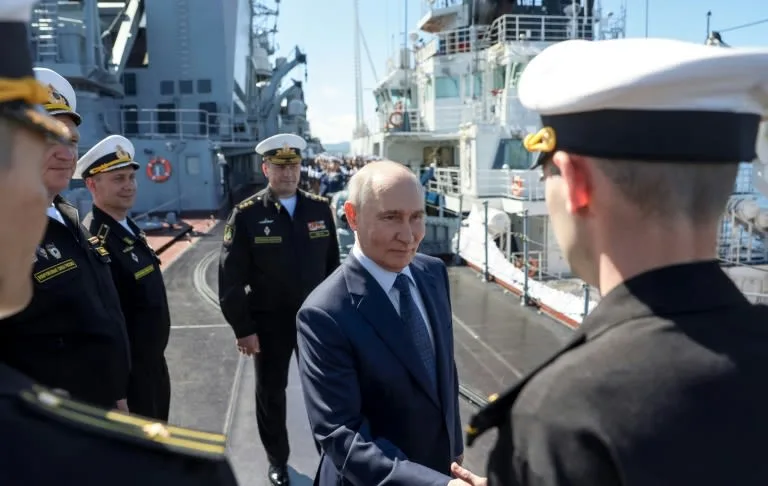
Russian President Vladimir Putin’s visit to the disputed Kuril Islands, known in Japan as the Northern Territories, has drawn fresh condemnation from Tokyo, which reiterated its stance that the islands are “inherently Japanese territory.” The trip, which occurred on August 13, 2026, marked the first time a Russian president has set foot on the four southernmost islands of the archipelago, which Russia administers but Japan claims. Japanese Prime Minister Sanae Takaichi called the move “absolutely unacceptable,” stating it “wounds the feelings of the Japanese people” and is “incompatible with Japan’s consistent position on the Northern Territories.” Foreign Minister Toshimitsu Motegi echoed the criticism, emphasizing the islands’ historical and legal ties to Japan.
During the visit, Putin toured the Southern Kuril Island of Iturup, known as Etorofu in Japan, where he visited a fish-processing plant and was served caviar, according to Russian state media. The trip followed a stop in Sakhalin, where Putin addressed security concerns for Russia’s eastern borders amid naval drills conducted by Russia’s navy. The Kremlin released a video of the visit, framing it as a demonstration of the islands’ development and strategic importance. However, Japan viewed the actions as a provocative assertion of control over the disputed territory, deepening diplomatic tensions between the two nations.
The Kuril Islands, a volcanic chain stretching from Russia’s Kamchatka Peninsula to Japan’s Hokkaido, have been a flashpoint since the Soviet Union seized them in 1945. The dispute has stalled a formal peace treaty between the two nations, leaving relations strained for generations. Putin’s visit coincided with a joint patrol by Chinese and Russian naval warships through a strait in the Kuril Islands, highlighting the region’s growing geopolitical significance. Russia has fortified the archipelago with advanced defense systems, including Bastion coastal missiles and SU-35 fighter jets, which experts say bolster its influence over key sea lanes.
Japanese officials emphasized the islands’ strategic significance, noting their proximity to Hokkaido and their role in regional maritime routes. The country’s latest defense white paper, released in August 2026, reiterated concerns about threats from Russia, China, and North Korea, citing their growing military coordination. Japan’s condemnation of Putin’s visit was echoed by its diplomatic allies, with the United States and other G7 nations likely to express solidarity. The timing of the trip, amid heightened regional tensions, underscores the broader contest for influence in the Indo-Pacific.
Russia’s military presence on the islands has intensified over the past decade, with the island of Iturup serving as a primary military air base in the region. The area has also become a theater for geopolitical maneuvering, with Russia conducting joint naval exercises with China and North Korea, prompting frequent Japanese military scrambles. The dispute has deep historical roots, with the Soviet Union deporting approximately 17,000 Japanese residents from the islands in 1945—a move Japan has long criticized as a violation of human rights.
Analysts suggest Putin’s visit is both a symbolic gesture and a strategic move to signal Russia’s resolve in the face of Western pressure. Yee Kuang Heng, a professor at the University of Tokyo, noted that the trip “may be a reminder of the cards he holds” and a response to Japan’s continued sanctions. The visit also highlights the broader deterioration of Russo-Japanese ties, exacerbated by Russia’s invasion of Ukraine in 2022. Tokyo has joined Western allies in imposing sanctions on Moscow and providing non-lethal aid to Ukraine, a move Russia has condemned.
The dispute over the Kuril Islands has seen intermittent diplomatic efforts, including a 1956 proposal by Soviet leader Nikita Khrushchev to return two of the islands in exchange for a peace treaty. However, no resolution has been reached, and the last Russian president to visit the territory was Dmitry Medvedev in 2010, according to the new source. Medvedev also visited the islands multiple times during his tenure as prime minister under Putin’s presidency, underscoring the ongoing significance of the region to Russian leadership.
For Japan, the visit represents a setback in its efforts to normalize relations with Russia. The country has sought to balance its security concerns with economic ties, but Putin’s actions have hardened its stance. The Kuril Islands remain a volatile symbol of unresolved history, with each move by Moscow or Tokyo carrying the risk of further escalation. As the dispute continues, the geopolitical stakes in the region grow higher, with military and diplomatic tensions shaping the future of Russo-Japanese relations.
How significant is this wire dispatch?
Cast your anonymous vote to register reader consensus across journalism and intelligence sectors.
Dateline Wire is dedicated to independent, evidence-backed reporting. This briefing was synthesized from primary source reporting, corroborated across independent newsrooms, and verified against our Editorial Standards.