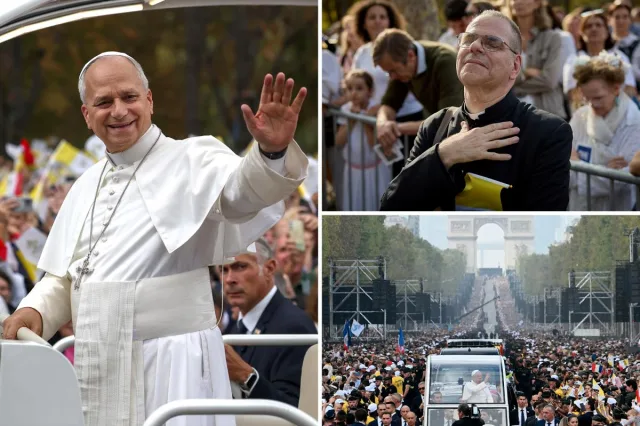
Pope Leo returns to the Vatican 4 days after lung cancer surgery
Pope Leo XIV returned to the Vatican four days after undergoing surgery to remove a cancerous section of his right lung, with plans for a Sunday Angelus address.
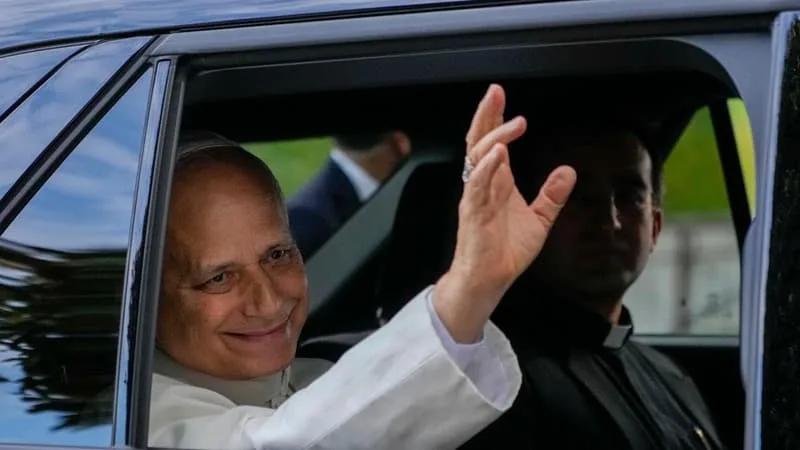
Pope Leo XIV returns to the Vatican 4 days after lung cancer surgery
Pope Leo XIV was discharged from Rome's Gemelli Hospital at about 3:30 p.m. Saturday afternoon, walking out to wave to dozens of well-wishers and journalists waiting outside after doctors deemed him fit to return to the Vatican just four days after lung cancer surgery.
The 71-year-old pontiff crossed the hospital lobby on foot, smiling, shaking hands, and pausing before his departure to speak with a 13-year-old Ukrainian girl named Varvara. With the help of a Ukrainian priest as translator, the girl explained that the pope's embrace of her before her own cancer surgery in December had given her the strength to overcome the illness,
presenting him with a large printed photo of their hug in St. Peter's Square and a handmade felt toy she made in his likeness. The girl stated that she had met the pope last year in Rome, and he blessed me for a successful treatment.
She added, With his support, I’ve now overcome my illness, and I want to give him my positive energy so that he, too, can overcome his illness as quickly as possible.
Before leaving, the pope thanked Professor Stefano Margaritora, who performed the surgery, together with the medical and nursing team, and greeted healthcare staff, Professor Elena Beccalli, Rector of the Catholic University of the Sacred Heart, and the leadership of the Agostino Gemelli University Hospital.
Medical condition and discharge details
His discharge followed a medical review on Saturday morning led by his personal physician, Dr. Luigi Carbone, and chief of thoracic surgery Dr. Stefano Margaritora. In a joint statement released by the Vatican that morning, Dr. Luigi Carbone and Dr. Stefano Margaritora wrote, Based on the blood tests and chest X-ray performed this morning, and after evaluating his clinical condition, the Holy Father has been deemed fit for discharge.
Surgeon Margaritora later told Vatican News that Leo was in absolutely satisfactory clinical condition. Margaritora stated that Leo's tumour had been discovered by chance during a routine abdominal X-ray that captured the little spot at the base of his right lung, and saluted the pontiff's commitment, saying he really put his heart and soul into it, like the most motivated patients. Margaritora added, His determination to achieve a very quick and very effective recovery from every point of view was really commendable.
The morning's announcement of the pope's imminent discharge came earlier than previously expected, as the Holy See Press Office had originally indicated that the pope would remain in the hospital for about a week following his Oct. 13 admission to Gemelli on the day of his surgery. Tuesday's surgery involved the removal of the lower lobe of the right lung using a minimally invasive video-assisted technique during a 90-minute operation. The procedure confirmed a diagnosis of pulmonary adenocarcinoma, the most common type of lung cancer. Surgeons reported the operation was completed successfully without immediate complications.
Despite the positive trajectory, critical prognostic details remain undisclosed. Doctors have not yet revealed the precise size of the tumor, nor have they stated whether the cancer spread to nearby lymph nodes. Furthermore, according to Vatican News, further post-operation tests on the tissue removed were planned in the days following the surgery, and the status of results of any additional laboratory analysis of tissue removed during surgery have not been made public.
Throughout his recovery inside the hospital, Leo maintained a degree of normal routine. The Vatican press office reported that the pontiff celebrated noon Mass at the hospital on Saturday, as he did the previous day, in a room set aside for that purpose on the 10th floor. Vatican spokesman Matteo Bruni reported earlier that the pontiff had celebrated Mass alone in green vestments, delivered a homily thanking staff for the work they do every day taking care of the sick in their fragility, and in a particular way what they had done for him, and carried on normal daily activities completely on his own.
Who is affected and what changes now for the Vatican?
The swift return to the Vatican alters the immediate rhythm of the Holy See, which had canceled public audiences through October 20 and anticipated a longer convalescence. Several key groups and individuals navigate the direct consequences of the pope's discharge:
- Pope Leo XIV: Faces a restricted schedule while handling basic administrative duties and preparing for his first post-surgery public appearance.
- Hospital staff and patients at Gemelli Polyclinic: Received personal thanks from the pope, who greeted patients alongside Dr. Stefano Margaritora and distributed Communion to medical personnel during a makeshift chapel Mass on the 10th floor.
- Vatican officials and international diplomats: Managing a resurgent workload that during hospitalization included a phone call on Friday with Russian President Vladimir Putin regarding a ceasefire and humanitarian supplies for Oleshky, alongside meetings with Cardinal Luis Antonio Tagle and Cardinal Baldassare Reina.
- The global Catholic faithful: Regaining access to papal addresses starting Sunday, exactly one week after Leo made the unusual disclosure in St. Peter's Square that doctors had found a lung nodule.
What is on the papal schedule and can he fly to South America?
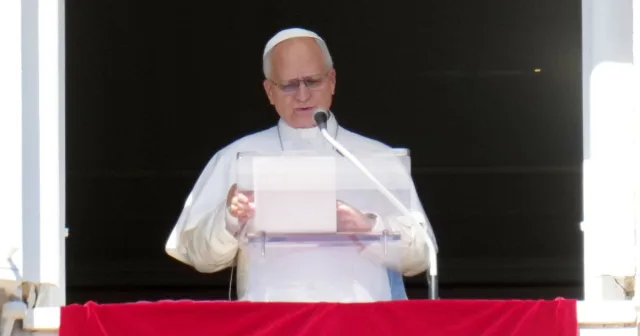
The immediate test of the pope's recovery arrives Sunday at noon, when the Vatican has confirmed Pope Leo will lead the Sunday noon Angelus prayer on Oct. 18 from the window of the Apostolic Palace before pilgrims gathered in St. Peter's Square. That appearance marks his first public address since the operation. In past years, former popes John Paul II and Francis, similarly hospitalized at the Gemelli, have delivered the prayer from the window of their hospital rooms, but Saturday's Vatican announcement confirmed Leo will recite the Angelus from the Apostolic Palace.
Looking further ahead, a planned papal voyage to South America is scheduled for November 6–13 to visit Uruguay, Argentina, and Peru, where the pope lived on and off for two decades and holds citizenship. On Friday, the Holy See published the names of journalists accredited to travel on the papal plane, signaling confidence in the journey. Vatican watchers say that Leo is anxious to make the long journey, but will likely follow the recommendations of his doctors. Cardinal Pietro Parolin, the Vatican's secretary of state, told reporters on Friday that Leo may need to readjust his trip schedule, at least with regard to South America, depending on his health.
However, Margaritora told Vatican News on Oct. 17 that he saw no clinical reasons
for why Leo’s planned trip shouldn’t take place. Margaritora stated, Treating him as I would any other patient, I think it takes a couple of weeks to make a truly complete physical recovery after this kind of operation. Since almost a week has already passed, I believe the Pope could be fully recovered in another ten days or so.
Oncology surgeons note that patients are generally cleared to fly after three weeks if recovery permits. With the trip scheduled to begin approximately three and a half weeks after his surgery, Leo's upcoming weeks of recuperation at the Vatican will determine whether his physical stamina matches the intense demands of the journey.
Catholics and travelers following the papal schedule can monitor official updates through the Holy See Press Office for changes to upcoming public liturgies and international travel confirmations. Pilgrims planning to attend Sunday events in St. Peter's Square should verify announcements regarding the noon Angelus address from the Apostolic Palace window.
How will the papacy adapt to an unprecedented test?
Elected only in May last year as the first US-born leader of the Roman Catholic church, Pope Leo XIV stands as a relatively young and energetic pontiff whose sudden cancer diagnosis sent immediate shockwaves through the church, rattling the Vatican and the world's 1.4 billion Catholics. The speed of his discharge points to a robust initial recovery driven by personal determination, yet the unresolved pathology reports on genetic makeup and lymph node involvement leave the long-term trajectory of his health unwritten. Whether the rigorous demands of a global papacy can resume without interruption depends entirely on test results that doctors have yet to release and the physical demands of his upcoming November international itinerary.
Updated 3 times since publication; last update 11 November 2026, 22:33.