French prime minister calls for ‘local and partial’ curfews after riots
Following violent cost-of-living riots that led to 2,400 arrests and millions in damages, French Prime Minister Sébastien Lecornu has called for local curfews.
- Headline: French prime minister calls for ‘local and partial’ curfews after riots
- Dispatch Summary: Following violent cost-of-living riots that led to 2,400 arrests and millions in damages, French Prime Minister Sébastien Lecornu has called for local curfews.
- Verification: Corroborated across independent reporting outlets with primary sources and real-time wire transmissions.
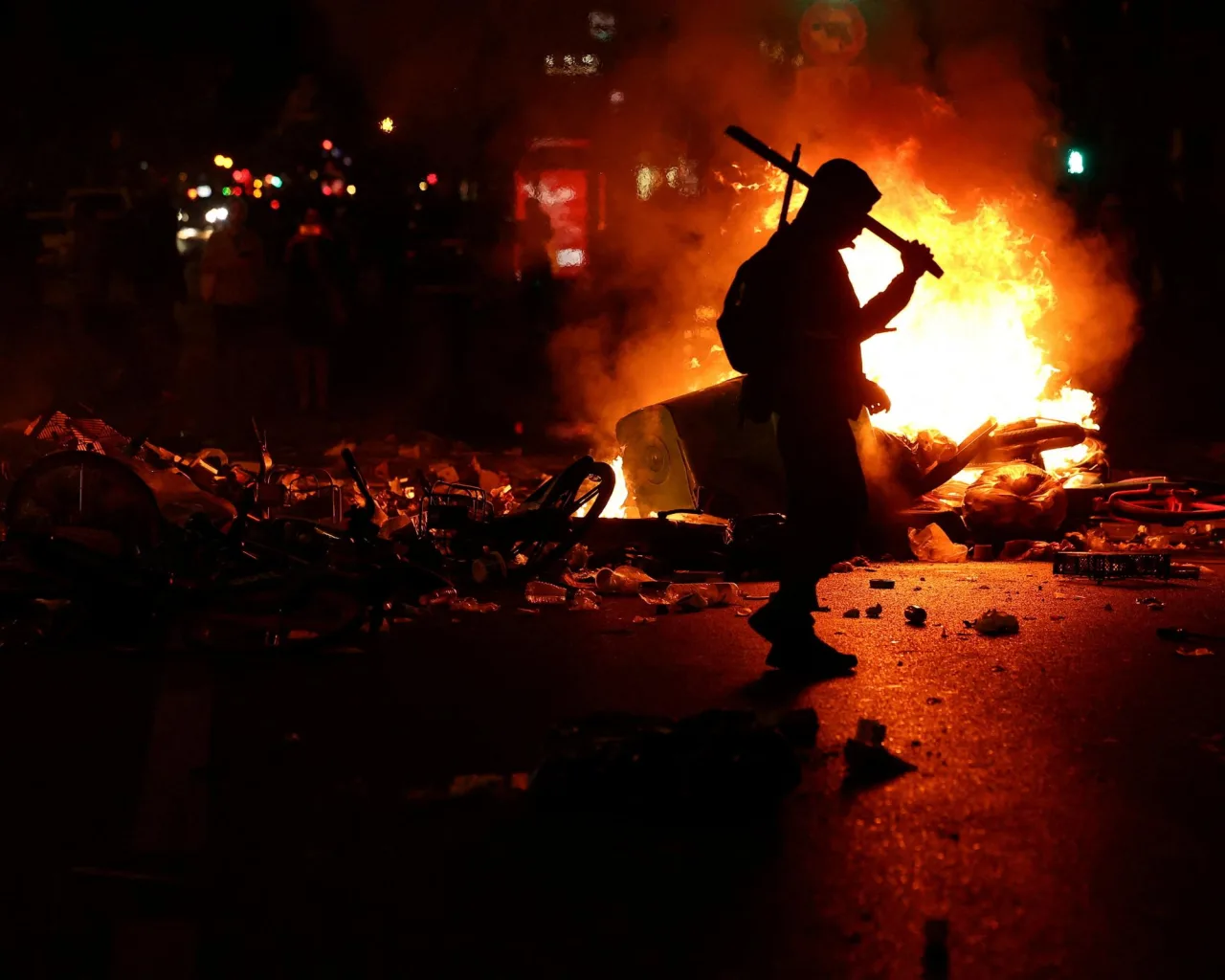
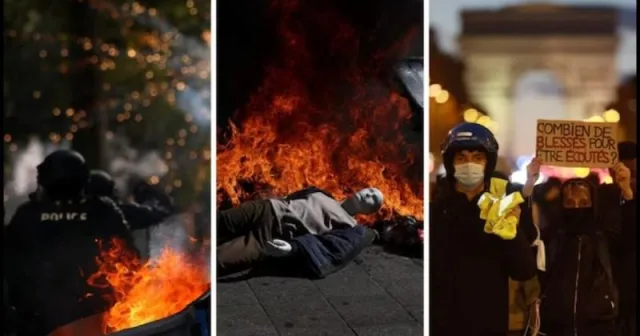
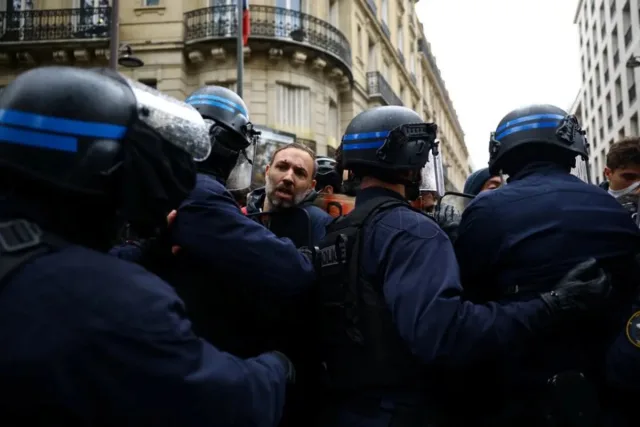
France is grappling with the aftermath of some of the worst street violence in recent years after cost-of-living demonstrations morphed into widespread riots and looting over the weekend. At least 2,400 people were arrested across the country, according to authorities, while police forces deployed 60,000 personnel to manage crowds that swelled past 500,000 demonstrators. Prime Minister Sébastien Lecornu responded on Monday by asking regional authorities to impose local and partial
curfews in affected cities. Lecornu stated after an emergency cabinet meeting that he was fully resolved to restore public order,
adding that declaring a state of emergency remains an option if needed.
The unrest follows weeks of protests sparked by high school students demanding better conditions in their schools, which subsequently widened into broader anger over inflation. Diesel prices have jumped nearly 40 percent and petrol by 25 percent since March, while food prices have risen by 25 percent since 2021. Saturday's nationwide marches — organized by labour unions, student groups, and activists seeking to revive the yellow vest movement — drew between 550,000 people according to authorities and 800,000 according to organisers. Peaceful demonstrations were hijacked by masked, highly mobile groups who attacked police, torched cars, bikes, and public buildings, and ransacked shops.
Who is bearing the brunt of the chaos and political fallout?
The human and material toll of the weekend has left local leaders, business owners, and politicians divided over who is to blame and how to respond. Interior Minister Laurent Nuñez conceded on Monday that police lost control
in several places, citing a lack of anticipation
in intelligence and preparations. Nuñez tendered his resignation to President Emmanuel Macron, admitting, I submitted my resignation because I am responsible for everything that is happening.
Macron refused the resignation, instructing Nuñez to implement new operational methods
for security forces on the ground and ensure full transparency regarding intelligence failures. Justice Minister Gérald Darmanin noted that nearly 2,400 people were arrested, 70% of them adults, with about 80% currently facing prosecution.
Business owners have suffered severe losses, with chamber of commerce president Alain Di Crescenzo estimating damage running into hundreds of millions of euros
across an expected 3,000 affected shops. In Paris, Ouri Zagoury, owner of a video game shop near Place de la République, watched surveillance cameras show looters forcing their way in. Even though I called the police, they said not to intervene, that they would come, but they never did, which is another problem,
Zagoury said. Paris Mayor Emmanuel Grégoire placed the blame squarely on the state, stating, Maintaining public order is the responsibility of the state. It is the state that was at fault this weekend.
Meanwhile, Marseille Mayor Benoît Payan described the situation as almost insurrectional,
arguing that the government’s response amounted to petty political manoeuvring.
How are politicians framing the riots ahead of the presidential election?
With a pivotal presidential election looming in six months where centrist incumbent Emmanuel Macron cannot run again, the violence has triggered intense political maneuvering. Prime Minister Lecornu and other government ministers pointed the finger at ultra-left militants
and radical groups for orchestrating deep unrest. Lecornu warned reporters that there is a whole network that could be mobilised to even call into question the timetable for the presidential election and the holding of the presidential election itself.
Far-right leader and presidential hopeful Marine Le Pen condemned the chaos on X, writing, Looting, ransacking, destroying and attacking law enforcement: Rioters have again spoiled the October 17 demonstrations for the protection of purchasing power.
Her political ally, National Rally president Jordan Bardella, asserted that the government has failed, the head of state has failed in his essential duty of protecting the French people.
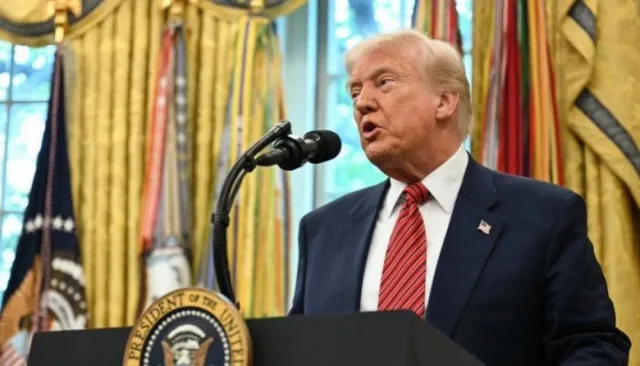
Unbowed candidate Mélenchon demands PM provides evidence of far left's intention to challenge the elections. Internationally, US President Donald Trump posted France is burning!
on Truth Social, apparently linking the unrest to the immigration of people from an entirely different world
, though French authorities have explicitly rejected any link between immigrants and the riots.
What practical support is available for affected businesses and travelers?
The immediate economic fallout has prompted local and national authorities to roll out emergency support measures for businesses. Paris mayor Emmanuel Gregoire announced the creation of an emergency unit to support businesses assess the damage. For travelers and residents, restrictions remain dynamic; Marseille authorities implemented an immediate ban on public gatherings and demonstrations from noon to 8:00 pm on Monday, and international governments are recalibrating advice. Germany updated its travel guidance to warn that further outbreaks of violence cannot be ruled out. If you are a resident or traveler in major French urban centers, you should monitor local prefectural decrees closely for curfew announcements, avoid active protest zones and squares such as Place de la République, and check museum and transit availability before commuting.
What happens next as demonstrations continue?
Public defiance showed no signs of abating on Monday as student protesters blocked the entrances to the Louvre Museum in Paris to denounce police repression, displaying a leaflet reading We are proud to announce that we are blocking the world’s largest museum.
Police forces also faced scrutiny over crowd-control tactics after a 17-year-old girl lost an eye in eastern France and another protester lost a hand in Saint-Etienne due to police munitions. Parliamentary inquiries have been launched in the senate and the national assembly, respectively, to get answers on what happened, according to Senator Hélène Conway-Mouret. As regional prefects finalize the specific geographic boundaries and timings for the newly demanded partial curfews, attention turns toward the coming weekend. Organizers of the yellow-vest revival movement have already published a map for a second round of nationwide demonstrations dubbed Act II,
scheduled for Saturday, October 24, 2026.