Sony brings AI upscaling to the standard PS5 console with QSSR
Sony has launched Quick Spectral Super Resolution (QSSR), bringing streamlined AI upscaling to the base PlayStation 5 to improve image stability and detail.
- Headline: Sony brings AI upscaling to the standard PS5 console with QSSR
- Dispatch Summary: Sony has launched Quick Spectral Super Resolution (QSSR), bringing streamlined AI upscaling to the base PlayStation 5 to improve image stability and detail.
- Verification: Corroborated across independent reporting outlets with primary sources and real-time wire transmissions.
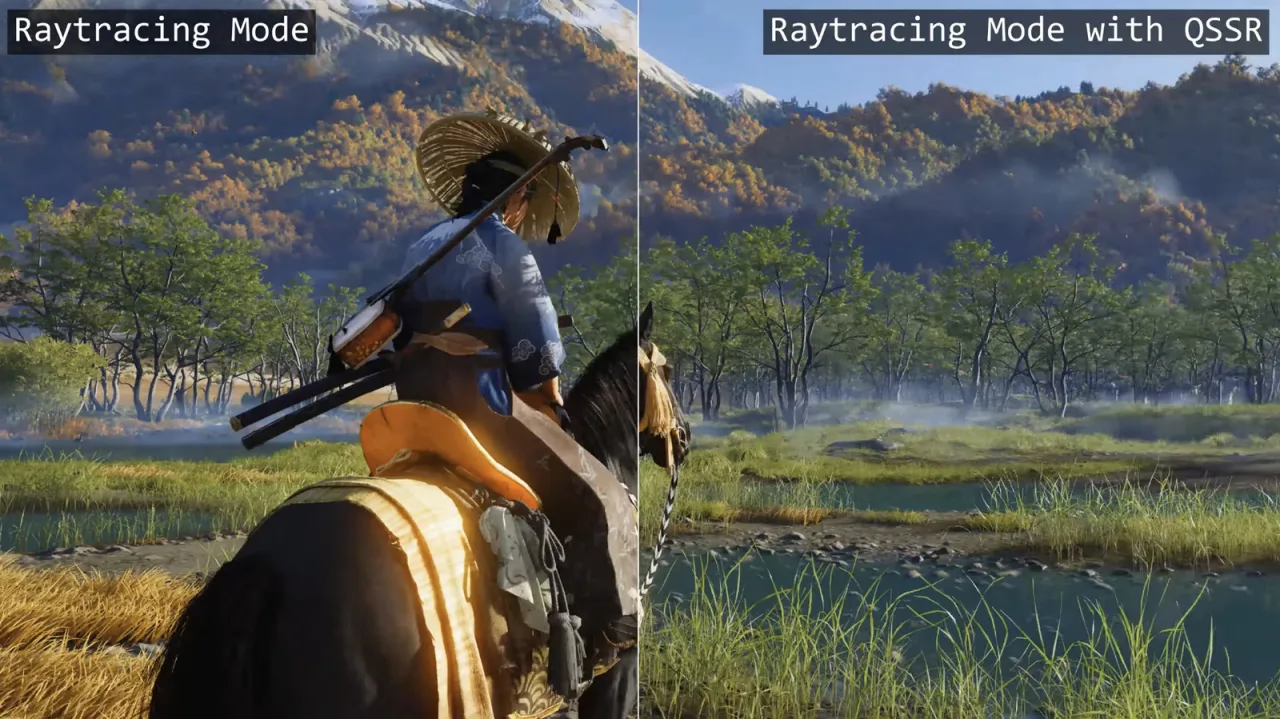
Sony Interactive Entertainment has expanded its AI upscaling capabilities to the standard PlayStation 5, introducing Quick Spectral Super Resolution (QSSR) as a new performance tier for the base console. The technology, unveiled on October 1, 2026, is a notable shift in PlayStation’s approach to graphics optimization, bridging the gap between the PS5 and PS5 Pro. Marvel’s Wolverine and Ghost of Yōtei are the first titles to implement QSSR, offering players an enhanced visual experience through patches released on the same day.
QSSR: A Streamlined Alternative to PSSR
QSSR emerges from Sony’s Project Amethyst collaboration with AMD, a joint effort to refine AI-driven graphics upscaling. Unlike the PlayStation Spectral Super Resolution (PSSR) available on PS5 Pro, which analyzes images pixel by pixel for high-detail upscaling, QSSR employs a “streamlined neural network architecture” and “hand-tuned implementation” to maximize performance on the less powerful base PS5. Sony emphasized that PSSR remains the “gold standard” for PS5 Pro, but QSSR provides “notable improvements” in image detail and stability for standard console users.
The distinction between the two technologies is critical. Digital Foundry noted that QSSR likely delivers closer to 1440p resolution on PS5 rather than the 4K upscaling achievable on PS5 Pro. This is attributed to the absence of dedicated machine learning hardware on the base console. Despite these limitations, developers like Insomniac Games and Sucker Punch Productions highlighted QSSR’s ability to enhance environments with “pixel-level clarity” and “temporal stability,” particularly in complex scenes such as crowded urban landscapes or detailed character animations.
Developer Reactions and Early Implementation
Mike Fitzgerald, head of technology at Insomniac Games, described QSSR as a “sample of the PS5 Pro experience” for base PS5 users. He emphasized its role in revealing “extra detail amidst the busy streets of Madripoor” and “dense alleyways of Shinjuku” in Wolverine. Similarly, Jasmin Patry of Sucker Punch Productions praised QSSR for resolving “fine details in characters and environments” with “a level of stability that hasn’t been possible on the PS5 console until now.”
The first games to adopt QSSR—Marvel’s Wolverine and Ghost of Yōtei—received patches on October 1, 2026. Ghost of Yōtei also launched a complete edition with a story expansion and a roguelike mode. Both titles now offer QSSR as an optional graphics setting, allowing players to balance visual fidelity with performance. Sony has not disclosed specific metrics for QSSR’s improvements, leaving analysts to speculate about potential trade-offs in frame rates or resource allocation.
Technical Foundations and Future Prospects
QSSR’s development builds on earlier advancements in AI upscaling. In February 2026, Sony introduced an upgraded PSSR for PS5 Pro, which was later expanded to existing games via a March 2026 system software update. The technology, rooted in Project Amethyst, leverages AMD’s expertise in machine learning and graphics processing. However, its adaptation for the base PS5 required significant optimization, including a “hand-tuned implementation” to mitigate hardware constraints.
Sony has committed to making QSSR available to all PlayStation developers, but the pace of adoption remains unclear. While Insomniac and Sucker Punch have already integrated the technology, third-party studios like Rockstar Games (developer of GTA6) may face challenges in implementing QSSR efficiently. The success of QSSR will depend on its scalability across diverse game engines and the willingness of developers to prioritize its integration.
| Detail | Information |
|---|---|
| QSSR Launch Date | October 1, 2026 |
| First Games to Support QSSR | Marvel’s Wolverine, Ghost of Yōtei |
| Technical Basis | Project Amethyst (Sony-AMD collaboration) |
| Key Innovations | Streamlined neural network, hand-tuned optimization |
| Distinguishing Feature from PSSR | Lower resolution output (1440p vs. 4K on PS5 Pro) |
Unresolved Questions and Industry Implications
The introduction of QSSR raises several unresolved questions. How will third-party developers adapt the technology to their workflows? Will QSSR’s performance trade-offs deter widespread adoption? And how will it affect the long-term relevance of the base PS5 as PS5 Pro’s capabilities continue to evolve?
For now, Sony’s move underscores its commitment to democratizing high-end graphics features across its console lineup. As more games adopt QSSR, the technology could redefine expectations for the standard PS5, potentially extending its lifecycle amid the upcoming PlayStation 6 era. However, without concrete performance benchmarks or developer roadmaps, the full impact of QSSR remains to be seen.
Frequently Asked Questions
What is QSSR, and how does it differ from PSSR?
QSSR is a new AI upscaling technology for the standard PS5, developed through Sony’s Project Amethyst collaboration with AMD. It uses a streamlined neural network and hand-tuned optimization to improve image detail and stability compared to traditional upscaling methods. Unlike PSSR, which remains the “gold standard” for PS5 Pro, QSSR delivers lower resolution output (1440p) due to hardware limitations on the base console.
Which games support QSSR, and when will more titles adopt it?
The first games to support QSSR are Marvel’s Wolverine and Ghost of Yōtei, which received patches on October 1, 2026. Sony has not disclosed a timeline for broader adoption, though it plans to make QSSR available to all PlayStation developers. The technology’s future depends on developer interest and the ability to balance performance trade-offs.
Will QSSR bring PS5 Pro-level image quality to the standard PS5?
No. Sony explicitly states that QSSR is not a direct transfer of PSSR’s image quality to the base PS5. While it improves detail and stability, its computational constraints mean it cannot match the 4K upscaling capabilities of PSSR on PS5 Pro. Analysts suggest there may be performance trade-offs, though specifics remain undisclosed.
The next major milestone for QSSR will likely involve third-party developers and their ability to integrate the technology into upcoming titles. As Sony continues to refine its AI graphics pipeline, the standard PS5’s role in the evolving console landscape will hinge on how effectively QSSR bridges the gap between hardware tiers.
How significant is this wire dispatch?
Cast your anonymous vote to register reader consensus across journalism and intelligence sectors.
Dateline Wire is dedicated to independent, evidence-backed reporting. This briefing was synthesized from primary source reporting, corroborated across independent newsrooms, and verified against our Editorial Standards.