Francis Halzen wins Nobel Prize in Physics for high-energy neutrino work
University of Wisconsin–Madison physicist Francis Halzen has been awarded the 2026 Nobel Prize in Physics for pioneering the IceCube Neutrino Observatory and discovering high-energy astrophysical neutrinos.
- Headline: Francis Halzen wins Nobel Prize in Physics for high-energy neutrino work
- Dispatch Summary: University of Wisconsin–Madison physicist Francis Halzen has been awarded the 2026 Nobel Prize in Physics for pioneering the IceCube Neutrino Observatory and discovering high-energy astrophysical neutrinos.
- Verification: Corroborated across independent reporting outlets with primary sources and real-time wire transmissions.
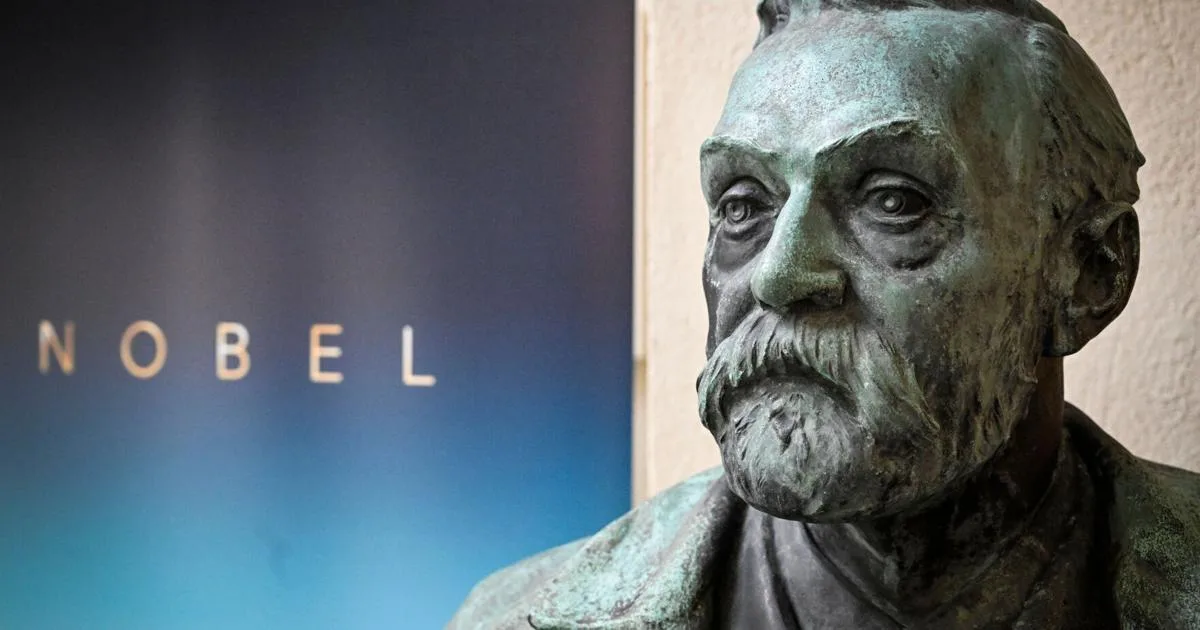
Francis Halzen, a Belgian-born physicist and professor at the University of Wisconsin–Madison, has been awarded the 2026 Nobel Prize in Physics for his novel work on the IceCube Neutrino Observatory and the discovery of high-energy neutrinos of astrophysical origin. The Royal Swedish Academy of Sciences recognized his "decisive contributions" to creating an observatory that detects neutrinos — subatomic particles that travel through the universe unimpeded by magnetic fields or matter, offering a unique window into cosmic phenomena.
IceCube: A Monument to Cosmic Exploration
The IceCube Neutrino Observatory, located at the Amundsen-Scott South Pole Station in Antarctica, is the world’s largest neutrino detector. It spans a cubic kilometer of glacial ice, embedded with 5,160 light sensors designed to capture the faint blue glow of Cherenkov radiation produced when high-energy neutrinos interact with atomic nuclei in the ice. This method allows scientists to trace neutrinos back to their sources, providing insights into some of the universe’s most energetic events, such as black hole jets and supernova explosions.
Halzen’s vision for IceCube dates back to the 1980s, when he proposed using the Antarctic ice sheet as a detector for neutrinos. His work built on earlier projects like AMANDA (Antarctic Muon and Neutrino Detector Array), which laid the groundwork for IceCube’s construction. The observatory, operational since 2010, has since detected dozens of high-energy neutrinos, including the first identified source of cosmic neutrinos: a blazar 4 billion light-years away, observed in 2017.
| Detail | Information |
|---|---|
| IceCube Sensor Count | 5,160 light sensors |
| IceCube Depth | 1.5–2.5 km of ice |
| First Identified Neutrino Source | Blazar TXS 0506+056 (4 billion light-years away) |
| Nobel Prize Money | 12 million Swedish kronor ($1.2 million) |
Neutrinos: The Universe’s Elusive Messengers
Neutrinos are nearly massless, electrically neutral particles that rarely interact with matter. While trillions of low-energy neutrinos from the Sun pass through Earth daily, high-energy neutrinos, millions to billions of times more energetic, are produced by extreme cosmic events. These particles, undeterred by magnetic fields, travel in straight lines, allowing scientists to pinpoint their origins with precision.
Halzen’s research transformed neutrino detection from a theoretical pursuit into a practical tool for astronomy. By 2013, IceCube had confirmed the existence of high-energy neutrinos from beyond the Solar System, marking the birth of "neutrino astronomy." This field complements traditional light-based telescopes, revealing hidden processes in regions like black hole accretion disks and the cores of exploding stars.
A Legacy of Scientific Leadership
Halzen, 82, began his career in the 1960s, earning degrees from the University of Leuven and later working at CERN. His move to the University of Wisconsin–Madison in 1972 solidified his role as a leader in particle physics. As principal investigator of IceCube, he coordinated hundreds of scientists across disciplines and countries, turning a bold idea into a functioning observatory.
The Nobel Committee highlighted his "tenacity and scientific vision," noting that IceCube’s success "paved the way for a new kind of astronomy." Mark Pearce, chair of the Nobel Committee for Physics, emphasized that Halzen’s work "provides researchers with novel knowledge about the violent settings in which high-energy neutrinos can be created," potentially uncovering unknown cosmic phenomena.
Next Steps and Unanswered Questions
The 2026 Nobel Prize ceremony will take place in Stockholm on December 10, the anniversary of Alfred Nobel’s death. While Halzen’s discovery has already reshaped astrophysics, questions remain about the full range of sources for high-energy neutrinos and their role in cosmic ray acceleration. Future observations by IceCube and similar projects may further unravel these mysteries, building on the foundation Halzen helped establish.
Frequently Asked Questions
How much is the 2026 Nobel Prize in Physics worth?
The prize includes 12 million Swedish kronor, equivalent to approximately $1.2 million.
What is the IceCube Neutrino Observatory, and how does it work?
IceCube is a neutrino detector located at the South Pole, using 5,160 sensors embedded in a cubic kilometer of Antarctic ice. When high-energy neutrinos interact with the ice, they produce Cherenkov radiation, which the sensors detect to trace the particles’ origins.
Why is Halzen’s work significant for astronomy?
His research enabled the detection of high-energy neutrinos from space, opening a new observational method that complements traditional telescopes. This allows scientists to study cosmic phenomena, such as black hole jets, that are otherwise invisible.
The recognition of Halzen’s work underscores the transformative power of interdisciplinary science. As IceCube continues to refine its observations, the "ghost particles" he helped detect will likely illuminate more of the universe’s hidden secrets, ensuring his legacy endures in the annals of astrophysics.
How significant is this wire dispatch?
Cast your anonymous vote to register reader consensus across journalism and intelligence sectors.
Dateline Wire is dedicated to independent, evidence-backed reporting. This briefing was synthesized from primary source reporting, corroborated across independent newsrooms, and verified against our Editorial Standards.