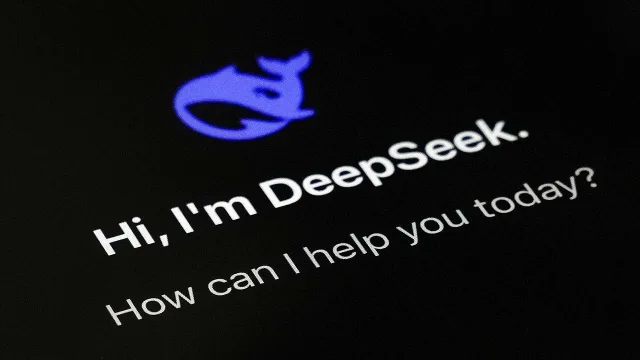
US bans DeepSeek AI from civilian federal agencies over security risks
The Department of Homeland Security ordered all civilian federal agencies to remove DeepSeek AI technology due to national security concerns.
- Headline: US bans DeepSeek AI from civilian federal agencies over security risks
- Dispatch Summary: The Department of Homeland Security ordered all civilian federal agencies to remove DeepSeek AI technology due to national security concerns.
- Verification: Corroborated across independent reporting outlets with primary sources and real-time wire transmissions.
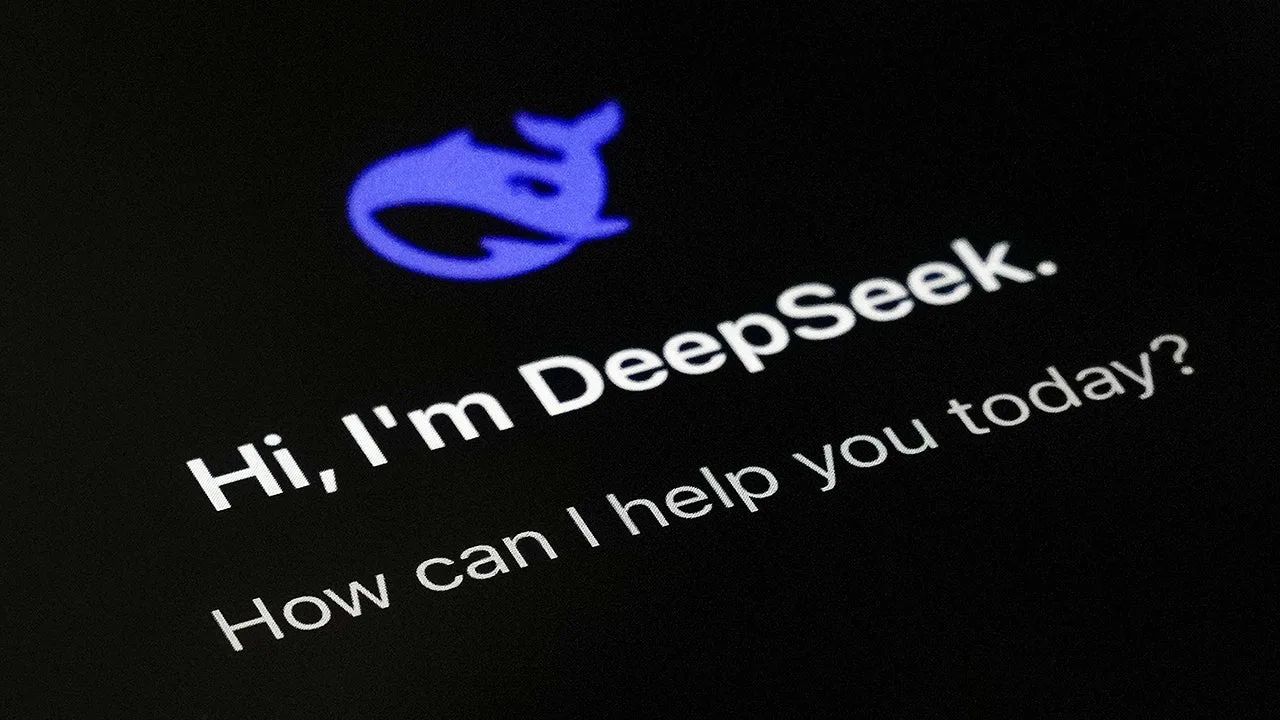
Why is Washington banning DeepSeek from civilian agencies right now?
The United States government has ordered all artificial intelligence technology from the Chinese firm DeepSeek to be removed from civilian federal agency IT systems. The Department of Homeland Security made the order public on Monday, though the directive actually took effect from the end of July. This action escalates Washington's scrutiny of Chinese artificial intelligence over national security concerns. The restriction covers civilian agencies including the Departments of the Treasury, State, and Justice, while agencies within the Department of Defense are excluded. The DHS banned DeepSeek products and any third-party services built using its AI models, warning that the technology could expose sensitive information to China.
The core argument driving this decision is that foreign models pose structural risks. When the Department of Homeland Security describes DeepSeek models as posing "multiple threat vectors," it points to servers located in China, where the legal system permits the government "extensive authority" to access private company infrastructure. This follows a July memo instructing agencies to monitor traffic flowing into and out of government websites.
Can federal IT teams actually find and remove every trace of DeepSeek?
The order raises difficult questions about enforcement and definition. The directive does not make clear whether the phrase "developed using DeepSeek" refers only to software invoking DeepSeek models through an application programming interface, or if it also covers any application whose developers merely used DeepSeek as a programming or testing tool. Services such as OpenRouter and Vercel AI Gateway pose another challenge because they automatically route requests to the model provider with the lowest cost or best performance. If agencies use these gateway services without explicitly restricting provider selection, they could inadvertently run queries through DeepSeek models.
While the DHS notice did not detail the exact security vulnerabilities that triggered the ban, political pressure has mounted across Washington. A bipartisan, bicameral legislative proposal named the "No Adversarial AI Act" was introduced in June 2025 to ban federal executive agencies from acquiring or using AI models developed by foreign adversaries, though that legislation remains pending in Congress. Several federal bodies including the Commerce Department and Navy had already banned DeepSeek from government devices, and states including New York, Tennessee, and Virginia have implemented similar measures.
What does this mean for the global AI market and American tech firms?
DeepSeek has emerged as a disruptive force in the global artificial intelligence race because its open-source models are cheaper and more accessible than proprietary alternatives. Startups and U.S. technology companies including Snowflake, Vercel, and OpenRouter have incorporated DeepSeek into their offerings. Last year, DeepSeek stated that training its debut model cost about $6 million, compared with roughly $100 million associated with OpenAI's GPT-4. Its free chatbot app has become one of the most downloaded applications in Apple's App Store rankings.
That low-cost efficiency has intensified commercial tensions. White House tech lead Michael Kratsios wrote earlier this year in an internal memo that "malicious exploitation" of American AI firms had been occurring, mainly by rival firms in China. Furthermore, companies like Anthropic and OpenAI have claimed to have had their AI models essentially copied by some Chinese AI firms, including DeepSeek. DeepSeek released its latest model last week, receiving praise from users online who claim it can outperform advanced tools from OpenAI on common tasks like software coding.
How is Beijing responding to the escalation?
DeepSeek is currently working to integrate its models with programming tools for Huawei’s Ascend series of AI accelerators, which the company has released as open source. Meanwhile, China published a draft regulation just days ago.
Despite the technological rivalry, high-level diplomatic channels remain active. When Chinese President Xi Jinping and U.S. President Donald Trump met at the White House in September, both countries agreed to set up a "communication channel" for AI incidents. That topic is expected to arise again at a meeting between Xi and Trump at a summit scheduled for November in the Chinese city of Shenzhen.
Federal agencies must now enforce the DHS removal directive while awaiting further clarity on exemptions and third-party software definitions. The next major milestone to watch is the Federal Communications Commission vote scheduled for Oct. 29 on whether to bar Chinese laboratories from testing electronic devices for U.S. use.