Tech firms unveil agentic AI smartphones at Shanghai industry conference
Tech companies are showcasing new agentic AI smartphones aimed at automating digital tasks, though developers face significant platform integration hurdles.
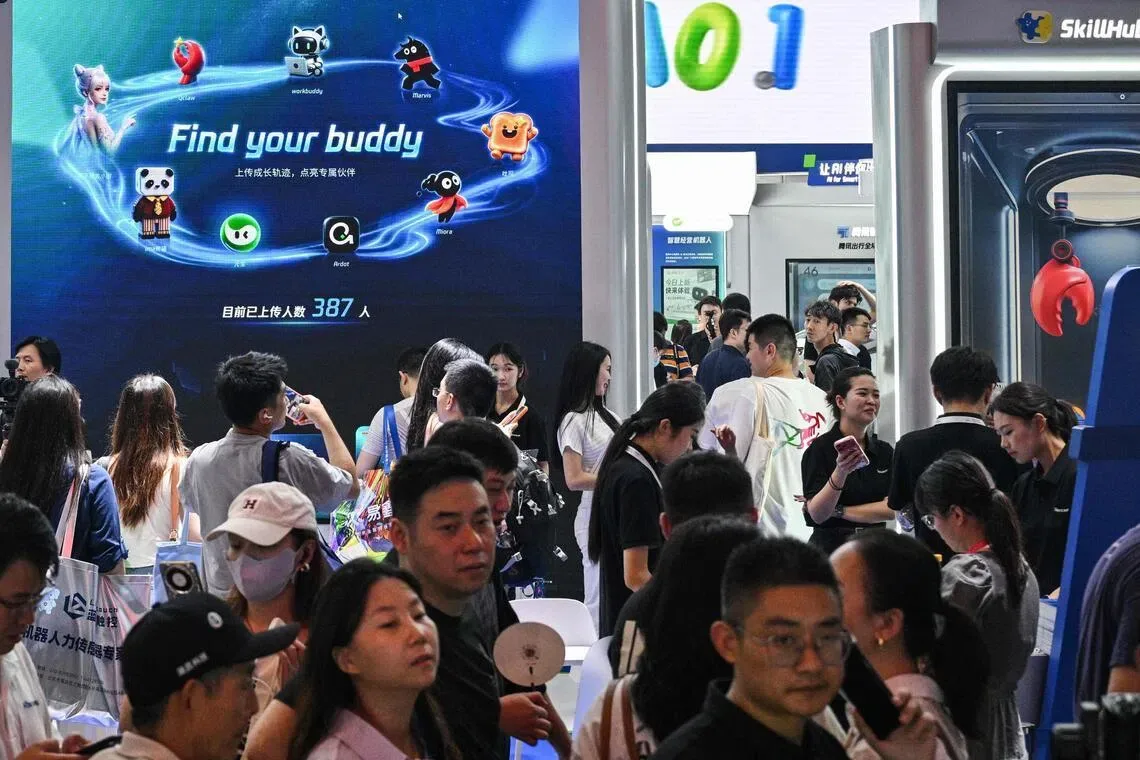
At the World Artificial Intelligence Conference in Shanghai, tech firms unveiled a new wave of smartphones powered by agentic AI, promising to revolutionize mobile interactions by enabling devices to perform complex tasks through voice commands. The event, held on July 18-19, 2026, highlighted advancements in AI-driven mobile technology, with companies like Nubia, Honor, and Shanghai-based startup StepFun showcasing prototypes that aim to redefine how users engage with digital services.
Smartphone maker Nubia introduced the NaviX Ultra, a device powered by Doubao, TikTok owner ByteDance’s popular AI chatbot. The phone’s AI agent, initially available in a limited prototype dubbed the “Doubao Phone,” sold out within days of its December 2025 release. However, its functionality was later restricted by major platforms like Alibaba, Tencent, and JD.com, which blocked unauthorized access to their services. This move effectively disabled the AI agent’s ability to execute tasks such as payments, prompting ByteDance to limit its capabilities in certain scenarios. Nubia emphasized that the NaviX Ultra seeks collaboration with apps rather than bypassing them, reflecting a strategic shift in navigating regulatory and competitive hurdles.
Honor presented its “Robot Phone,” featuring an interactive camera that extends on a robotic arm. The device, set for release later in 2026, uses AI models co-developed with Alibaba to interpret gestures, play music, and capture videos. Meanwhile, StepFun unveiled the STEPX Neo, an “AI agent-native smartphone” designed to integrate with platforms like Alipay and ride-hailing service Didi. According to StepFun chairman Yin Qi, the device aims to streamline travel bookings, shopping, and productivity by leveraging partnerships with major Chinese services. However, the company’s reliance on third-party platforms underscores the ongoing challenge of securing seamless access to digital ecosystems.
The struggle for app access has become a central issue for agentic smartphones. Kiranjeet Kaur, associate research director at IDC, noted that platforms like Alibaba and Tencent prioritize maintaining direct user relationships, fearing loss of control to third-party AI systems. “Agenting is everyone’s dream, but we haven’t reached there yet,” she said, citing the patchy performance of current AI tools. Despite these obstacles, experts predict a fundamental shift in digital economies. Marc Einstein of Counterpoint Research suggested that within five to 10 years, traditional app-based interactions may be replaced by AI agents that autonomously handle tasks, disrupting existing business models.
Outside China, US startup Brain Technologies launched the “Natural AI Phone” in April 2026, partnering with SoftBank to sell the device in Japan. While the phone demonstrated capabilities like sending apology messages via voice commands, it also faced limitations, often failing to execute requests accurately. Such challenges highlight the nascent state of the technology, with companies racing to refine AI agents while navigating technical and commercial barriers.
The Shanghai conference underscored the global race to embed AI agents into smartphones, with implications for user autonomy, platform control, and industry competition. As firms like Nubia, Honor, and StepFun push boundaries, the interplay between innovation and regulation will shape the future of mobile technology. For now, the vision of a seamless AI-driven smartphone remains aspirational, constrained by the need to balance ambition with the realities of digital ecosystems.
Dateline Wire is dedicated to independent, evidence-backed reporting. This briefing was synthesized from primary source reporting, corroborated across independent newsrooms, and verified against our Editorial Standards.