Humanoid robot breaks Usain Bolt's 100m world record in Beijing
A humanoid robot reportedly broke Usain Bolt's 100m world record with a 9.32-second run during the World Humanoid Robot Games in Beijing.
- Headline: Humanoid robot breaks Usain Bolt's 100m world record in Beijing
- Dispatch Summary: A humanoid robot reportedly broke Usain Bolt's 100m world record with a 9.32-second run during the World Humanoid Robot Games in Beijing.
- Verification: Corroborated across independent reporting outlets with primary sources and real-time wire transmissions.
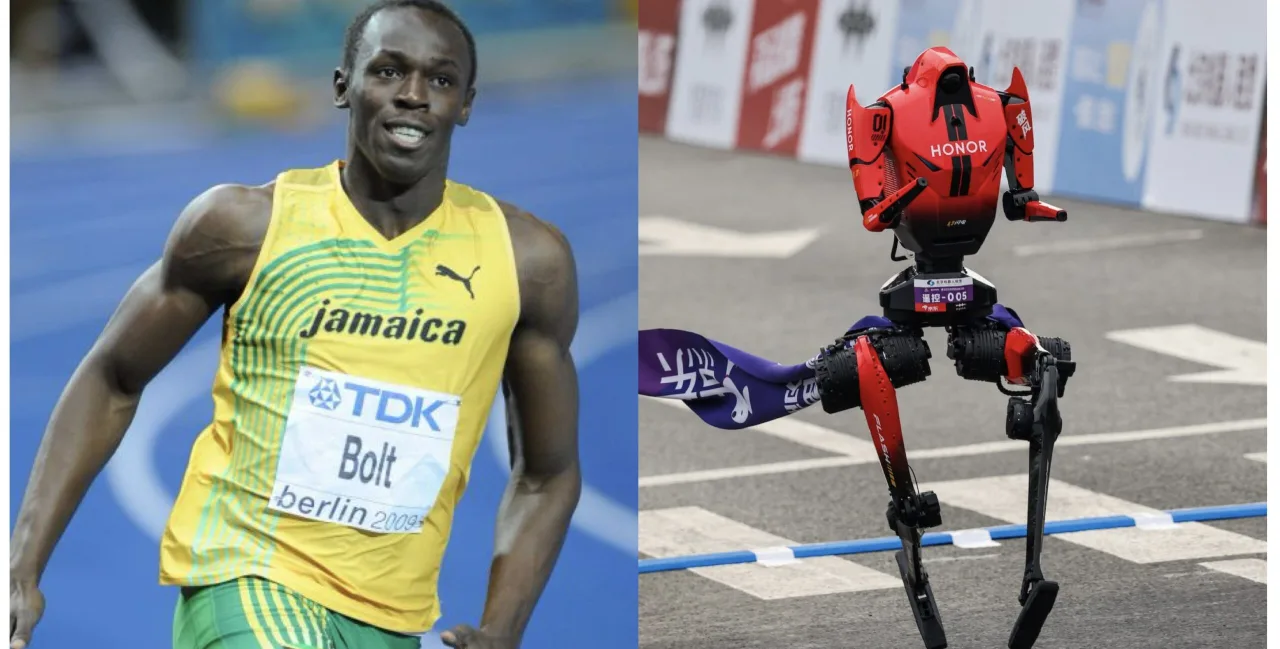
A humanoid robot has broken Usain Bolt’s 100m world record, according to multiple reports from August 22, 2026. However, the specific robot, time, and context vary across sources, reflecting differing accounts of the event.
Robot’s Time: 9.32 vs. 9.39 Seconds
Chinese smartphone maker Honor’s humanoid robot, named “Lightning,” reportedly ran the 100m in 9.32 seconds during a test run for the World Humanoid Robot Games in Beijing, according to gazettengr.com and techjuice.pk. This time would surpass Bolt’s record of 9.58 seconds set in 2009. A separate report from the BBC cited a time of 9.39 seconds for a robot named “Tianzhuo,” developed by Beijing’s Innovation Centre of Humanoid Robotics. The discrepancy raises questions about whether multiple robots achieved the feat or if different test runs were referenced.
The BBC’s report noted that Tianzhuo outperformed two other robots, including one from Honor, which the manufacturer claimed ran 9.32 seconds in a separate test. This suggests the event may have involved multiple competitors, with varying results. The robot’s peak speed during its run was reported as 14.5 meters per second, significantly exceeding Bolt’s top speed of 10.44 meters per second during his record-setting sprint.
Previous Achievements and Robot Specifications
Lightning, the robot linked to Honor, had previously demonstrated its capabilities by winning the Beijing half marathon in April 2026. It completed the 21-kilometer course in 50 minutes and 26 seconds, a time faster than the men’s human world record for the distance. The robot stood 169cm tall with 95cm-long legs during its 100m test, though its legs were later extended to 1.05 metres, according to gazettengr.com.
The World Humanoid Robot Games, which began on August 22, 2026, included events beyond athletics, such as boxing, football, and household tasks like folding laundry. The competition aims to showcase advancements in robotics and artificial intelligence, with China positioning humanoid robots as a strategic industry. Government and private sector investments are driving their development for applications in manufacturing, logistics, and consumer technology.
Official Context and Technological Implications
The achievement highlights China’s rapid progress in artificial intelligence and robotics. State media and private companies are promoting humanoid robots as symbols of technological prowess, with the World Humanoid Robot Games serving as a platform to demonstrate innovation. The event’s focus on both athletic and practical tasks underscores the dual purpose of these machines: to push human-like capabilities while addressing real-world challenges.
Despite the record-breaking performance, the event’s organizers and participants have not issued formal statements addressing the implications of the robot’s success. However, the feat has drawn global attention, with media outlets such as the BBC, Reuters, and Al Jazeera reporting on the milestone. The lack of an official response from athletics authorities or Bolt’s team leaves the broader context of the achievement unresolved.
Timeline of Key Developments
The World Humanoid Robot Games in Beijing began on August 22, 2026, with the 100m test run occurring on the same day. Lightning’s previous half marathon victory in April 2026 marked an earlier milestone in its development. The robot’s 9.32-second sprint, if confirmed, would represent a significant leap in robotic speed, though the BBC’s 9.39-second time suggests variability in test conditions or reporting.
The event’s duration extends through August 26, 2026, with additional competitions planned. While the 100m record has dominated headlines, other activities, such as football matches and household task challenges, illustrate the games’ broader focus on robotics applications.
Unanswered Questions and Discrepancies
The conflicting times reported by different outlets — 9.32 versus 9.39 seconds — raise questions about the accuracy of the data or the specific robots involved. Additionally, the attribution of the robot’s development to either Beijing’s Innovation Centre or Honor highlights potential overlaps or collaborations between institutions. No source explicitly clarifies whether Tianzhuo and Lightning are the same machine or separate entities.
Further details about the robots’ technical specifications, such as their power sources or control systems, remain unreported. The absence of official statements from athletics governing bodies also leaves the status of the record uncertain, as no human athlete or organization has commented on the achievement.
The event underscores the growing intersection of robotics and athletics, challenging traditional notions of human performance. As humanoid robots continue to evolve, their role in competitive settings, and the criteria for recognizing their achievements, may become a subject of debate in the years to come.