Sweden votes in tight race as far right eyes first role in government
Sweden faces a political turning point as a right-wing alliance and a left-wing coalition battle for power, with the far-right Sweden Democrats potentially securing historic cabinet posts.
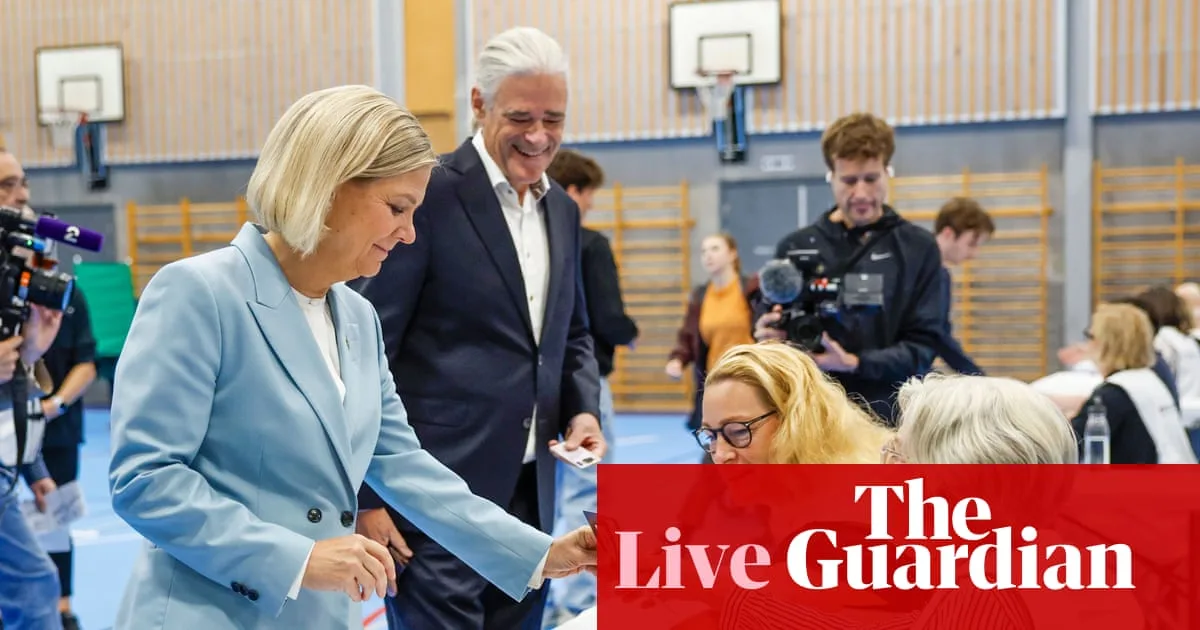
Sweden’s Election: A Nation at a Crossroads
Sweden’s general election, held on Sunday, has become a pivotal moment for the country’s political landscape, with the far-right Sweden Democrats potentially securing their first-ever role in government. The race between Prime Minister Ulf Kristersson’s right-wing alliance and Social Democrat leader Magdalena Andersson’s left-wing coalition has tightened in the final days, leaving voters to decide whether to maintain the status quo or embrace a shift toward more hardline policies.
Polls opened at 8 AM local time and closed at 8 PM, with exit polls expected shortly after. The results could determine whether the Sweden Democrats, a party with neo-Nazi roots that has since rebranded as a mainstream force, enters government for the first time. Kristersson, who leads a minority coalition that includes the Sweden Democrats, has pledged to offer the party cabinet posts if his alliance wins, a move that would mark a significant shift in Swedish politics.
Candidates and Competing Visions
Kristersson’s four-party right-wing alliance, which includes the Sweden Democrats, has positioned itself as a champion of law and order, citing a decline in organized crime and asylum applications as evidence of its success. The prime minister, 62, has framed his campaign around improving “ordinary people’s lives,” borrowing rhetoric from U.S. President Donald Trump with his pledge to “make Sweden great again.”
Opposing him is Andersson, 59, whose Social Democrats have long dominated Swedish politics. Her left-wing coalition, which includes the Greens and the Centre Party, has focused on expanding the welfare state and addressing rising living costs. Andersson criticized the Sweden Democrats during the campaign, warning that their influence could lead to a government “entirely dominated by” the far right. “Sweden is becoming safer, better, and more Swedish,” Kristersson’s far-right ally Jimmie Akesson declared at a rally, echoing the party’s “Make Sweden Sweden Again” slogan.
The Sweden Democrats, led by Akesson since 2005, have transformed from a fringe group with ties to neo-Nazism into a party that now polls at 19%, according to some surveys. Their rise has been fueled by concerns over immigration and crime, issues that have resonated with voters frustrated by societal changes. “Like Jimmie, I want it to be like it was when I was young, in the old Sweden,” said Agneta Andersson, a 78-year-old pensioner who voted for the party.
High Stakes and Uncertain Outcomes
The election’s outcome hinges on a tightly contested race. Early polls gave Andersson’s coalition a comfortable lead, but the gap narrowed in the final weeks, with both sides claiming momentum. The Sweden Democrats’ ability to sway undecided voters has been a key factor, as has the left’s internal divisions. Andersson’s coalition, though larger in numbers, faces challenges in uniting its four parties, which range from social democrats to environmentalists.
Voter turnout, traditionally above 80%, is expected to be high again this year. Over eight million eligible voters cast ballots in a country of 10.6 million people. The results could take days to finalize, as partial counts from exit polls are expected to be released hours after polls closed, with more reliable data emerging later.
Regardless of the immediate outcome, the election has underscored deepening polarization. Climate activist Greta Thunberg urged voters to “vote out Tido,” a reference to Kristersson’s alliance with the Sweden Democrats, while others, like 58-year-old voter Tommy Strand, prioritized environmental policies over welfare cuts.
| Detail | Information |
|---|---|
| Key Parties | Right-wing alliance (Kristersson’s Moderate Party, Christian Democrats, Liberals, Sweden Democrats); Left-wing coalition (Social Democrats, Greens, Centre Party, Left Party) |
| Sweden Democrats’ Poll Support | 19% (as of recent surveys) |
| Voter Turnout | Expected to exceed 80% |
| Exit Polls | Published after 8 PM local time; partial results expected hours later |
Frequently Asked Questions
Could the Sweden Democrats enter government for the first time?
If Kristersson’s right-wing alliance wins, the Sweden Democrats could secure cabinet posts, marking their first role in government. This would represent a significant shift, as the party has long been marginalized despite its growing influence.
What are the main issues driving the election?
Migration, crime, and the welfare state are central. The right-wing bloc emphasizes security and border control, while the left focuses on social equity and climate action. The Sweden Democrats have capitalized on fears about societal changes linked to immigration.
How might the government be formed?
If the right-wing alliance wins, a coalition would likely form quickly. If the left wins, negotiations among its four parties could be complex due to ideological differences, even if they hold a majority.
The coming days will reveal whether Sweden’s voters opt for continuity or a historic shift. With the far right’s influence at a critical juncture, the election’s outcome could redefine the country’s political trajectory for years to come.
Dateline Wire is dedicated to independent, evidence-backed reporting. This briefing was synthesized from primary source reporting, corroborated across independent newsrooms, and verified against our Editorial Standards.