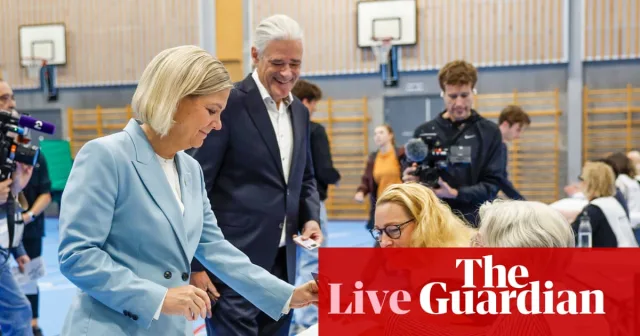
Swedish PM Ulf Kristersson resigns after election defeat to opposition
Prime Minister Ulf Kristersson has resigned following a narrow election defeat. The Social Democrats, led by Magdalena Andersson, now face challenges in forming a government.
- Headline: Swedish PM Ulf Kristersson resigns after election defeat to opposition
- Dispatch Summary: Prime Minister Ulf Kristersson has resigned following a narrow election defeat. The Social Democrats, led by Magdalena Andersson, now face challenges in forming a government.
- Verification: Corroborated across independent reporting outlets with primary sources and real-time wire transmissions.
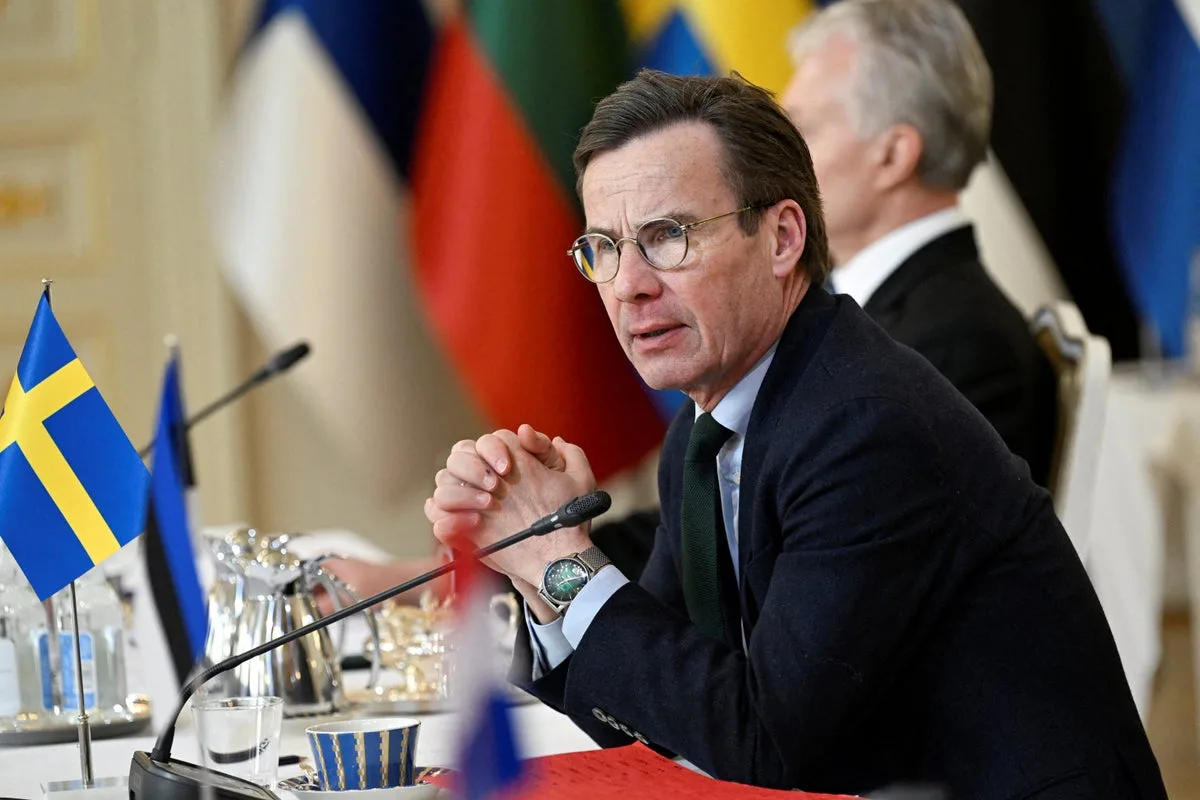
Swedish Prime Minister Ulf Kristersson resigned on Thursday after his right-wing coalition lost the country’s parliamentary election to a centre-left opposition, which secured a narrow 176–173 seat majority in the 349-member Riksdag. The result marks a pivotal shift in Sweden’s political landscape, with Kristersson’s conservative-led government, which relied on support from the anti-immigration Sweden Democrats, now giving way to a fragmented opposition bloc.
Kristersson’s Resignation and Election Results
Kristersson, leader of the centre-right Moderate Party, announced his resignation in a letter to the Riksdag speaker, stating, “Now it is the speaker who will lead the next stage of the way to a new government. I am herewith requesting that I be relieved of the office of prime minister to allow that work to start immediately.” The declaration came after the Swedish Election Authority confirmed the final tally, which included late-counted overseas ballots that solidified the opposition’s lead.
The centre-left opposition, comprising the Social Democrats, the Green Party, the Centre Party, and the Left Party, secured 176 seats, while Kristersson’s coalition—including the Moderates, the Sweden Democrats, the Christian Democrats, and the Liberals—won 173. The Social Democrats, led by former Prime Minister Magdalena Andersson, remained the largest single party with 99 seats, though they lost eight seats compared to the 2022 election.
| Detail | Information |
|---|---|
| Opposition seats | 176 |
| Right-wing coalition seats | 173 |
| Social Democrats seats | 99 |
| Sweden Democrats seats | 62 |
Challenges for the New Government
Despite its narrow majority, the opposition faces significant hurdles in forming a stable government. Andersson, who led the Social Democrats from 2014 to 2018 before losing power, must navigate tensions within the left-leaning bloc. The Centre Party, which opposes cooperation with the Sweden Democrats, also rejects alliances with the Left Party, complicating efforts to build a unified coalition.
The Sweden Democrats, a party with far-right origins that has gradually gained mainstream acceptance, saw their influence wane. They dropped to third place with 62 seats, a 11-seat decline from 2022. Kristersson had previously promised cabinet positions to the Sweden Democrats if his coalition won, but the party’s poor performance suggests a shift in public sentiment, particularly on immigration and security issues.
The opposition’s path to power is further complicated by the unique structure of Sweden’s parliamentary system. Under “negative parliamentarism,” a prime minister can be confirmed without an explicit majority, as abstentions are treated as passive support. This mechanism, while enabling minority governments, may prolong negotiations as parties seek compromises on contentious issues like taxation and social policy.
Next Steps and Political Uncertainty
The new Riksdag is expected to convene on 28 September, with the Speaker of Parliament initiating talks to propose a new prime minister. The process could take weeks, as seen in previous elections. For example, it took 37 days to form a government after the 2022 election, and 134 days in 2018. Kristersson will remain in office until a successor is chosen, though his resignation signals the end of his four-year tenure.
Andersson has already begun discussions with opposition parties, but her ability to secure a majority will depend on reconciling divergent priorities. The Social Democrats, historically Sweden’s dominant party, face pressure to balance progressive policies with pragmatic alliances. Meanwhile, the Sweden Democrats’ decline raises questions about their future role in Swedish politics, particularly as they seek to maintain relevance amid shifting voter preferences.
Frequently Asked Questions
How will the new government be formed?
The Riksdag will convene on 28 September, with the Speaker of Parliament initiating talks to propose a new prime minister. A candidate can be confirmed without an explicit majority, as abstentions are treated as passive support under Sweden’s “negative parliamentarism” system.
What role did the Sweden Democrats play in the election?
The Sweden Democrats, an anti-immigration party with far-right roots, dropped to third place with 62 seats, down 11 from 2022. They had previously supported Kristersson’s coalition but saw declining popularity, reflecting broader public concerns about migration and security.
When will the new prime minister be appointed?
The Riksdag is expected to elect its speaker on 28 September, with the new prime minister proposed the following day. However, the process could take weeks due to the need for negotiations among opposition parties.
The resignation of Kristersson and the opposition’s narrow victory set the stage for a period of political recalibration. As Andersson seeks to rebuild a government, the challenges of uniting a fractured left-leaning bloc and addressing Sweden’s evolving priorities will define the next chapter of the country’s political landscape.
How significant is this wire dispatch?
Cast your anonymous vote to register reader consensus across journalism and intelligence sectors.
Dateline Wire is dedicated to independent, evidence-backed reporting. This briefing was synthesized from primary source reporting, corroborated across independent newsrooms, and verified against our Editorial Standards.