In setback to BJP, Congress retains Nagpur MLC seat; Wanjari wins
Congress candidate Abhijeet Wanjari retained the Nagpur Division Graduates' constituency seat in the Maharashtra Legislative Council elections, defeating BJP rival Sudhakar Kohale by 3,271 votes.
- Headline: In setback to BJP, Congress retains Nagpur MLC seat; Wanjari wins
- Dispatch Summary: Congress candidate Abhijeet Wanjari retained the Nagpur Division Graduates' constituency seat in the Maharashtra Legislative Council elections, defeating BJP rival Sudhakar Kohale by 3,271 votes.
- Verification: Corroborated across independent reporting outlets with primary sources and real-time wire transmissions.
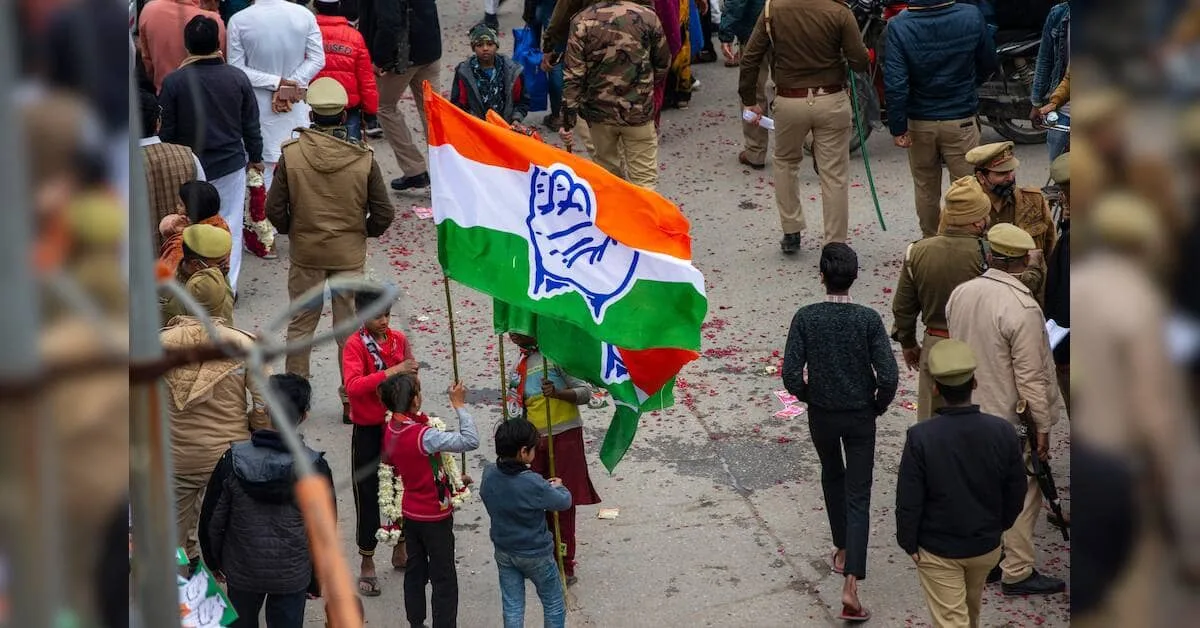
Congress candidate Abhijeet Wanjari defeated BJP rival Sudhakar Kohale by 3,271 votes to retain the Nagpur Division Graduates' constituency seat in the Maharashtra Legislative Council elections. Wanjari secured 67,231 votes while Kohale secured 63,960 votes, handing a prominent defeat to the ruling party in a region that serves as the headquarters of the Rashtriya Swayamsevak Sangh and the home turf of Maharashtra Chief Minister Devendra Fadnavis and Union Minister Nitin Gadkari.
The result stands out because both Fadnavis and Gadkari campaigned extensively for Kohale, and Gadkari had previously represented the seat for several terms. Despite this heavyweight political mobilization and an early lead by the BJP challenger, the contest swung decisively during the elimination and preference rounds of counting.
Counting Dynamics and the Preference Vote Shift
The election process began on Tuesday morning and concluded in the early hours of Thursday at the Mankapur Indoor Stadium, where tensions briefly flared as BJP and Congress workers clashed before police intervened to restore order. The contest required a shift to second-preference votes after initial ballots left all candidates short of the required quota. Independent candidate Nitesh Karale emerged as a significant factor in the early stages by pulling 24,249 votes.
Kohale held the advantage after the second round of first-preference counting on Wednesday, leading Wanjari by 4,294 votes after polling 60,924 votes compared to Wanjari's 56,630. That momentum evaporated once election officials initiated the elimination rounds. Wanjari steadily closed the gap and ultimately pulled ahead to finish with 67,231 votes against Kohale's 63,960, according to a senior poll official cited by PTI.
Reacting to the outcome on October 28, Wanjari emphasized the scope of the opposition effort.
Wanjari credited the victory to unity within the Congress and the broader Maha Vikas Aghadi alliance, alongside backing from 48 organizations that supported his campaign. Congress leader Pawan Khera also seized on the outcome, taking a public jab at the ruling party by posting on X thatThe BJP exerted all its might, all their leaders were present in Nagpur, yet the voters stood with us.
Abhijeet Wanjari
BJP lost in Nagpur too.
- Tuesday morning: Counting of votes begins for the Nagpur Division Graduates constituency.
- Wednesday: Second round of counting concludes with BJP candidate Sudhakar Kohale leading Congress incumbent Abhijeet Wanjari by 4,294 votes.
- Wednesday night to early Thursday: Counting moves to second-preference votes and elimination rounds as no candidate reaches the required quota.
- Thursday wee hours: Final elimination rounds conclude, confirming Wanjari's victory by a margin of 3,271 votes.
Regional Context Across Four States
The Nagpur contest played out alongside biennial elections for Legislative Council seats across Maharashtra, Uttar Pradesh, Bihar, and Karnataka, offering a complex picture of regional political strength among registered teachers and graduates. In Maharashtra, Council seats tested the cohesion of the ruling alliance against the opposition Maha Vikas Aghadi, which groups the Congress, Shiv Sena (Uddhav Balasaheb Thackeray), and NCP (Sharadchandra Pawar).
Across Maharashtra, the opposition MVA won three seats while the ruling parties secured two. The broader four-state picture showed distinct regional dynamics across the electoral map.
| State / Region | Key Results | Notable Outcomes |
|---|---|---|
| Nagpur Division, Maharashtra | Congress wins 1 seat | Abhijeet Wanjari defeats BJP's Sudhakar Kohale by 3,271 votes on Fadnavis and Gadkari home turf. |
| Varanasi, Uttar Pradesh | Samajwadi Party wins 2 seats | Lal Bihari Yadav and Ashutosh Sinha defeat BJP rivals in Prime Minister Narendra Modi's parliamentary constituency. |
| Karnataka | NDA clean sweep | BJP wins 3 seats and JD(S) wins 1; Congress fails to secure any of the four seats it contested. |
| Bihar | NDA wins 4 of 8 seats | Prashant Kishor's Jan Suraaj Party secures its first-ever Legislative Council seat through Suresh Prasad Rai in Darbhanga Teachers'. |
In Uttar Pradesh, the BJP maintained its overall advantage by winning six of 11 Council seats, while the Samajwadi Party took five. Yet the most striking upset occurred in Prime Minister Narendra Modi's parliamentary constituency of Varanasi, where the Samajwadi Party captured both the Teachers' and Graduates' seats. Lal Bihari Yadav retained the Varanasi Teachers' seat against Pramod Kumar Mishra, and Ashutosh Sinha defeated Kedar Nath Singh in the Graduates' contest. The results prompted protests from BJP workers at the Pahadiya Mandi counting center over alleged counting irregularities.
In Bihar, the NDA improved its tally to four out of eight seats. The election also marked a milestone for Prashant Kishor's Jan Suraaj Party, which won its first legislative upper house seat when Suresh Prasad Rai defeated former Bihar Congress president Madan Mohan Jha in the Darbhanga Teachers' constituency. Meanwhile, Karnataka delivered a clean sweep, with the BJP winning three seats and the JD(S) taking one, leaving Congress shut out entirely.
The central question left open by these results is whether the fissures exposed within the ruling alliance in Maharashtra—visible in candidate disagreements in Pune and friction over rebel nominees—will compound the coalition's challenges as preparations ramp up for broader state legislative battles. How the opposition translates these targeted wins among professional constituencies into broader electoral momentum remains the test.