European Central Bank President Christine Lagarde to step down early
European Central Bank President Christine Lagarde has announced she will step down in February 2027, nearly nine months before her term expires.
- Headline: European Central Bank President Christine Lagarde to step down early
- Dispatch Summary: European Central Bank President Christine Lagarde has announced she will step down in February 2027, nearly nine months before her term expires.
- Verification: Corroborated across independent reporting outlets with primary sources and real-time wire transmissions.
European Central Bank President Christine Lagarde to step down early
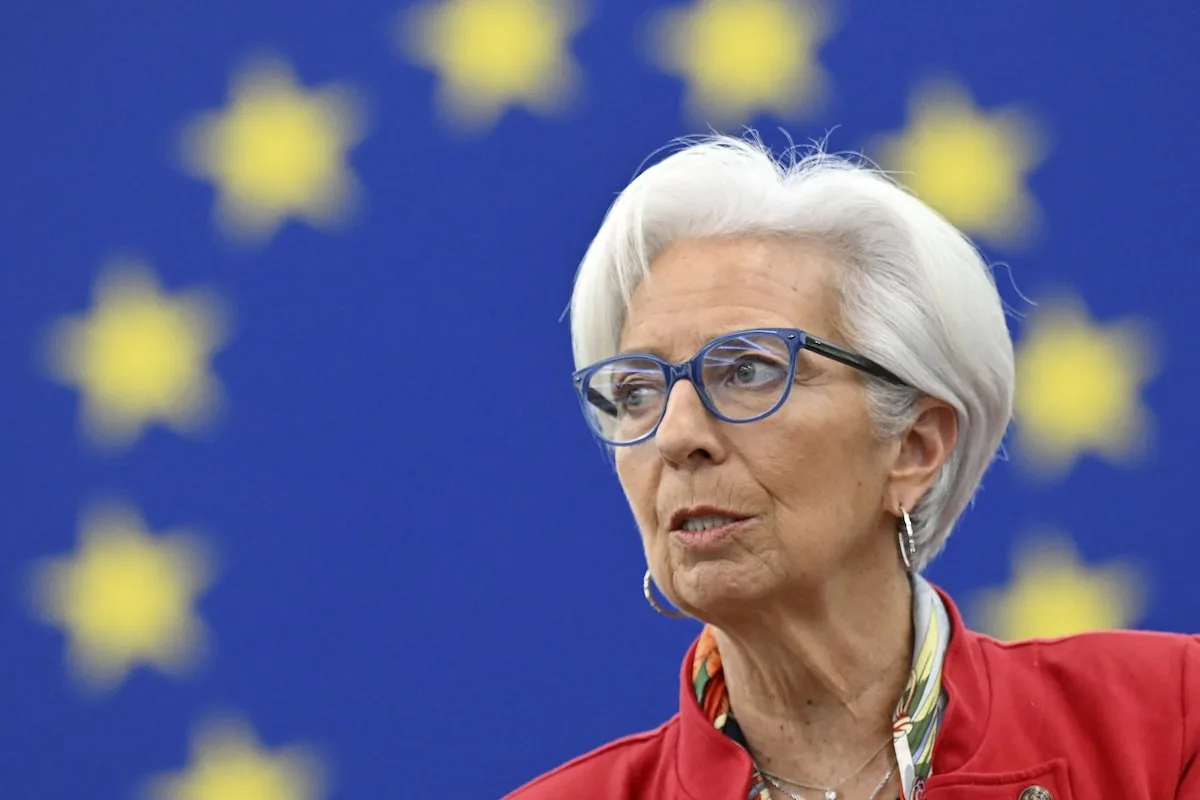
European Central Bank President Christine Lagarde will step down on February 7, 2027, nearly nine months before her term expires at the end of October 2027. The announcement, delivered to the Governing Council and European Council President António Costa, ends months of speculation and sets off an immediate scramble among European Union leaders to secure a successor.
It has been a source of great pride to serve this institution. I thank all of those who have supported me on this journey over the past seven years, Christine Lagarde said on Thursday as she announced she will step down as President of the European Central Bank.
Her departure is timed to allow current EU leadership to finalize the appointment before a high-stakes French presidential election in April and May 2027, where polls show far-right candidate Marine Le Pen is a favorite to win. By stepping down early, outgoing French President Emmanuel Macron retain a direct hand in filling one of Europe's most powerful posts, insulating the central bank from potential euro-skeptic political interference.
The European Union is trying to guard itself at least somewhat against the risk that rightwing Marine Le Pen may win the French presidential election in April/May 2027, said Holger Schmieding, the chief economist at Berenberg bank. Lagarde’s successor will still be appointed while the staunchly pro-European centrist Emmanuel Macron still resides in the Elysee Palace. He is a long-term political adversary of Le Pen.
Lagarde has led the central bank since July 2019, steering its policy responses through the COVID-19 pandemic, the Russia-Ukraine war, and severe energy price shocks that pushed inflation in the euro area above 11 per cent. Her exit arrives as the 21-nation euro zone contends with a three-year high in inflation reached in September, alongside a volatile monetary backdrop marked by an oil-price shock linked to the Iran war and a surge in government bond yields, particularly in debt-laden France.
Contenders and the Bureaucratic Succession Puzzle
The race to succeed Lagarde centers on two prominent front-runners from the central banking establishment: Klaas Knot, the former head of the Netherlands central bank, and Pablo Hernández de Cos, former head of Spain's central bank who now heads the Bank for International Settlements.
Nationality and regional balance will heavily dictate the negotiations among eurozone heads of state. ING global head of macro Carsten Brzeski noted that Knot may find stronger backing among Northern European governments, while the position of the current Spanish government regarding De Cos remains a factor. Both men would bring deep monetary policy expertise to the role, a contrast to Lagarde, who had to pick up on that technical background when already in office.
Other internal candidates have shifted position as the timeline accelerates. Isabel Schnabel, an ECB Executive Board member who had expressed interest in succeeding Lagarde, will move to the International Monetary Fund in Washington in early January 2027. Meanwhile, Joachim Nagel, President of the Deutsche Bundesbank, has also put himself forward. However, Germany faces a significant institutional hurdle: European Commission President Ursula von der Leyen is already German, and having two Germans at the helm of such important institutions in Europe would likely be difficult to justify in the political maneuvering over personnel appointments in Brussels.
| Candidate | Current or Past Role | Key Considerations |
|---|---|---|
| Klaas Knot | Former head of the Netherlands central bank | Favored by Northern European governments; noted for financial stability expertise. |
| Pablo Hernández de Cos | Former head of Spain's central bank / head of the Bank for International Settlements | Strong monetary policy background; dependent on Spanish government backing. |
| Joachim Nagel | President of the Deutsche Bundesbank | Put himself forward, though Germany's hold on the European Commission complicates bids. |
This leadership transition is part of a broader turnover at the central bank. Philip R. Lane will finish his term as chief economist in June 2027, and Schnabel's departure leaves her executive board seat vacant in January. Berenberg Chief Economist Holger Schmieding pointed out that beyond regional balance, the ECB would need to consider who could deal with potential financial turbulence amid widening spreads in bond yields between member states. Schmieding noted that Knot, as a former chair of the G20's Financial Stability Board, may hold an edge in this respect.
Markets are actively debating whether the central bank might be forced to use one of its intervention mechanisms as France faces a mounting sovereign debt crisis, though Schmieding noted that the ECB has no mandate and no appetite to fund French fiscal follies, and would only support France if Paris returns to more sustainable policies.
Economic Pressures and Political Guardrails
Lagarde's tenure concludes against a tense economic backdrop of persistent inflation fueled by renewed energy costs and deteriorating financing conditions that curb business and household growth.
Ahead of the announcement, the ECB was widely expected to keep its deposit rate at 2.5 per cent on Thursday while signalling that another increase, potentially as soon as December, remains likely. The central bank faces the delicate task of balancing anti-inflation measures with financial stability, particularly as rising borrowing costs pressure vulnerable member states.
Lagarde received a standing ovation by the Governing Council of the central bank on Thursday, capping a career that includes serving as France's first female finance minister in 2007 and managing director of the International Monetary Fund from 2011 onward. Financial Times reporting indicates she is a top candidate to become the next chair of the World Economic Forum, and she has suggested in recent media interviews that she does not plan a run at the French presidency in the 2027 election.
European Council President Antonio Costa thanked Lagarde for her dedication, stating that she has provided a steady and determined stewardship, helping to safeguard stability and the resilience of the euro area.
Updated 2 times since publication; last update 29 October 2026, 13:33.