Patrick Stewart, Star Trek and X-Men Actor, Dies at 86
Sir Patrick Stewart, whose iconic roles as Captain Jean-Luc Picard and Professor X defined modern sci-fi, has passed away at the age of 86.
- Headline: Patrick Stewart, Star Trek and X-Men Actor, Dies at 86
- Dispatch Summary: Sir Patrick Stewart, whose iconic roles as Captain Jean-Luc Picard and Professor X defined modern sci-fi, has passed away at the age of 86.
- Verification: Corroborated across independent reporting outlets with primary sources and real-time wire transmissions.
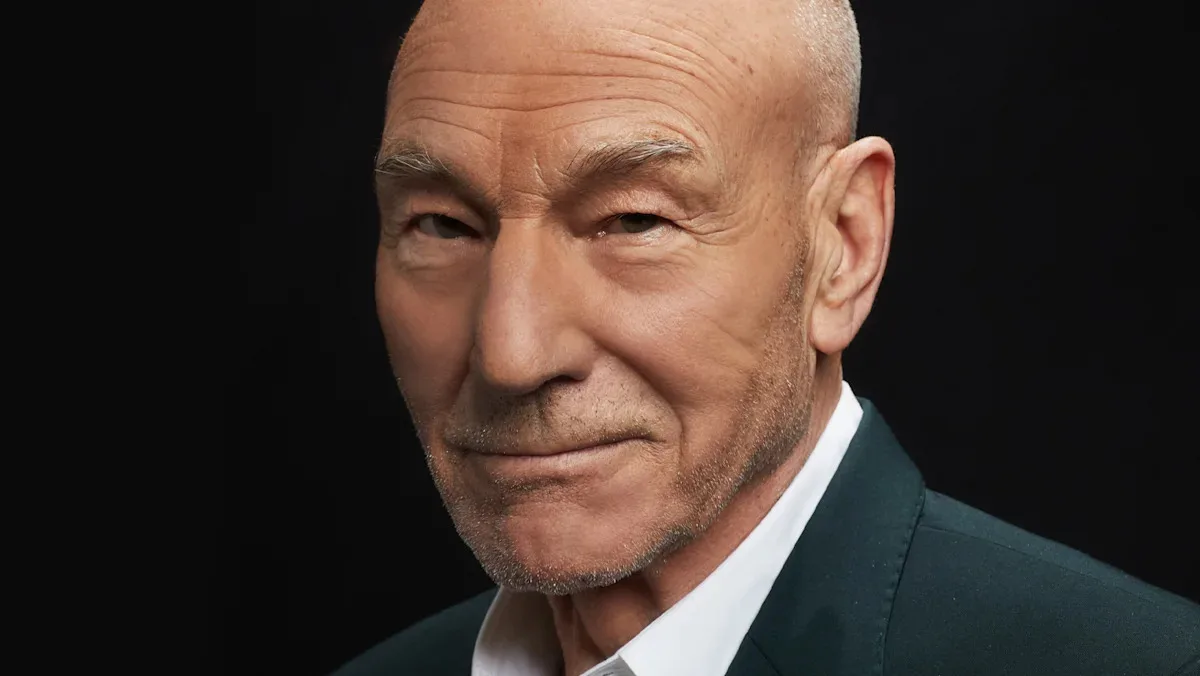
Sir Patrick Stewart Dies at 86, Leaving Behind a Titan of Stage and Screen
Sir Patrick Stewart died on Wednesday, October 28, 2026, at his home in Los Angeles at the age of 86. His spokesperson, Kelly Bush Novak, and his family confirmed in a statement shared via social media that the actor passed away following a brief and poignant battle with Alzheimer's disease and Lewy body dementia.
In a statement shared via Stewart's Instagram account, Novak noted that the actor was in the loving care of his wife, Sunny Ozell, surrounded by family and friends. He has been held in the warm embrace of family and friends, surrounded by live music, prayer, tears, laughter and the kind of profound emotion that only he could inspire after a lifetime of devotion to us all,
the statement read, adding, We will forever cherish the peaceful ease and reflection on his face, an enduring reminder of his invincible grace.
Fans wishing to honor his memory have been encouraged by the family to make contributions to the Johns Hopkins Alzheimer’s Disease Research Center Fund and Alzheimer’s Foundation of America Caregiver Resources in lieu of sending flowers.
Lewy body dementia is the second most common form of Alzheimer’s disease, per the Mayo Clinic. The condition develops when protein deposits called Lewy bodies form in the nerve cells of the brain, causing cognitive changes, memory loss and limited regulation of bodily functions, among other symptoms.
From Yorkshire Roots to the Royal Shakespeare Stage
Born Patrick Hewes Stewart on July 13, 1940, in Mirfield, West Riding of Yorkshire, England, Stewart grew up in poverty without a bathroom in his house and endured physical abuse at the hands of his father, a former regimental sergeant major in the British Army. In his memoir, Making It So, Stewart wrote about how he and his older brother Trevor braced for the nights when their father came home drunk and angry, attacking their mother. Sometimes it was with an open hand, other times a closed fist. Always he aimed for her head,
he wrote. The son later became a patron for Refuge, an organization that provides shelter for domestic abuse victims, noting that the stage provided a safe space away from real life.
He joined an amateur drama group at 12, left school at 15, spent time as a newspaper reporter, and earned a grant to attend the prestigious Bristol Old Vic Theatre School alongside future actor Brian Blessed. He made his professional stage debut in 1959 at the Theatre Royal, Bristol in a production of Cyrano de Bergerac. Beginning to lose his hair in his teenage years, Stewart seldom wore a hairpiece, a physical reality that initially limited him primarily to supporting screen roles while he built an extraordinary theatrical pedigree.
Stewart officially joined the Royal Shakespeare Company in 1966, embarking on an association that saw him appear in more than 60 productions, playing roles including Shylock, Oberon, Titus Andronicus, and Astrov in Uncle Vanya. He was eventually named an Honorary Associate Artist of the RSC. His stage mastery earned him three Olivier Awards, beginning with his 1979 performance in Peter Brook's production of Antony and Cleopatra, followed by recognition for playing Claudius in Hamlet opposite David Tennant, and his solo adaptation of Charles Dickens's A Christmas Carol, in which he portrayed more than 40 characters. His extensive Broadway and West End credits included a Tony-nominated and Evening Standard Award-winning performance as Macbeth, as well as landmark repertory productions of Harold Pinter's No Man's Land and Samuel Beckett's Waiting for Godot opposite his close friend Ian McKellen.
| Award / Honor | Work | Organization / Source |
|---|---|---|
| Olivier Award (First) | Antony and Cleopatra | Laurence Olivier Awards (1979) |
| Grammy Award | Peter and the Wolf | Recording Academy (1995) |
| Knighthood | Services to Drama | Queen Elizabeth II (2010) |
That monumental stage foundation ran parallel to early British television appearances, including I, Claudius and Tinker Tailor Soldier Spy, alongside 1980s cinematic turns in John Boorman's Excalibur, David Lynch's Dune, and Tobe Hooper's Lifeforce.
Commanding Enterprise and Mutants on Screen
Stewart's career shifted dramatically in 1987 when he was offered the lead role of Captain Jean-Luc Picard in Star Trek: The Next Generation, the first live-action Star Trek series in over two decades. Initially unfamiliar with the franchise and largely disdainful of science fiction, Stewart took the role over the objections of McKellen, expecting the project to be cancelled within a year. Instead, the show became a massive global phenomenon, running for seven seasons across 178 episodes and cementing Picard as one of the most iconic characters in television history. Stewart played Picard as if he were a character in Henry IV, drawing on the formality of Shakespearean situations. He reprised the role in four feature films beginning with Star Trek Generations in 1994, and returned to the character as an executive producer and star of the streaming series Star Trek: Picard, which concluded its third and final season in April 2023.
In 2000, Stewart cemented his place in a second major sci-fi franchise by originating the role of the telepathic Professor Charles Xavier in the film X-Men. He reprised the character across multiple sequels, including a critically lauded performance opposite Hugh Jackman in Logan, a cameo appearance in Doctor Strange in the Multiverse of Madness, and an appearance in Avengers Doomsday.
Marvel Studios chief Kevin Feige paid tribute to the actor following his passing, stating:
I’ll never forget the first time I saw Sir Patrick Stewart on the set of the first X-Men. After years of knowing him as the inimitable Captain Picard, I was in awe — and he turned out to be everything I had seen on screen and more: brilliant, charming, warm, generous, with a quiet strength and gravitas. Away from the cameras, he was even more remarkable, with a wonderfully sharp sense of humor. It was a true privilege to know him and to work with him.
Kevin Feige, via NBC News
His extensive screen credits further encompassed Steve Martin's L.A. Story, Robin Hood: Men in Tights, Green Room, Conspiracy Theory, and voice acting in animated hits such as American Dad!, where he voiced CIA Deputy Director Avery Bullock, Seth MacFarlane's films Ted and Ted 2, in which he served as narrator, and the series Blunt Talk.
Beyond his acting achievements, Stewart was a vocal advocate for social justice, women's rights, domestic abuse advocacy, global refugees, veterans' mental health services, and animal welfare, particularly his fostered pit bulls. Appointed an Officer of the Order of the British Empire (OBE) by Queen Elizabeth II in the 2001 New Year Honours list, he was officially knighted by the Queen for services to drama in June 2010. He also served as chancellor of the University of Huddersfield from 2004 to 2015. He published his New York Times best-selling memoir, Making It So, through Gallery Books in 2023.
Stewart is survived by his wife, Sunny Ozell, whom he married in 2013 in a ceremony officiated by McKellen, and his two children, Daniel and Sophie, from his previous marriage to Sheila Falconer.
Updated 1 time since publication; last update 29 October 2026, 22:57.