Miguel Angel Felix Gallardo, Guadalajara Cartel Boss, Dies at 80
Miguel Angel Felix Gallardo, founder of the defunct Guadalajara Cartel, has died at age 80 from multiple organ failure at a health center in Guadalajara.
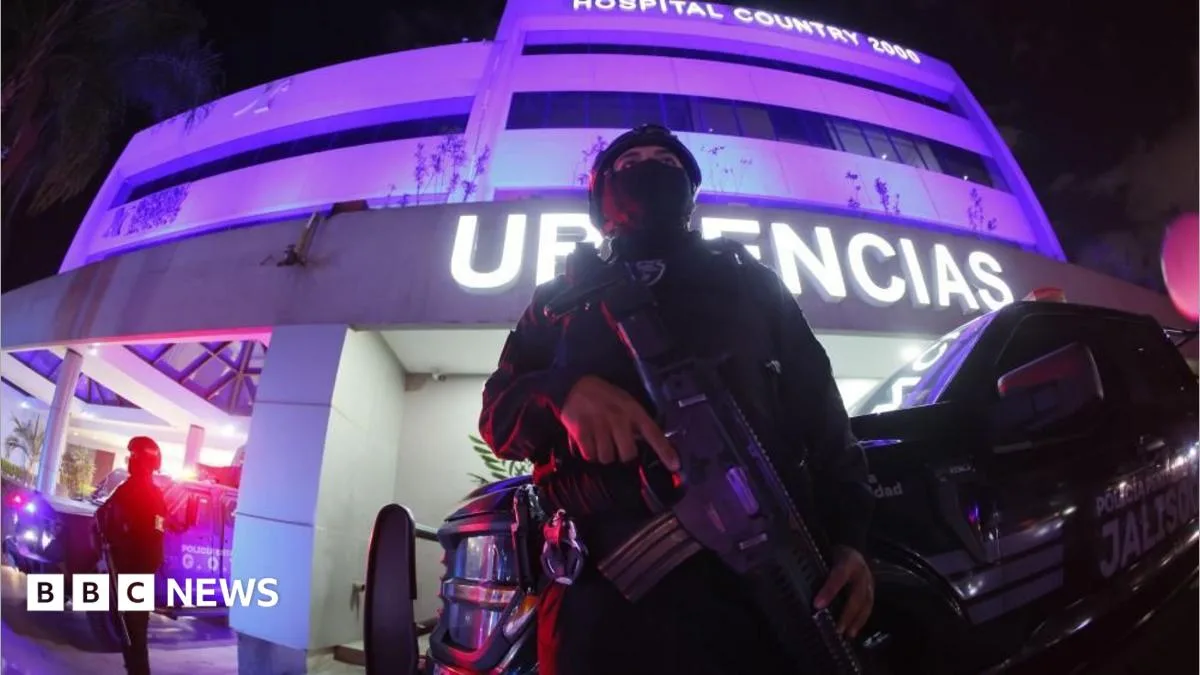
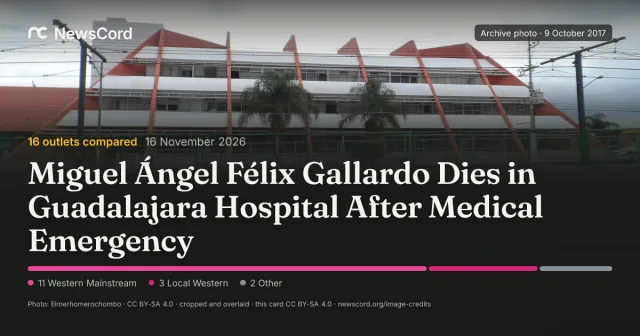
Miguel Ángel Félix Gallardo, the architect of modern Mexican drug trafficking and founder of the defunct Guadalajara Cartel, died at age 80 on Sunday at a health center in Guadalajara, western Mexico. According to the Jalisco Secretariat of Security, Félix Gallardo died at 2 p.m. due to multiple organ failure. He had been rushed to the medical facility on an emergency basis from his Puente Grande prison cell on Friday alongside a heavy security team including air support, after being under observation with a guarded prognosis. Mexican prison police secured the hospital following his admission, and while authorities stated he suffered multiple organ failures, the security ministry noted his health had spiraled in recent years, blighted by issues including high blood pressure, diabetes, and deafness.
Félix Gallardo, widely known as The Godfather or the Boss of Bosses, was incarcerated since 1989 as part of a 77-year sentence for drug trafficking offenses and the 1985 torture and murder of U.S. Drug Enforcement Administration agent Enrique "Kiki" Camarena. Camarena had angered the criminal group after discovering and destroying a vast marijuana plantation in Chihuahua belonging to the cartel. His death sparked one of the biggest manhunts the U.S. government ever launched in North America, tightening the net around Félix Gallardo, along with co-founders Rafael Caro Quintero and Ernesto Fonseca Carrillo. That murder permanently altered cross-border law enforcement and cemented the kingpin's notoriety in trafficking history.
That leaves the enduring legacy of the Guadalajara Cartel, which reigned over Mexican drug trafficking at the height of the cocaine boom of the 1980s. Félix Gallardo revolutionized regional smuggling by building a partnership between criminal groups in Colombia—particularly Pablo Escobar's Medellín Cartel—and his own organization, combining Andean cocaine production with Mexican transportation across the U.S. border. At one point, an estimated 80% of all cocaine entering the United States came from the Medellín Cartel, with Félix Gallardo playing a major role in smuggling it in. At its height, his cartel influenced Mexican politics and law enforcement by controlling entire police networks and state governorships, creating a new modus operandi in the illegal drug trade that endures to this day.
From the Guadalajara Cartel to Modern Drug Dynasties
The arrest of Félix Gallardo in 1989 triggered the fracture of his vast criminal empire, giving rise to new groups including the Sinaloa Cartel in the country's north. During the 1980s, Joaquín "El Chapo" Guzmán was introduced to Félix Gallardo, who put him in charge of handling logistics for his drug organization. From the subsequent break-up of the empire after the boss's arrest, the Sinaloa Cartel emerged under Guzmán, who was sentenced to life in prison in 2019 for drug trafficking and money laundering following one of the most high-profile trials in recent U.S. history.
Félix Gallardo's final years were defined by legal battles over his deteriorating physical condition. In 2019, he filed a request for house arrest citing his advanced age and declining health, but the courts rejected the petition. Although a judge granted him house arrest in September 2022, the measure was never carried out because of appeals filed by Mexico's Attorney General's Office. Co-founder Rafael Caro Quintero was recaptured in July 2022 and extradited to the United States in February of last year along with 28 other inmates sought for drug trafficking-related crimes tied to the killing of Camarena.
After remaining under observation with a guarded prognosis, he died on November 15 at the medical facility.
Jalisco Secretariat of Security, via The Sun
That leaves the historical weight of an era where a single alliance bridged South American production and North American demand, laying the groundwork for contemporary cartel structures. While the state security apparatus secured his final moments in a Guadalajara hospital, the organizations he midwifed continue to drive transnational narcotics flows.
Chronology of the Guadalajara Cartel and Its Leadership
- 1985: DEA agent Enrique "Kiki" Camarena is kidnapped, tortured, and murdered after discovering and destroying a vast marijuana plantation in Chihuahua belonging to the Guadalajara Cartel.
- 1989: Miguel Ángel Félix Gallardo is captured and subsequently sentenced to decades in prison, leading to the break-up of his organization and the eventual emergence of the Sinaloa Cartel.
- 2019: Félix Gallardo files a request for house arrest, which courts reject; meanwhile, Joaquín "El Chapo" Guzmán is sentenced to life in prison in the U.S.
- September 2022: A judge grants Félix Gallardo house arrest due to failing health, but appeals from Mexico's Attorney General's Office prevent the measure from being carried out.
- February of last year: Co-founder Rafael Caro Quintero is extradited to the United States alongside 28 other inmates for crimes related to the Camarena murder.
- November 15: Félix Gallardo dies in hospital in Guadalajara at age 80 due to multiple organ failure after being transferred from Puente Grande prison.
That leaves open the question of how the final chapter of the Guadalajara Cartel generation will influence ongoing diplomatic and security cooperation between Mexico and the United States regarding historic prosecutions. With the passing of the Boss of Bosses, the last imprisoned pillars of a foundational 1980s syndicate have exited the stage, leaving behind modern cartels whose decentralized structures operate on a scale far beyond even the cocaine boom he engineered.