Miguel Ángel Félix Gallardo, Mexican drug kingpin, dies at 80
Miguel Ángel Félix Gallardo, the Mexican drug lord known as the Boss of Bosses, has died at 80 following a 37-year imprisonment.
Miguel Ángel Félix Gallardo, Mexican drug kingpin, dies at 80
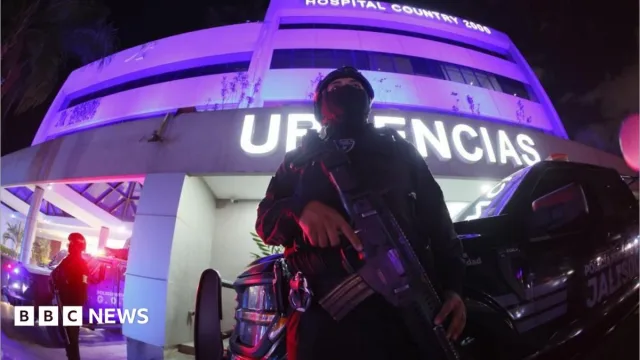
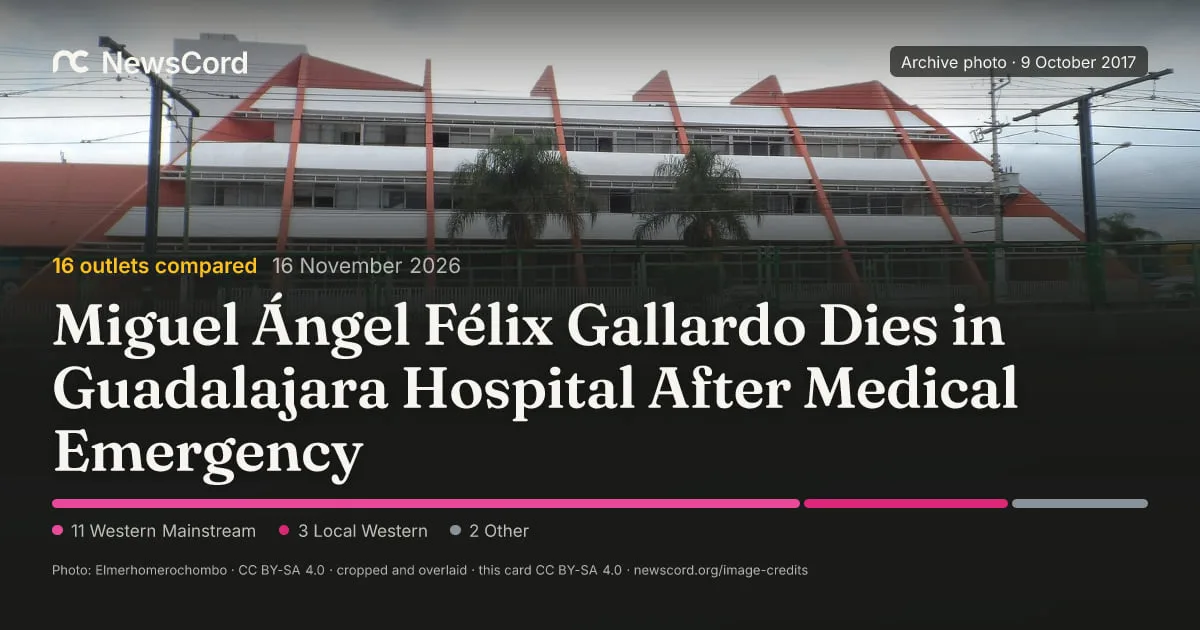
Miguel Ángel Félix Gallardo, the notorious Mexican drug lord dubbed The Godfather and the Boss of Bosses, died at the age of 80 on Sunday at a hospital in the western city of Guadalajara. According to the Jalisco state security department, his death occurred at 2 pm local time due to multiple organ failure. He had been hospitalised since Friday, when he was rushed from Puente Grande, a maximum-security prison complex. State authorities reported that he suffered from poor oxygenation, altered level of consciousness and disorientation before passing away. Jorge Eduardo Montiel, a spokesman for the Secretary of Public Security of Jalisco state, stated that a small religious ceremony would be held at the hospital in the presence of his relatives.
That passing closes the book on a 37-year imprisonment that began with his high-profile apprehension on April 8, 1989, at a house in Guadalajara by federal police. At the time of that arrest, the Mexican attorney general, Enrique Alvarez del Castillo, described him as the No. 1 narcotics trafficker in Mexico. The Europe 1 account noted he was serving a combined 77-year prison sentence for drug trafficking offenses and for the 1985 killing of US Drug Enforcement Administration agent Enrique Kiki
Camarena.
The Guadalajara cartel, also known as The Federation, was founded in the late 1970s by Félix Gallardo together with Rafael Caro Quintero and Ernesto Fonseca Carrillo. Félix Gallardo, a former local police officer and gubernatorial aide from Sinaloa, helped build an organization that dominated drug trafficking in Mexico during the 1980s cocaine boom, entering into partnership with Colombian cartels like Escobar’s Medellín Cartel to pool production in the Andes with Mexican transportation across the border into the US. The Independent reported that at one point, an estimated 80 per cent of all cocaine that entered the US came from the Medellín Cartel. Those standard operating procedures shaped modern international drug trafficking before the cartel eventually splintered into several criminal organisations in the country’s north, including the Sinaloa cartel.
What led to the fall of the Boss of Bosses?
The collapse of Félix Gallardo’s empire traces back to one of the most notorious killings in law enforcement history: the 1985 abduction, torture, and murder of U.S. DEA special agent Enrique Kiki
Camarena and his pilot, Alfredo Zavala Avelar. The New York Times and other accounts noted that the U.S. Drug Enforcement Administration accused Félix Gallardo of the kidnapping, torture, and murder of an undercover agent, Enrique Kiki
Camarena. The Europe 1 account recorded that Camarena was kidnapped on February 7, 1985, at the exit of the U.S. Consulate in Guadalajara, with the bodies of Camarena and Zavala Avelar discovered in Michoacán in March. That assassination triggered overwhelming U.S. political pressure that ultimately broke through state protection. The Europe 1 account noted that the Attorney General of Mexico acknowledged corrupt police provided him with information on investigations and protected his shipments. All three founders were convicted in Mexico in connection with Camarena’s killing.
Of the three co-founders, Rafael Caro Quintero was released on procedural grounds in 2013, but was recaptured in July 2022. In February 2025, he was extradited to the United States along with 28 other prisoners wanted by US authorities on drug-related charges.
Despite his decades behind bars, the kingpin maintained he had nothing to do with the empire he built. Four years earlier, El País quoted him denying the very existence of his organization:
There were never cartels in Guadalajara. I dedicated myself to agriculture and livestock since I was a child.
Miguel Ángel Félix Gallardo, via El País
Why did his release attempts fail despite failing health?
Félix Gallardo waged a prolonged legal battle to secure his freedom. The Independent reported that he had sought house arrest since 2019, citing his advanced age and deteriorating health, while the DW account noted that he spent the last years of his life trying to convince the courts to grant him house arrest without success. The BBC reported he was granted house arrest in 2022 but technical problems with electronic ankle monitoring prevented his transfer, and it said he died in hospital in his native Guadalajara. The Independent added that while courts initially rejected his requests, in September 2022 a judge granted him house arrest, but the order was never carried out because of legal challenges by Mexico’s federal attorney general’s office.
That final legal wall kept him locked away until his death, ensuring the state never conceded an inch on his accountability for the 1985 murder. That leaves prosecutors and courts to manage the final closure of an era without ever having permitted the aging kingpin a final homecoming.
What is the legacy of the Guadalajara Cartel?
Félix Gallardo’s historical footprint extends far beyond the courtrooms and prison walls. Arynews.tv described him as the de facto godfather of current day Mexican drug trafficking, noting that his leadership spurred the creation of countless others. The BBC credited him with building an alliance between criminal groups in Colombia and his own Mexican cartel.
That criminal history also secured his place in global popular culture. He remained a palpable presence through true crime literature and television adaptations, most prominently by star Diego Luna as him in the Netflix hit Narcos: Mexico.
Updated 1 time since publication; last update 18 November 2026, 06:04.