FBI arrests California woman accused of spying on Taiwan president's son
Federal prosecutors arrested a 34-year-old California woman at LAX for allegedly acting as an unregistered foreign agent surveilling Taiwan leader's son.
- Headline: FBI arrests California woman accused of spying on Taiwan president's son
- Dispatch Summary: Federal prosecutors arrested a 34-year-old California woman at LAX for allegedly acting as an unregistered foreign agent surveilling Taiwan leader's son.
- Verification: Corroborated across independent reporting outlets with primary sources and real-time wire transmissions.
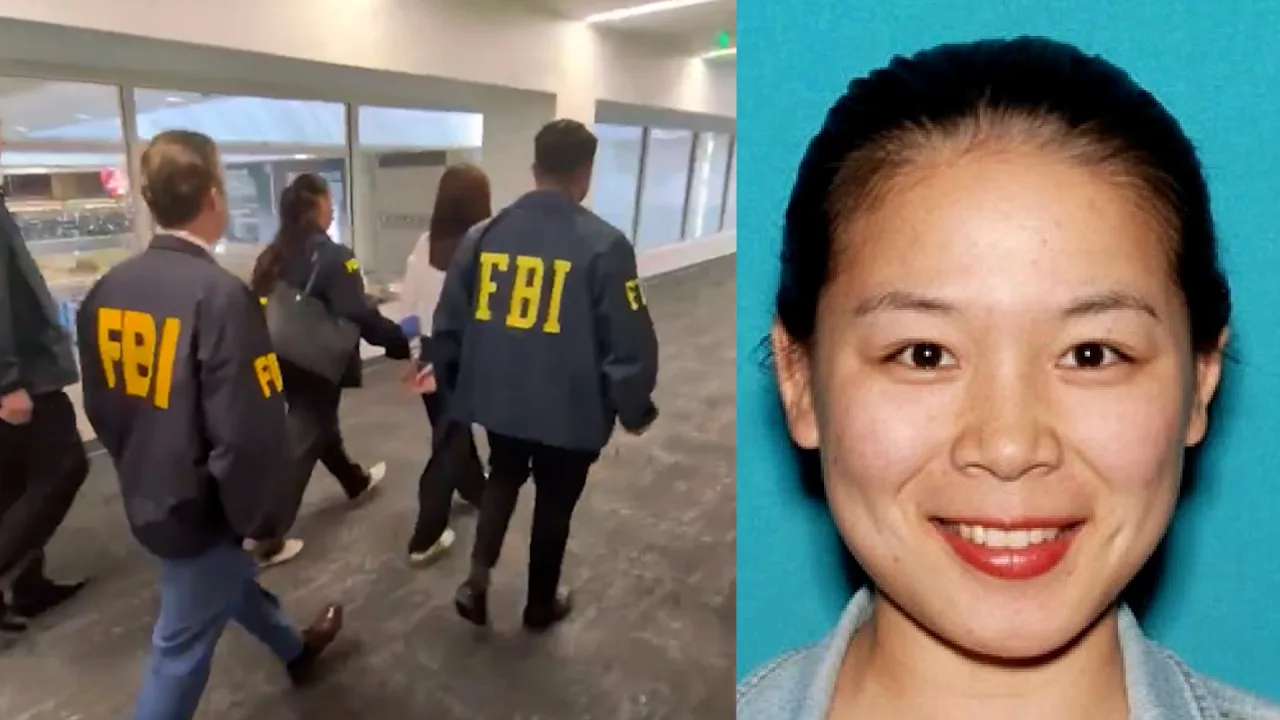
The FBI arrested Wanying Zhang, a 34-year-old California realtor, at Los Angeles International Airport on Sunday after she was accused of spying on the son of Taiwan’s president for China. Zhang, known as “Heather,” was detained as she prepared to board a flight to Shanghai, with federal prosecutors charging her with acting as an unregistered foreign agent of the People’s Republic of China.
According to a criminal complaint filed by FBI Special Agent Kevin Holt, Zhang surveilled Lai Ting-yu, a U.S.-based son of Taiwanese President Lai Ching-te, and transmitted sensitive information to Chinese officials. The complaint detailed that Zhang traveled to Seattle in 2025 at the direction of Chinese authorities, using covert methods to avoid detection. She allegedly took photos and videos of Lai Ting-yu’s family, including license plate data, and sent them to Chinese handlers via encrypted messaging apps.
Zhang’s alleged activities included text messages to a Chinese government contact, such as “Saw him. It’s that young one,” and “I am videorecording,” according to the complaint. Security camera footage from a neighbor’s home in Seattle reportedly showed Zhang and an accomplice filming Lai Ting-yu’s residence in September 2025. The target, an engineer in his 30s who works for Philips, had previously studied in the U.S. and resides in the country with his wife and child.
Taiwan’s presidential office described the case as a “typical case of transnational repression,” a term used to describe governments targeting critics or dissidents abroad. Spokesperson Karen Kuo condemned the actions, stating they “disregard human rights and national sovereignty.” The office thanked the U.S. for protecting Taiwanese citizens, though it did not confirm whether Lai Ting-yu was the sole target of the surveillance.
Chinese officials did not respond to requests for comment, but the U.S. Justice Department emphasized that Zhang failed to register as a foreign agent, a violation of federal law. Bill Essayli, first assistant U.S. attorney for the Central District of California, stated that Zhang used “tradecraft” to evade detection and did not disclose her work for a foreign government. Her husband, Edric Ding, a realtor at the same firm, told CBS News he was unaware of the allegations.
The case adds to a broader pattern of Chinese intelligence operations in the U.S., including previous arrests of agents linked to the Ministry of State Security. In 2024, Shujun Wang, a 75-year-old Chinese national, was convicted for infiltrating a pro-democracy group in New York for 17 years. Earlier this year, two individuals were arrested for operating an unofficial Chinese police station in Manhattan to monitor dissidents.
| Detail | Information |
|---|---|
| Arrested Individual | Wanying Zhang (also known as Heather), 34, Irvine, California |
| Charges | Acting as an unregistered foreign agent of the People’s Republic of China |
| Alleged Target | Lai Ting-yu, son of Taiwanese President Lai Ching-te, U.S. resident |
| Surveillance Methods | Photos, videos, license plate data, and encrypted messaging |
| Location of Activities | Seattle, Washington (2025), and U.S. locations tied to Lai Ting-yu |
| Legal Proceedings | First court appearance scheduled for Monday in Los Angeles federal court |
Zhang’s arrest highlights ongoing tensions between the U.S. and China over espionage and the protection of foreign nationals. Taiwan, which China claims as part of its territory, has long accused Beijing of targeting its citizens abroad. The case also underscores the U.S. government’s focus on countering foreign intelligence operations, particularly those involving Chinese entities.
Frequently Asked Questions
What are the specific charges against Wanying Zhang?
Zhang is charged with acting as an unregistered foreign agent of the People’s Republic of China, a federal offense. She is accused of surveilling the son of Taiwan’s president and transmitting sensitive information to Chinese officials.
Who is the alleged target of the surveillance?
The target is identified as Lai Ting-yu, a U.S.-based son of Taiwanese President Lai Ching-te. He works for the Dutch electronics firm Philips and resides in the U.S. with his wife and child.
What is the geopolitical context of this case?
The case occurs amid heightened tensions between the U.S. and China over espionage and Taiwan’s status. Taiwan’s presidential office labeled the actions as “transnational repression,” while China has not commented directly. The U.S. does not have formal diplomatic ties with Taiwan but is its primary international supporter.
Zhang is expected to appear in federal court on Monday, where further details about her legal defense and the scope of the surveillance will likely emerge. The case also raises questions about the extent of Chinese intelligence operations in the U.S. and the measures being taken to counter them. As the investigation continues, the implications for U.S.-China relations and Taiwan’s security remain significant.
How significant is this wire dispatch?
Cast your anonymous vote to register reader consensus across journalism and intelligence sectors.
Dateline Wire is dedicated to independent, evidence-backed reporting. This briefing was synthesized from primary source reporting, corroborated across independent newsrooms, and verified against our Editorial Standards.