Musk says it would be ‘an honor’ to hire scandal-struck Nvidia CEO Jense…
Elon Musk stated it would be an honor to hire Nvidia CEO Jensen Huang as the chipmaker's board reviews his future amid foreign intelligence and ethics probes.
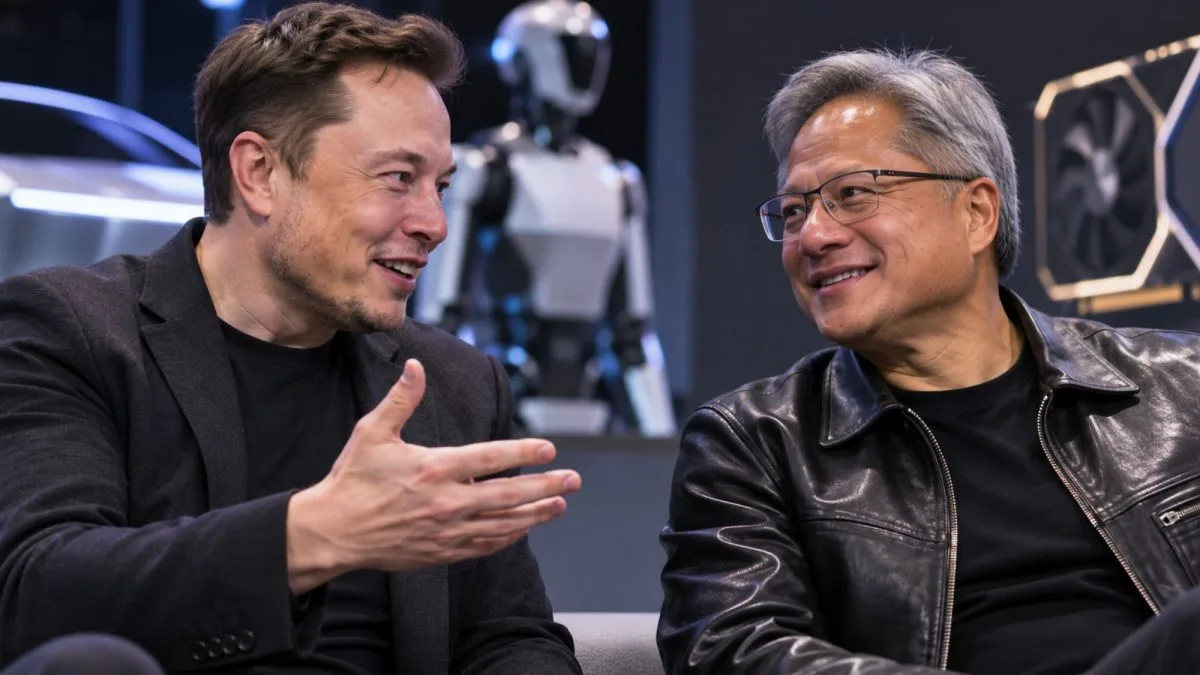
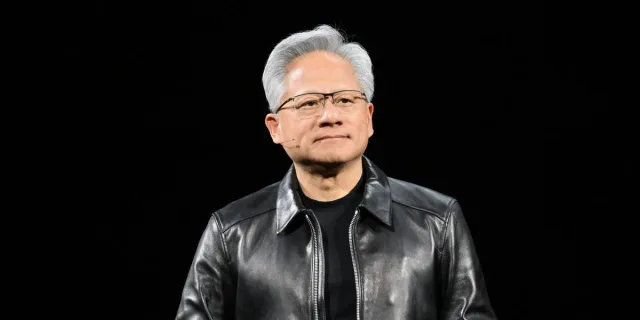
The promise that defined the modern artificial intelligence boom—that visionary engineering and unshakeable corporate leadership would march hand in hand—is colliding with an unprecedented personal and geopolitical crisis at Nvidia. As the chipmaker's board met late Wednesday to decide his fate, Elon Musk seized the moment on social media to declare that hiring 63-year-old co-founder and chief executive Jensen Huang would be an honor
. That public overture lays bare the central fracture of the current technology landscape: while Washington lawmakers demand resignations and intelligence agencies probe alleged compromises, the world’s richest entrepreneurs are openly circling the most influential executive in the semiconductor industry.
The crisis metastasized rapidly following revelations that unspooled across multiple newsrooms. Huang sent a memo to Nvidia employees Sunday admitting he had been unfaithful to his wife and saying he was deeply sorry
for the hurt he had caused without going into details. That admission followed reports regarding Alice Huang, also known as Huang Le, a former executive at cloud computing company Megaspeed whom U.S. intelligence officials believed had been recruited by China's Ministry of State Security to gather information on the chief executive. China has denied the claims that Alice Huang, also known as Huang Le, was recruited by its Ministry of State Security for corporate espionage purposes, calling them purely unsubstantiated and directed at smearing China,
and the intelligence claims have not been independently established. Compounding the governance crisis, a subsequent report by The New York Times on November 11 alleged that Huang had also been involved in an extramarital relationship with Kimberly Powell, an Nvidia vice president who reportedly worked directly under him. Nvidia has not publicly confirmed the relationship. Powell has also not publicly confirmed the allegation.
How Did the Markets and the Board Respond to the Scandal?
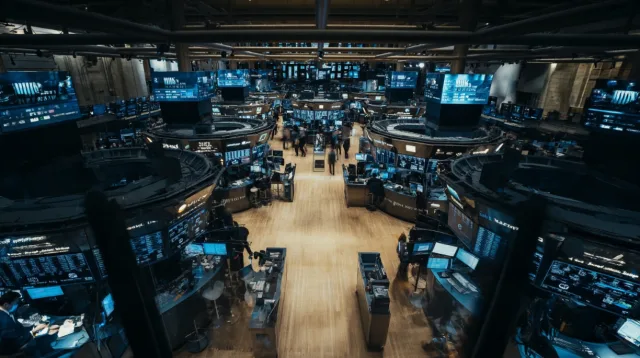
The convergence of foreign intelligence scrutiny and internal governance questions triggered an immediate financial earthquake. Nvidia stock fell $14.95, or 8.61%, to $158.78 in after-hours trading Wednesday, after closing the regular session at $173.73, up $4.84, or 2.87%, according to data from aa.com.tr. Other reports indicated the stock fell approximately 9 percent in after-hours trading, knocking approximately $350 billion from its value. The board of directors responded to the initial affair by launching an internal investigation into the revelations led by law firm Wachtell, Lipton, Rosen & Katz and prepared to meet late Wednesday to determine whether to oust Huang.
The swiftness of the board's deliberations contrasts sharply with Huang's immense tenure. Huang co-founded Nvidia in 1993 and has served as its president and chief executive since its inception, transforming the enterprise from a graphics-chip manufacturer into a $4 trillion dominant supplier of processors powering the global artificial intelligence investment cycle. Yet that monumental success now intersects awkwardly with his personal conduct, leaving directors weighing the preservation of institutional stability against the severe reputational liabilities of keeping him at the helm.
Who is Demanding Accountability in Washington?
The fallout has escaped the boardroom and entered the highest corridors of American political power. Republican leaders of three House committees called for Huang to deliver closed-door testimony on his interactions with the alleged intelligence asset. Compounding the political pressure, U.S. Senator Kevin Cramer, R-N.D., a member of the Senate Banking Committee, told CNBC: As a matter of his own conscience, he should resign.
Cramer's demand was echoed by other lawmakers, including Rep. Suhas Subramanyam, D-Va., a member of the House Oversight Committee, and Rep. Don Bacon, R-Neb., who is retiring from Congress.
The diplomatic dimensions run deeper still. Reports emerged that Trump was warned
about Huang’s compromised position by Secretary of State Marco Rubio in May as the executive joined their visit to Beijing, despite his saying earlier in the week that he had been blindsided by the news. Meanwhile, Democratic senators Elizabeth Warren and Chris Coons have also written to Commerce Secretary Howard Lutnick to demand that all company records relating to Nvidia’s dealings with China be preserved. This bipartisan convergence of oversight demands leaves the chipmaker vulnerable to regulatory and legislative bottlenecks that could impede its operations across the semiconductor and AI sectors.
What Would an Alliance Between Musk and Huang Mean for Tech?
Into this vacuum stepped Elon Musk, whose response on X to a post from a financial blog called Zerohedge appealing to him to Elon please hire Jensen
was a succinct That would be an honor.
Musk did not identify a potential position for Huang or specify which of his companies could employ him, offering no details of a formal job offer or recruitment discussions. Even so, the public statement highlights the profound interconnectedness of the elite technology ecosystem. Tesla uses powerful computing systems to train its autonomous-driving and artificial intelligence models, SpaceX operates in an increasingly technology-intensive environment, and xAI is another major consumer of computing resources.
Because Nvidia hardware and software have become the foundational layer for training advanced AI models globally, any relocation of Huang's talent would send shockwaves through competing enterprises. Musk has also previously expressed support for the Nvidia chief. Earlier in November, he agreed with a social media post by Sequoia Capital partner Shaun Maguire, who described Huang as an important entrepreneur while acknowledging concerns about the controversy surrounding him. Whether Musk’s overture amounts to genuine recruitment strategy or tactical posturing during a leadership crisis, it shows the outsized value placed on executive talent in an industry driven by scarce engineering leadership.
What Happens Next for Nvidia and Its Embattled Chief?
Despite the turmoil, Huang sought to project a business as usual
atmosphere on his first day back at the office after the revelations. Nvidia has not formally announced a succession decision, and until the board completes its review and issues an official communication, Huang remains the company’s chief executive. Investors, customers, and employees are left watching for the outcome of the Wachtell, Lipton investigation and any formal declarations from the directors regarding the reported allegations.
The core question remaining is whether Nvidia’s board can insulate the world's most vital AI supplier from the compounded pressures of espionage probes, shareholder sell-offs, and congressional subpoenas without severing ties with the founder who built it. As global competitors race to develop alternative processors and technology markets digest the after-hours valuation swings, the resolution of Huang's future will determine not only the trajectory of a $4 trillion chipmaker, but the leadership architecture of the global artificial intelligence economy.