Anak Krakatau eruption strands 170,000 passengers across 8 airports
The eruption of Mount Anak Krakatau caused widespread flight suspensions at eight airports. Volcanic ash clouds reached altitudes of up to 50,000 feet, disrupting over 1,500 flights.
Volcanic Ash Disrupts Air Travel Across 8 Airports
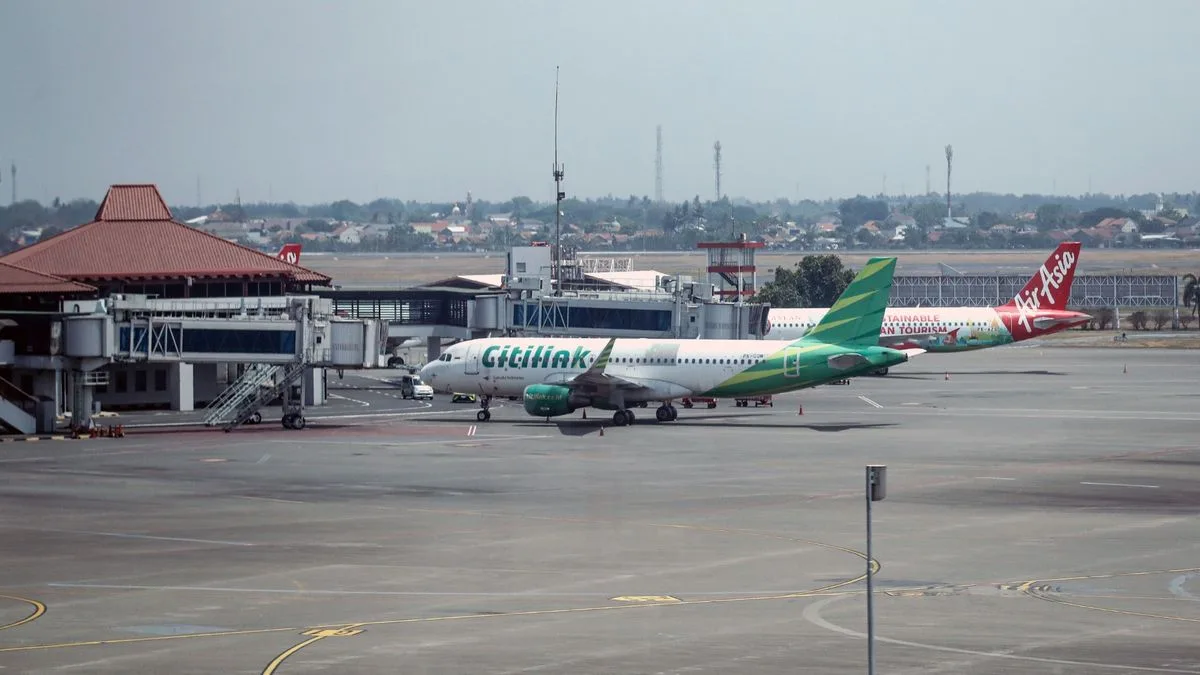
The eruption of Mount Anak Krakatau in Indonesia's Sunda Strait triggered widespread flight suspensions at eight airports, stranding over 150,000 passengers as of Sunday, 6 September 2026. The eruption, which began late on Friday, sent volcanic ash clouds as high as 50,000 feet over Sumatra and 20,000 feet over Java, prompting airspace closures and flight cancellations. Soekarno-Hatta International Airport in Jakarta, the country’s main hub, remained shut until at least 8:59 a.m. local time on Monday, with operations extended multiple times due to ongoing ash dispersion.| Detail | Information |
|---|---|
| Passengers stranded | 170,000 (dailymail.com) / 150,000 (mirror.co.uk) |
| Flights affected | 1,500 (dailymail.com) / 712 (mirror.co.uk) |
| Ash height | 50,000 feet (Sumatra side) / 20,000 feet (Java side) |
| Airports closed | 8 (including Soekarno-Hatta, Kertajati, Ahmad Yani, Juanda) |
Passenger Stranding and Airport Closures
Soekarno-Hatta International Airport, which handles a significant portion of Indonesia’s air traffic, became the epicenter of the disruption. The transport ministry reported that 964 flights were canceled at the airport alone, with total disruptions across eight airports exceeding 1,500 flights. Passengers from Singapore, Doha, Sydney, and Kuala Lumpur faced cancellations, while airlines like Singapore Airlines, Malaysia Airlines, and Lion Air Group suspended services. Ersy Laksita Rini, a 55-year-old passenger, criticized airlines for failing to notify travelers of cancellations in advance. “If the eruption happened last night and there were predictions of flight cancellations, we should have been notified from the start,” she said. Similarly, French national Eloan Tasset expressed uncertainty about his delayed flight, stating, “If they tell me my flight is cancelled, I think I’m going to try to find a hotel in Jakarta.” The airport operator provided food, refreshments, and bus services to stranded passengers, while the disaster mitigation agency BNPB announced plans to conduct weather modification operations, including cloud-seeding, to wash away ash. “If it rains heavily enough, the volcanic ash will be washed away quickly,” BNPB chief Suharyanto said.Broader Impacts and Safety Measures
Beyond air travel, the eruption caused health and environmental concerns. Schools in Banten and West Java canceled activities due to eye irritations from ash, while fishermen and residents in Cianjur, 200 km from the volcano, faced restrictions. Police distributed masks to motorists, and governors of Jakarta and Lampung ordered remote learning to protect students. The transport ministry also warned of volcanic hazards for maritime traffic, advising vessels to stay at least 3 km from Anak Krakatau’s crater. Meanwhile, Mount Semeru in East Java erupted simultaneously, sending an ash column 1 km high, prompting additional safety advisories.Historical Context and Ongoing Risks
Anak Krakatau, a volcanic island formed from the remnants of the 1883 Krakatoa eruption, has been on alert level 3 since July 2. The 2018 eruption of Anak Krakatau triggered a tsunami that killed over 400 people. However, authorities confirmed no tsunami risk this time, though the volcano’s activity remains under close monitoring. The disaster mitigation agency emphasized that while no evacuation orders were issued, residents were advised to wear masks, cover water sources, and avoid outdoor activities during ashfall. “In the event of ashfall, people are advised to wear masks and eye protection,” said BNPB spokesperson Berton Panjaitan.Frequently Asked Questions
How many passengers were stranded by the eruption?
Reports vary, with dailymail.com citing 170,000 stranded passengers and mirror.co.uk reporting 150,000. The discrepancy likely reflects different reporting timelines and data sources.
Which airports were affected?
Eight airports were closed or disrupted, including Soekarno-Hatta International, Kertajati, Ahmad Yani, Juanda, and others in Banten, Lampung, and West Java. Flights to and from Singapore, Doha, Sydney, and Kuala Lumpur were particularly impacted.
The situation remains fluid as authorities monitor ash dispersion and work to resume normal operations. For now, stranded passengers continue to navigate the uncertainty, relying on airline support and local resources to manage the disruption.
Dateline Wire is dedicated to independent, evidence-backed reporting. This briefing was synthesized from primary source reporting, corroborated across independent newsrooms, and verified against our Editorial Standards.