Pennsylvania reports fourth measles death in worst state outbreak in 35 …
Pennsylvania has documented 693 measles cases and four deaths among unvaccinated individuals, leading to political tensions over vaccine skepticism.
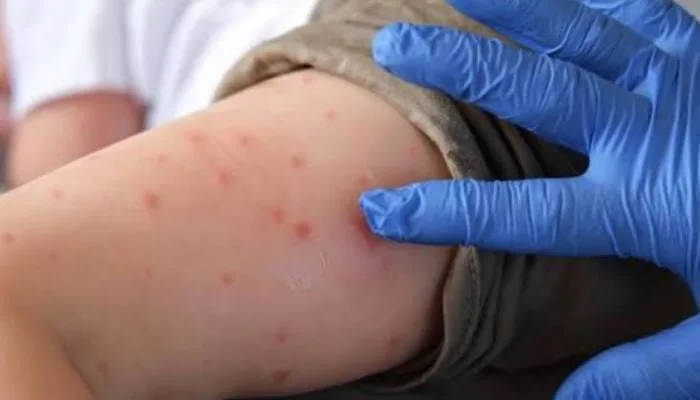
Pennsylvania’s measles outbreak has reached a critical threshold, with health officials confirming a fourth death in the state’s worst outbreak in over three decades. The fatality, an 18-year-old Mifflin County resident, died from acute disseminated encephalomyelitis, a rare neurological complication of measles, according to the county coroner. This follows the deaths of a 40-year-old Jefferson County woman, an infant in Lancaster County, and a second infant, whose cause of death remains under investigation. All four victims were unvaccinated, highlighting the role of declining immunization rates in the crisis.
Outbreak Timeline and Demographics
The state’s health department has documented 693 measles cases this year, with 133 hospitalizations. The outbreak has disproportionately affected rural and agricultural regions, including Lancaster and Mifflin counties. The first two deaths occurred in August among infants in Lancaster County, both of whom were too young for the measles, mumps, and rubella (MMR) vaccine. The 6-week-old infant was confirmed to have died from measles complications, while the newborn’s death was attributed to an internal hemorrhage and spleen rupture, though measles virus was detected in lung tissue. The state’s health secretary, Dr. Debra Bogen, emphasized that all four deaths are classified as “measles-associated” due to clinical and laboratory evidence.
| Victim Details | Information |
|---|---|
| Age and County | 18-year-old Mifflin County resident; 40-year-old Jefferson County woman; two Lancaster County infants (newborn and 6-week-old) |
| Death Cause | Acute disseminated encephalomyelitis (18-year-old); measles complications (40-year-old woman); internal hemorrhage and spleen rupture (newborn); measles-linked neurological issues (6-week-old) |
| Vaccination Status | All unvaccinated; infants too young for MMR vaccine |
The state’s health department has attributed the outbreak to a combination of waning vaccination rates and the virus’s high transmissibility. Measles, declared eliminated in the U.S. in 2000, resurges when coverage drops below the 95% threshold needed for herd immunity. Pennsylvania’s kindergarten vaccination rates have declined in recent years, with experts linking the trend to misinformation and political rhetoric. The outbreak has also drawn national attention, with the U.S. reporting over 3,300 cases in 2026—its highest number since 1991.
CDC Dispute and Political Tensions
A significant point of contention is the Centers for Disease Control and Prevention’s (CDC) stance on the deaths. While Pennsylvania officials classify the fatalities as measles-related, the CDC has not confirmed them as such, citing a lack of 2026 death records. The agency typically relies on state health departments for such data but has not yet validated Pennsylvania’s findings. This discrepancy has raised questions about the federal agency’s role in tracking and responding to outbreaks.
The political dimension of the crisis has intensified, with Pennsylvania Governor Josh Shapiro accusing Health Secretary Robert F. Kennedy Jr. of stoking vaccine skepticism. The dispute dates back to August, when Shapiro criticized Kennedy’s anti-vaccine advocacy, while Kennedy suggested the infant deaths might have been “fabricated” for political gain. The controversy has fueled broader debates about the impact of anti-vaccine rhetoric on public health, with experts warning that misinformation undermines efforts to control preventable diseases.
Public Health Response and Challenges
Pennsylvania’s health department has intensified outreach efforts to combat the outbreak, emphasizing the efficacy of the MMR vaccine. Two doses of the vaccine offer 97% protection against measles, yet vaccination rates have faltered due to parental waivers, limited healthcare access, and disinformation. The state has also faced challenges in coordinating with the CDC, as the agency has not requested assistance despite the scale of the outbreak. Pennsylvania officials maintain that they submit death records to the CDC daily, but the agency’s reluctance to confirm the cases has complicated national reporting.
Measles’ resurgence has broader implications for global health. The disease remains a leading cause of vaccine-preventable infant mortality worldwide, and the U.S. faces pressure to maintain its measles-free status. International health officials will assess the country’s status in November, with recent outbreaks threatening to reverse progress made over the past two decades.
Frequently Asked Questions
Why has the CDC not confirmed the Pennsylvania measles deaths?
The CDC has not yet validated the deaths as measles-related, citing a lack of 2026 death records. While Pennsylvania classifies the fatalities as “measles-associated,” the agency typically relies on state health departments for such data, and the discrepancy reflects a departure from past practices.
What role did vaccination rates play in the outbreak?
Declining vaccination rates, particularly among kindergarten-aged children, have contributed to the outbreak. Measles requires 95% coverage to prevent transmission, but Pennsylvania’s rates have fallen below this threshold, enabling the virus to spread rapidly in communities with low immunity.
How have political tensions affected the response?
Political disputes, including accusations between Governor Josh Shapiro and Health Secretary Robert F. Kennedy Jr., have amplified public debates about vaccine safety. These tensions have complicated efforts to address misinformation and restore trust in immunization programs.
The outbreak underscores the fragility of public health gains in the face of misinformation and political polarization. As Pennsylvania grapples with its worst measles crisis in decades, the state’s health department continues to urge residents to seek vaccination, while the CDC’s delayed confirmation of deaths raises questions about federal coordination. With international health officials set to review the U.S.’s measles status, the coming months will test the resilience of both state and national public health infrastructure.
Dateline Wire is dedicated to independent, evidence-backed reporting. This briefing was synthesized from primary source reporting, corroborated across independent newsrooms, and verified against our Editorial Standards.