India approves Takeda’s Qdenga as its first vaccine for dengue
The Drug Controller General of India has authorized Takeda’s Qdenga, a two-dose vaccine that offers protection against all four dengue virus serotypes without requiring pre-screening.
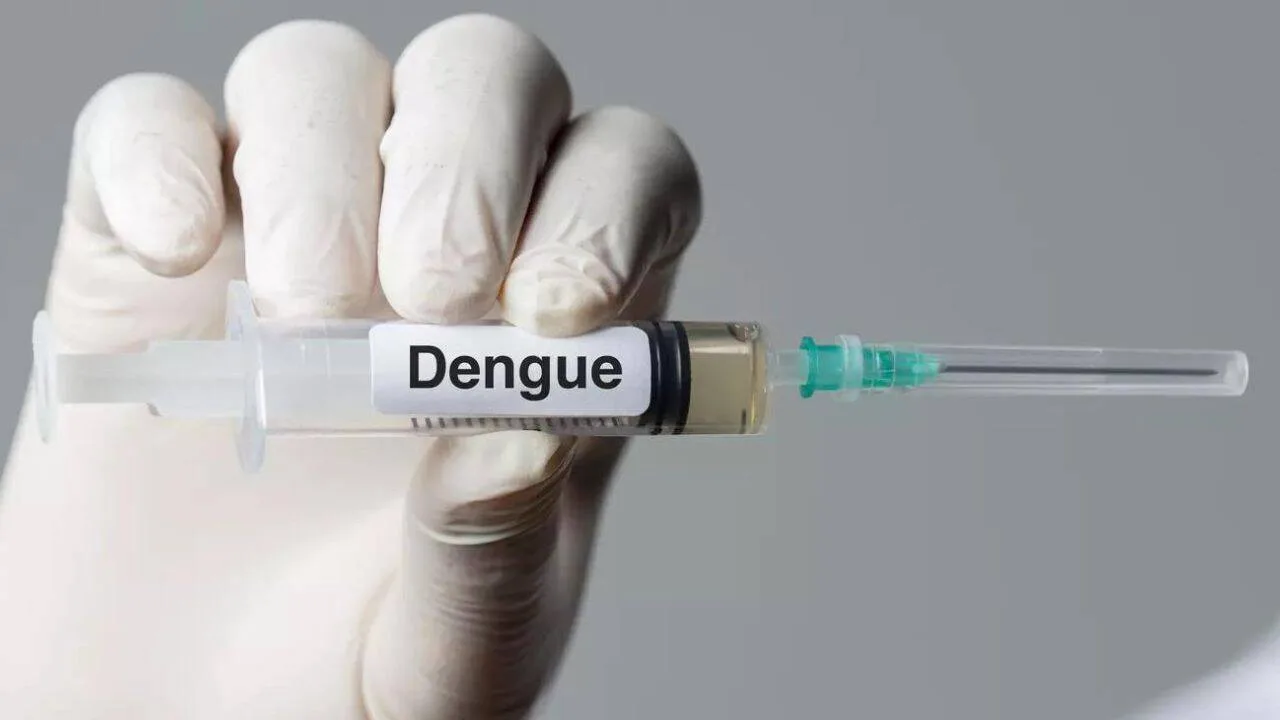
India has approved its first dengue vaccine, Qdenga, marking a pivotal moment in the nation’s battle against the mosquito-borne disease. The Drug Controller General of India (DCGI) granted market authorization for the vaccine, developed by Japanese pharmaceutical company Takeda Biopharmaceuticals, for individuals aged 4 to 60 years. The vaccine, which protects against all four dengue virus serotypes (DENV 1, DENV 2, DENV 3, and DENV 4), eliminates the need for pre-vaccination testing, a significant departure from earlier dengue vaccines that required serological screening.
Qdenga, a live attenuated tetravalent vaccine, is administered as a two-dose regimen, with the second dose given three months after the first. Clinical trials have demonstrated its efficacy, including 80.2% protection against virologically confirmed dengue at 12 months post-vaccination, 90.4% efficacy against dengue-related hospitalization at 18 months, and 84.1% protection against hospitalization after 4.5 years. These results, drawn from Takeda’s global clinical development program involving over 28,000 participants, include the pivotal Phase III TIDES trial, which evaluated the vaccine in 20,000 individuals across eight countries. The approval also incorporates data from a Phase III trial conducted in India, confirming the vaccine’s safety and immunogenicity in children, adolescents, and adults.
Dengue remains a critical public health challenge in India, which accounts for nearly one-third of the global dengue burden. Reported cases have surged 11-fold over the past two decades, with 113,000 cases recorded in 2025 alone. However, modeling studies suggest the actual number of infections could reach tens of millions annually. The disease, which can progress to severe forms like dengue hemorrhagic fever, lacks specific antiviral treatments, making prevention through vaccination a priority.
“Dengue is a growing public health challenge, and India needs sustained, evidence-based prevention,” said Dr. Mahender Nayak, head of intercontinental markets at Takeda. The company emphasized that Qdenga’s approval represents a “significant milestone” in India’s dengue control efforts, complementing existing strategies such as mosquito control, surveillance, and community awareness. The vaccine has already been approved in 43 countries, including Brazil, Argentina, and Indonesia, and has received World Health Organization (WHO) prequalification, enabling its procurement through international agencies like UNICEF.
Manufacturing partnerships are underway to ensure availability. Takeda has collaborated with Biological E, a Hyderabad-based firm, to produce up to 50 million doses annually. However, pricing details remain unspecified, with the company stating that costs will depend on inclusion in government immunization programs. Commercial availability is expected by mid-2027, pending regulatory and supply chain processes. Initially, the vaccine will likely be accessible through private healthcare channels, though Takeda aims to secure its inclusion in India’s National Immunization Programme over time.
Healthcare experts have welcomed the approval but cautioned that vaccination must complement, not replace, existing measures. “Vaccination is one layer within integrated prevention,” said Suresh F. Shah, founder of Sparsh Children’s Hospital. He highlighted the vaccine’s advantage of not requiring pre-screening, which simplifies deployment in endemic regions, but noted its contraindications for immunocompromised individuals and pregnant women. Long-term efficacy data, while promising, remains under observation.
The approval comes amid parallel efforts to develop an indigenous dengue vaccine. The Indian Council of Medical Research (ICMR) and Panacea Biotec have initiated a Phase III trial for DengiAll, an indigenous tetravalent vaccine. This trial, involving participants across 18 states, aims to address gaps in local vaccine production. However, Qdenga’s global regulatory approvals and WHO prequalification position it as a critical tool in India’s immediate response to the disease.
For India, where dengue outbreaks often strain healthcare systems, the introduction of Qdenga offers hope. Yet, challenges remain, including ensuring equitable access and integrating the vaccine into broader public health strategies. As the nation prepares for its rollout, the approval underscores a shift toward proactive, science-driven solutions in combating a disease that has long tested the resilience of its healthcare infrastructure.
Dateline Wire is dedicated to independent, evidence-backed reporting. This briefing was synthesized from primary source reporting, corroborated across independent newsrooms, and verified against our Editorial Standards.