US service member killed in Iraq as Iran conflict continues
A U.S. service member was killed in northern Iraq on July 18 during a controlled detonation of an unexploded Iranian drone. The incident occurred amid ongoing U.S. airstrikes against Iranian targets following a strike in Jordan.
A U.S. service member was killed in northern Iraq on July 18 during a controlled detonation of an unexploded Iranian drone, marking the 17th American fatality in the ongoing conflict with Iran, according to U.S. Central Command (CENTCOM). The incident occurred as the U.S. continued its eighth consecutive night of airstrikes against Iranian targets, escalating tensions in the Middle East amid a collapsing ceasefire and a widening regional crisis.
The U.S. military stated the soldier died following the detonation of a downed Iranian one-way attack drone, with another service member wounded and treated for minor injuries. CENTCOM also confirmed that unidentified remains were found in Jordan, where two U.S. service members were killed in an Iranian strike on July 17. The remains are undergoing examination, though no further details were provided. The attack on the Jordanian military base, which also left one soldier missing, prompted the U.S. to launch retaliatory strikes targeting Iranian Revolutionary Guard forces, coastal surveillance facilities, and missile storage sites.
Iranian missile attacks on Jordan, including a strike near the border city of Aqaba, raised fears of spillover into Israeli territory. Israel’s military warned that debris from the Iranian missiles could threaten Eilat, its southernmost city, and activated air-raid sirens for the first time in weeks. Israeli Defense Minister Israel Katz vowed a “powerful” response to any Iranian aggression, while military chief Lieutenant General Eyal Zamir emphasized readiness to act “with great determination” against threats. Jordan’s military claimed to have intercepted multiple Iranian missiles, though no casualties were reported in the kingdom.
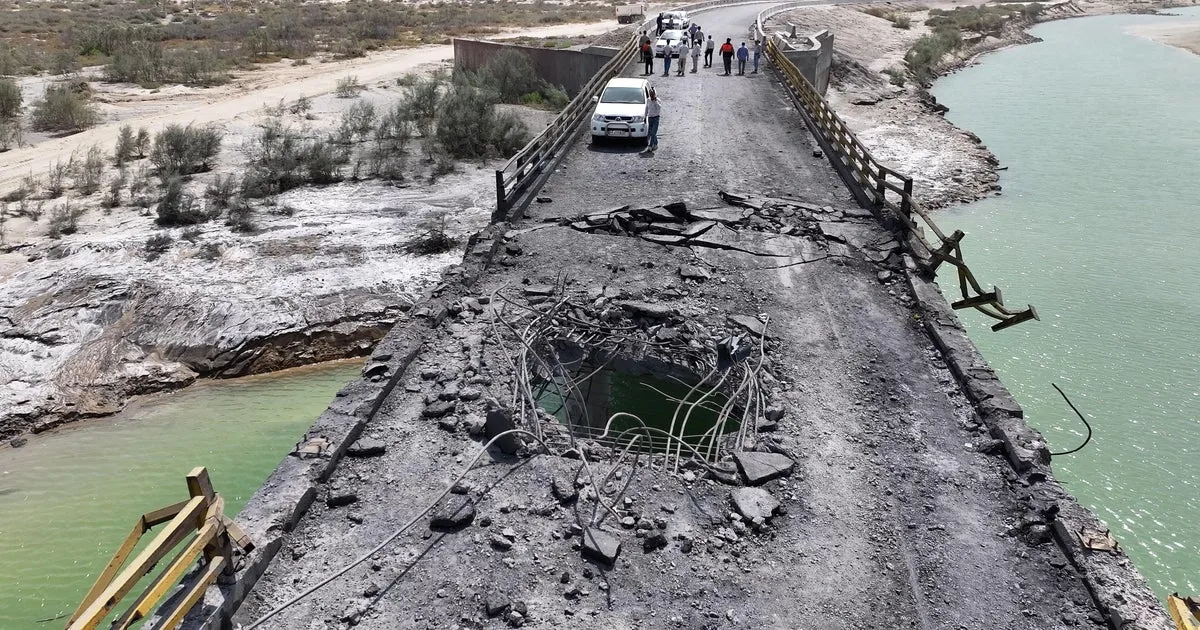
The U.S. strikes, which began on July 18, targeted Iranian infrastructure in a bid to degrade its military capabilities and secure the Strait of Hormuz, a critical oil transit route. CENTCOM stated the attacks aimed to “swiftly punish” Iranian Revolutionary Guard Corps (IRGC) forces responsible for the Jordanian strike. The campaign has seen the U.S. hit bridges, water desalination plants, and electrical facilities in Iran, while Tehran has retaliated by attacking U.S.-allied Arab states. Kuwait’s power and water desalination plant was struck for the second consecutive day, causing fires and prompting concerns over regional stability.
Iranian authorities reported at least 50 deaths and 517 injuries from U.S. strikes, though the U.S. has not independently verified these figures. The Islamic Republic’s atomic energy agency alleged that U.S. forces targeted a planned nuclear power plant in southwest Iran, but satellite imagery from Planet Labs PBC showed little construction at the site, which had no radiological material. The International Atomic Energy Agency (IAEA) confirmed the site was in “very early stages of construction” with no nuclear material present during its last inspection.
The conflict has deepened divisions across the region. The Gulf Cooperation Council (GCC) condemned Iran’s attacks as “war crimes,” citing deliberate targeting of civilian infrastructure. GCC Secretary-General Jasem Mohamed Albudaiwi called the strikes a “grave violation of international law” and demanded accountability. Meanwhile, Iran suspended its commitments to an interim peace deal with the U.S., accusing Washington of violating its terms. Iranian Supreme Leader Mojtaba Khamenei warned of “unforgettable lessons” for the U.S., as the country’s military capabilities face continued degradation from American strikes.
The U.S. has also intensified its naval blockade of Iranian ports, disrupting crude oil shipments and further straining global energy markets. A maritime organization under the U.S. Navy reported “severe threats” to shipping, with only eight transits through the Strait of Hormuz on July 19—far below the pre-war average of 140 daily crossings. The conflict’s ripple effects are felt globally, with fuel and commodity prices impacting vulnerable regions.
Amid the escalating violence, diplomatic efforts remain stalled. Lebanese President Joseph Aoun traveled to Washington to discuss the Israel-Hezbollah conflict, while U.S. Secretary of State Marco Rubio engaged in talks with regional leaders. However, Iran’s focus on attacking U.S. allies rather than Israel has so far prevented a direct confrontation with the Jewish state. Analysts warn that any Iranian strike on Israeli territory could trigger a broader regional war, with Israel vowing to respond decisively.
The U.S. military has issued heightened travel advisories, urging Americans worldwide to exercise caution amid the volatile situation. Defense Secretary Pete Hegseth paid tribute to the fallen service members, stating, “Their sacrifice only stiffens our resolve.” As the conflict enters its second week, the risk of further escalation looms, with both sides doubling down on military actions and diplomatic posturing.
Dateline Wire is dedicated to independent, evidence-backed reporting. This briefing was synthesized from primary source reporting, corroborated across independent newsrooms, and verified against our Editorial Standards.