Russia charges Telegram founder Pavel Durov with aiding terrorism
Russia's Federal Security Service has charged Telegram founder Pavel Durov with facilitating terrorism and issued an international arrest warrant.

Russia has formally charged Telegram founder Pavel Durov with facilitating terrorist activity, escalating a legal battle that began in February 2026 and now includes an international arrest warrant. The Federal Security Service (FSB) alleged that Telegram failed to remove content used by Ukrainian intelligence services, terrorist groups, and extremist organizations to coordinate sabotage, terrorism, and cyber-fraud within Russia. The charges, which carry severe criminal penalties under Russian law, mark the culmination of a case first reported by Russian state media in February 2026.
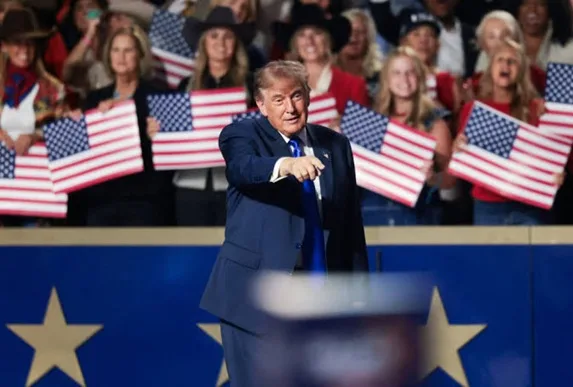
The FSB cited a dating chatbot called Daivinchik (also known as Leo) on Telegram, claiming it was exploited by Ukrainian special services to recruit Russian users for “sabotage and terrorist activities.” According to the agency, 46 Russians aged 12 to 22 were arrested across 16 regions since July 2025 for offenses linked to such operations, including assaults on law enforcement and arson. Telegram’s official X account responded to the charges by posting an image of Durov making an obscene gesture, though no immediate statement from Durov or the platform was released.
Durov, who holds French and Emirati citizenship and resides in Dubai, has repeatedly denied wrongdoing. He accused Russian authorities of fabricating pretexts to restrict Telegram’s access, a claim echoed by the company. The FSB’s move aligns with broader efforts by Moscow to tighten control over the internet, including banning foreign platforms like Facebook, Instagram, and X while promoting its state-backed messaging service, MAX. Unlike Telegram, MAX does not use end-to-end encryption and explicitly states it will share user data with authorities upon request.
The legal pressure on Durov extends beyond Russia. He faces an ongoing criminal investigation in France over allegations that Telegram facilitated drug trafficking and the distribution of child sexual abuse material. French authorities lifted his travel restrictions earlier this year, allowing him to leave the country, but the investigation remains open. Both cases raise questions about the legal responsibility of platform operators for how their services are used, though the specific allegations differ.
The FSB’s international arrest warrant for Durov has not yet been clarified, with no immediate confirmation that Interpol has issued a Red Notice. A source with knowledge of the situation noted that if Moscow requests a Red Notice, the process would likely be slow. Dubai, where Durov lives, has friendly relations with Moscow, but his potential extradition could risk damaging the emirate’s image as a hub for enterprise and technology.
The FSB’s charges against Durov come amid renewed scrutiny of his activities. Russian state media first reported in February 2026 that he was under investigation in connection with a terrorism-related case. In April, Durov disclosed that a legal summons addressed to “Suspect P.V. Durov” had been delivered to an apartment in Russia where he had lived about 20 years earlier. He responded at the time by accusing authorities of targeting him for defending constitutional protections guaranteeing freedom of speech and the privacy of personal correspondence.
Durov’s exact location remains undisclosed, though recent updates on his Telegram channel indicated he was in Dubai in May. A post shared on July 23 suggested he had visited Georgia and expressed hope of returning in the future. The FSB’s international arrest warrant process has not yet been clarified, with no immediate confirmation that Interpol has issued a Red Notice. A source with knowledge of the situation noted that if Moscow requests a Red Notice, the process would likely be slow.
The financial implications of the charges have also emerged. GRAM (formerly TON), the native token of Telegram, dropped nearly 2.5% on news of the warrant, trading at $1.41. The coin’s price has declined over the past month, with analysts noting that positive developments in Durov’s legal cases could reverse the trend. Telegram has announced plans to roll out a native Gram crypto wallet, adding to the ecosystem’s significance for users and investors.
Telegram, founded in 2013, has grown into one of the world’s largest encrypted messaging platforms, with around 950 million users. Despite Moscow’s efforts to curb its influence, state institutions including the Kremlin and the Defence Ministry continue to use the app for official communications. The platform has become a critical channel for information sharing during the Russia-Ukraine war, used by civilians, government agencies, and military-linked channels on both sides of the conflict.
Russia’s efforts to control the internet have intensified since the full-scale invasion of Ukraine in February 2022. The FSB claims Telegram’s administration failed to remove “numerous channels, chats and bots” used by Ukrainian intelligence agencies, terrorist, and extremist organizations to prepare and coordinate acts of sabotage and terrorism in Russia. These activities have led to “numerous human casualties,” according to the security agency. Durov has accused Russian authorities of fabricating pretexts to restrict access to Telegram, calling it part of a broader attempt to “suppress the right to privacy and free speech.”
Dateline Wire is dedicated to independent, evidence-backed reporting. This briefing was synthesized from primary source reporting, corroborated across independent newsrooms, and verified against our Editorial Standards.