Iran launches renewed missile attacks as US and Saudis strike Iraq militias
Iran's ballistic missile attacks on U.S. forces triggered a joint U.S.-Saudi military retaliation against Iran-backed militias in Iraq, escalating the regional conflict.
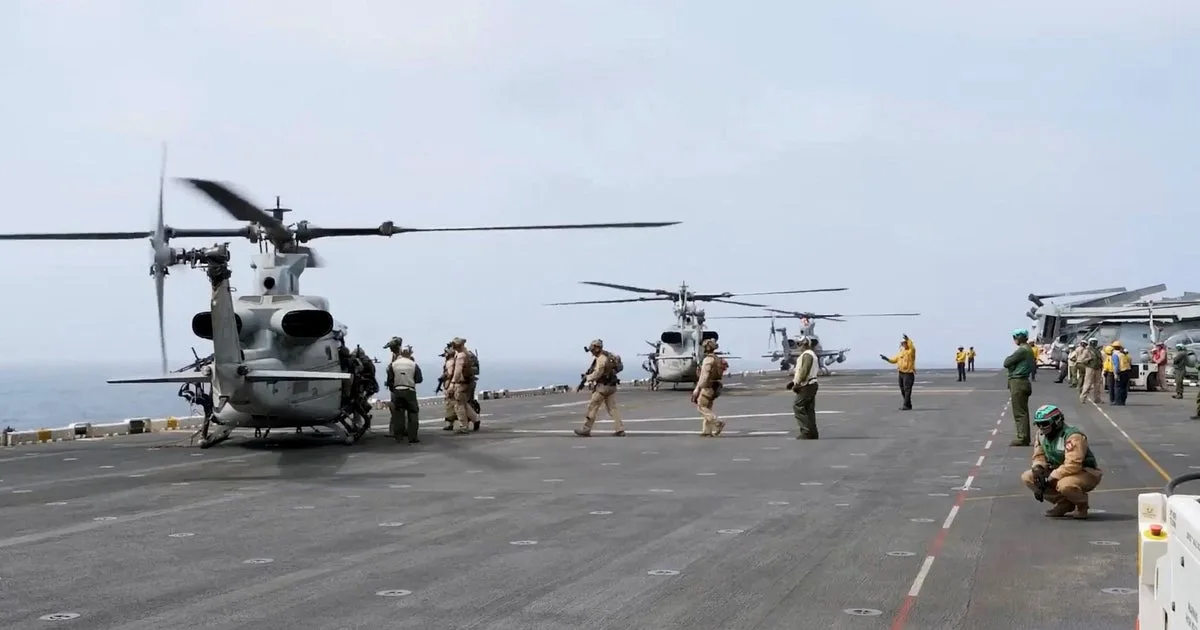
Iran launched a series of ballistic missile attacks against U.S. forces in the Middle East early Wednesday, prompting a joint U.S.-Saudi military response targeting Iran-backed militias in Iraq. The strikes marked a sharp escalation in the five-month-old conflict, raising fears of a broader regional war and disrupting global energy markets.
Iran’s assault involved multiple missiles aimed at U.S. military installations, including Jordan’s Muwaffaq Salti Air Base, a key regional hub. Jordan’s military reported intercepting five of the missiles, with no immediate casualties or damage. The U.S. Central Command confirmed it had thwarted the attack, stating all Iranian missiles were intercepted. However, the strike underscored the volatile security environment, as tensions had briefly eased following a pause in direct U.S. attacks on Iranian targets.
In retaliation, U.S. and Saudi fighter jets struck logistics and weapons sites in eastern Iraq, targeting the Popular Mobilization Forces (PMF), a coalition of Shiite militias backed by Iran. The PMF, which includes groups like Hashed al-Shaabi, reported at least 20 fighters killed and 32 wounded in the strikes. Two Iraqi militia officials, speaking on condition of anonymity, confirmed the casualties, though they noted the toll could rise. The PMF’s headquarters in Baghdad and other provinces were also damaged, according to the group’s statement.
The U.S. and Saudi operations followed allegations that Iranian proxies had launched drone attacks on Saudi oil facilities. Saudi Arabia’s Defense Ministry accused the PMF of coordinating these strikes, calling them a threat to regional stability. The kingdom had previously condemned the militias for targeting its energy infrastructure, with one official describing the attacks as “a blatant violation of Iraq’s sovereignty.”
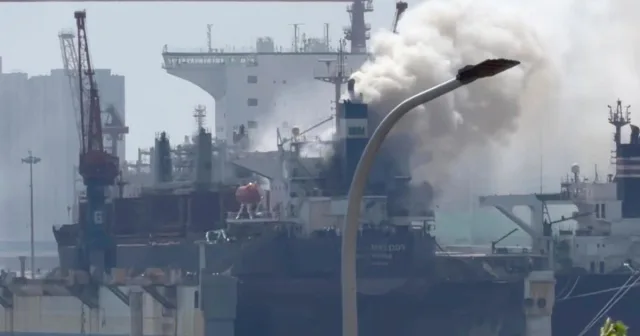
The renewed violence intensified concerns over the global energy supply. Brent crude oil prices surged 3.1% to $84.58 a barrel, while U.S. crude climbed 3.67% to $82.17. The surge came as Iran’s Islamic Revolutionary Guard Corps (IRGC) reportedly struck three oil tankers in the Strait of Hormuz, a critical chokepoint for global trade. The IRGC claimed the vessels ignored warnings and violated “unsafe” routes, though no immediate damage or casualties were reported. The incident added to fears of further disruptions, as the strait had already been a flashpoint in the conflict.
Diplomatic efforts to de-escalate the crisis faced fresh challenges. Iran rejected an Omani proposal to jointly manage the Strait of Hormuz, with a senior official dismissing the plan as “unrealistic.” The Iranian deputy foreign minister, Kazem Gharibabadi, reiterated that the strait would not return to its prewar state, emphasizing Tehran’s “defensive capabilities.” Meanwhile, Oman’s foreign minister participated in virtual talks with Gulf states to address the strait’s security, but no immediate agreement was announced.
The conflict also expanded to other fronts. Yemen’s Houthi rebels, an Iranian proxy, threatened to impose fees on ships transiting the Bab el-Mandeb Strait, a move that could exacerbate global supply chain pressures. The Houthis had previously targeted Saudi oil facilities, including a drone attack on a refinery in Jazan, which temporarily shut down operations. Saudi Arabia’s National Security Council condemned the strikes, while the U.S. reiterated its commitment to countering “Iran-aligned terrorist” activities.
Regional tensions were further fueled by the involvement of other actors. In Lebanon, Israeli forces accused Hezbollah of violating a ceasefire by launching a drone attack near the border. Hezbollah, backed by Iran, denied the allegations, but the incident highlighted the fragile truce in the area. Meanwhile, the U.S. suspended strikes on Iran Friday after 13 consecutive nights of attacks, in an attempt, according to U.S. Ambassador to the U.N. Mike Waltz, to allow diplomacy to yield an agreement to reopen the strait.
The U.S. and Saudi response drew sharp criticism from Iraqi authorities. Iraqi President Nizar Amidi condemned the strikes as an “unacceptable attack” on Iraq’s sovereignty, while the National Security Council urged dialogue to address concerns. A planned visit by Iraqi Prime Minister Ali al-Zaidi to Saudi Arabia was postponed, underscoring the diplomatic fallout.
Amid the escalation, U.S. President Donald Trump reiterated his stance on Iran, warning that “if they don’t make a deal, I go back and finish the job.” His administration has faced pressure to balance military action with diplomatic efforts, as the conflict risks further straining U.S. military resources and alliances. The strikes also come as Trump prepares for a high-stakes meeting with Israeli Prime Minister Benjamin Netanyahu, who emphasized the shared goal of preventing Iran from acquiring nuclear weapons.
The latest violence underscores the difficulty of resolving a conflict that has already destabilized the Middle East. With regional powers entangled in multiple fronts and global markets on edge, the path to de-escalation remains unclear. As Jordan, Iraq, and Saudi Arabia grapple with the fallout, the world watches closely for signs of a new diplomatic breakthrough—or a further slide into chaos.
Dateline Wire is dedicated to independent, evidence-backed reporting. This briefing was synthesized from primary source reporting, corroborated across independent newsrooms, and verified against our Editorial Standards.