Powerful quake off Indonesia kills 20, sparks mass evacuations
A 7.7-magnitude earthquake struck off Indonesia's Flores Island, triggering mass evacuations and leaving buildings in ruins amid varied casualty reports.
- Headline: Powerful quake off Indonesia kills 20, sparks mass evacuations
- Dispatch Summary: A 7.7-magnitude earthquake struck off Indonesia's Flores Island, triggering mass evacuations and leaving buildings in ruins amid varied casualty reports.
- Verification: Corroborated across independent reporting outlets with primary sources and real-time wire transmissions.
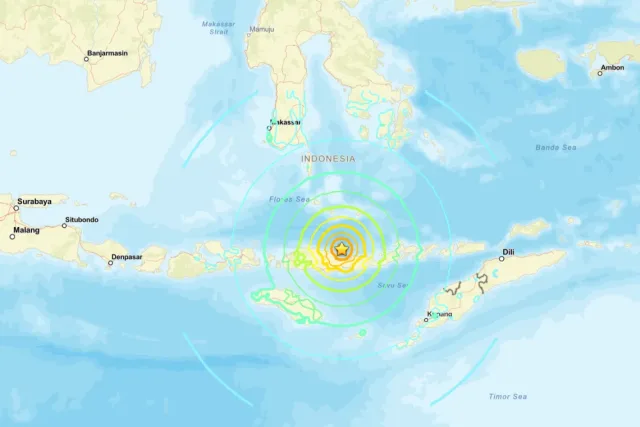
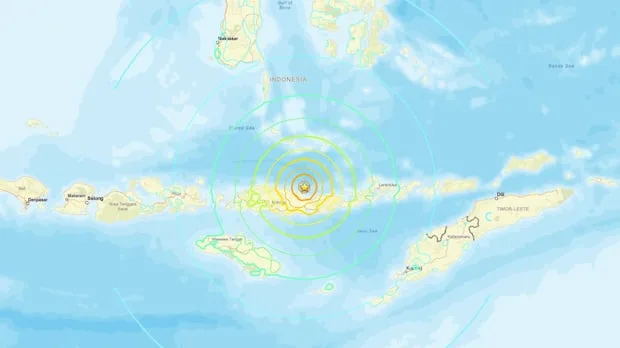
A powerful 7.7-magnitude earthquake struck off the coast of Indonesia on Saturday, triggering mass evacuations and leaving buildings in ruins, though reports of casualties and damage varied across sources. The quake, centered near Flores Island in East Nusa Tenggara province, was followed by dozens of aftershocks, including one measuring 6.1 in magnitude, according to the U.S. Geological Survey (USGS).
Indonesian authorities initially issued tsunami warnings for coastal areas, urging residents to move inland or to elevated zones. While the warning was later lifted, officials cautioned against returning to damaged structures due to the risk of further collapses. Rescue teams worked through the day to locate survivors trapped under debris, though landslides and communication disruptions complicated efforts, as reported by abc7.com and jacarandafm.com.
Reports of fatalities varied widely. Malaysiasun.com cited a provincial governor’s statement that five people died from collapsing rubble, while the Indian Express and jacarandafm.com both reported 20 confirmed deaths. The discrepancy likely reflects the evolving nature of the crisis, with initial assessments later updated as more information emerged. At least six others were injured, and two individuals remained buried under rubble in Nagekeo and Manggarai regencies, according to rescue officials, as noted by jacarandafm.com.
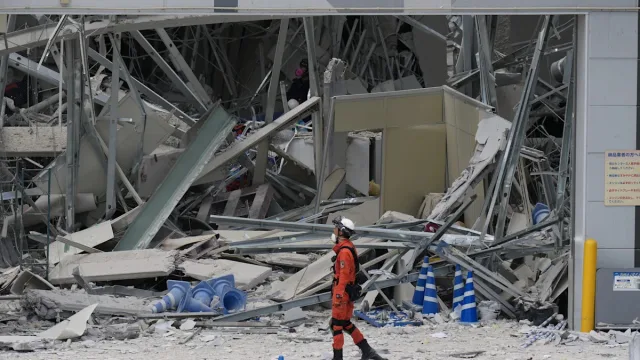
Videos shared on social media and broadcast by international outlets captured the chaos. In Maumere, a port terminal collapsed, and hospitals evacuated patients as walls cracked and ceilings fell. A resident described the scene as “panicking, running here and there,” with people fleeing to hills and open spaces. In Nagekeo, the area closest to the epicenter, the sea briefly receded — a natural precursor to tsunamis — prompting immediate evacuations. “The shaking was strong. Thankfully, we were already outside the house,” said Yohanes Babo, a market vendor who survived the quake, per jacarandafm.com.
Indonesian meteorological agencies initially recorded tsunami waves of less than 1 meter, but the threat of larger surges kept communities on edge. The country’s location along the Pacific “Ring of Fire” makes it prone to seismic activity, with a history of catastrophic quakes. In 1992, a 7.7-magnitude earthquake off Flores triggered a tsunami that killed around 2,500 people, as noted by the Indian Express and jacarandafm.com. More recently, a 2018 quake on Lombok and a 2021 tremor in Sulawesi left hundreds dead, underscoring the region’s vulnerability.
Rescue efforts faced additional challenges as aftershocks continued to rattle the area. In Sikka Regency, a seminary’s assembly hall roof collapsed during morning Mass, forcing students and staff to flee. A priest suffered a broken leg after jumping from a second-floor window, according to abc7.com. Meanwhile, in Manggarai, a hospital’s waiting hall at the port terminal collapsed, adding to the urgency of the response. “We are continuing to collect reports of damages and casualties, but there are communication disruptions,” said East Nusa Tenggara police chief Rudi Darmoko, highlighting the logistical hurdles in assessing the full extent of the disaster.
The quake’s impact extended beyond immediate destruction. Power outages in affected regions hindered coordination, while long queues of evacuees clogged roads, with families traveling by foot, motorbike, and truck. In some areas, the lack of high-rise buildings limited the scale of structural damage, but the shallow depth of the quake, 10 kilometers below the surface, amplified its effects. “The ground shook violently,” said Lukas Lotar, a Maumere resident. “I saw some walls were cracked,” per abc7.com.
As the death toll remains fluid, the focus shifts to recovery. Indonesian authorities have emphasized the need for sustained aid, particularly in remote regions where access is limited. The disaster also reignites debates about disaster preparedness in a country where seismic risks are an inescapable reality. For now, survivors grapple with the aftermath, their lives upended by a force of nature that continues to shape Indonesia’s landscape, and its people.
How significant is this wire dispatch?
Cast your anonymous vote to register reader consensus across journalism and intelligence sectors.
Dateline Wire is dedicated to independent, evidence-backed reporting. This briefing was synthesized from primary source reporting, corroborated across independent newsrooms, and verified against our Editorial Standards.