Panama struck by magnitude 7.7 earthquake, tsunami threat issued
A powerful magnitude 7.7 earthquake struck Panama on Friday, sending residents into the streets, damaging buildings in central provinces, and prompting regional tsunami alerts.
- Headline: Panama struck by magnitude 7.7 earthquake, tsunami threat issued
- Dispatch Summary: A powerful magnitude 7.7 earthquake struck Panama on Friday, sending residents into the streets, damaging buildings in central provinces, and prompting regional tsunami alerts.
- Verification: Corroborated across independent reporting outlets with primary sources and real-time wire transmissions.
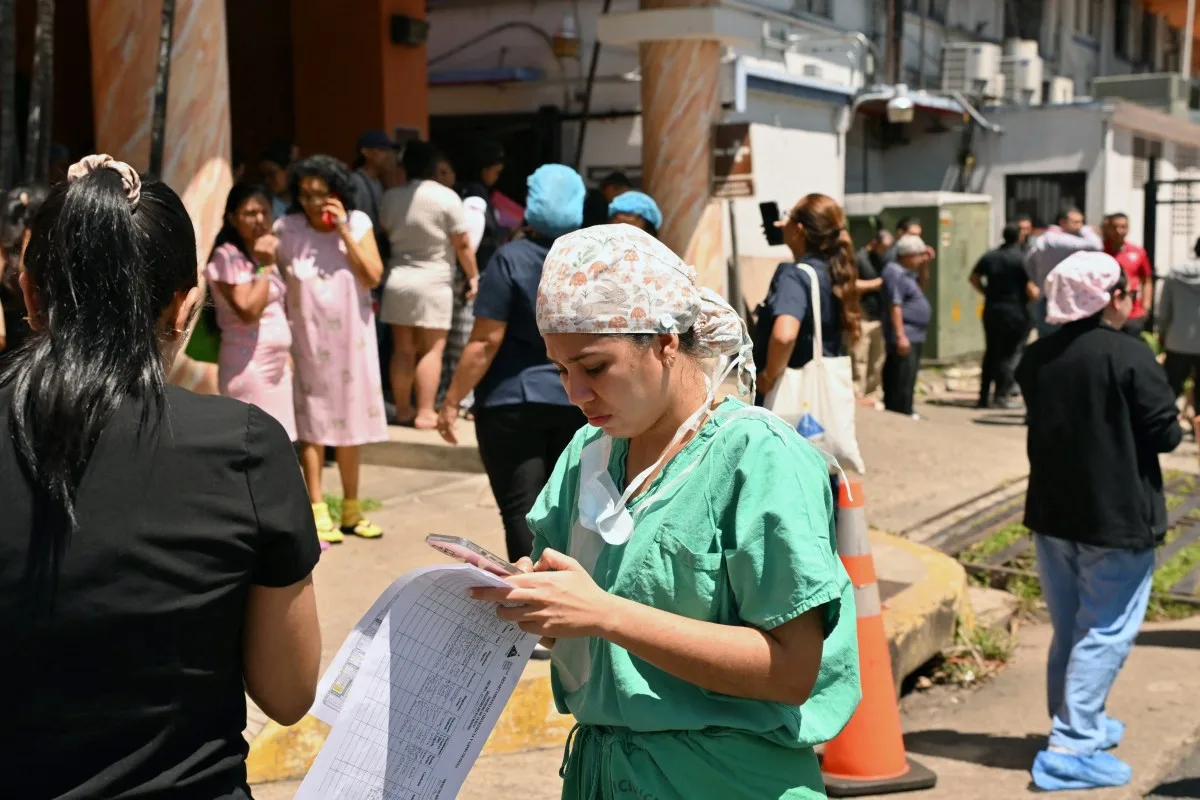
Around 4.6 million people experienced moderate to severe shaking on Friday afternoon when a major earthquake struck Panama, according to the United States Geological Survey. The quake was initially measured at magnitude 8.0 before being revised to 7.6 and finally settled at magnitude 7.7. Centered about 6 to 9 miles southwest of the remote community of Pitaloza Arriba in Herrera province, the tremor shook buildings more than 100 miles away in Panama City and sent residents fleeing into the streets. USGS modeling placed likely casualties in the range of dozens to hundreds of fatalities and damages in the hundreds of millions of dollars, though officials reported no immediate deaths as emergency services fanned out across the country.
The National Weather Service issued a tsunami warning for Panama, Colombia, Costa Rica, Ecuador, Peru, Nicaragua, Guatemala, El Salvador and Mexico, warning that waves ranging from 3 to 9 feet (1 to 3 meters) above tide may occur in some coastal areas of Panama. Chile's government placed Easter Island under a precautionary advisory. However, USGS seismologist Susan Hough explained that the tsunami threat likely receded because the quake occurred on land at a relatively shallow depth.
The U.S. National Ocean and Atmospheric Administration’s Tsunami Warning System has not issued a tsunami warning, advisory, watch or threat alert, and the National Weather Service stated tsunamis were "NOT expected" to hit the United States after initially alerting the public that they were possible along the West Coast.Susan Hough, USGS seismologist, via Scientificamerican.com
Because this was on land and shallow, you’re not on the seafloor, so it didn’t move the seafloor underneath the water column and that’s what you need to generate a tsunami,
Ground Impact and Government Response in Central Provinces
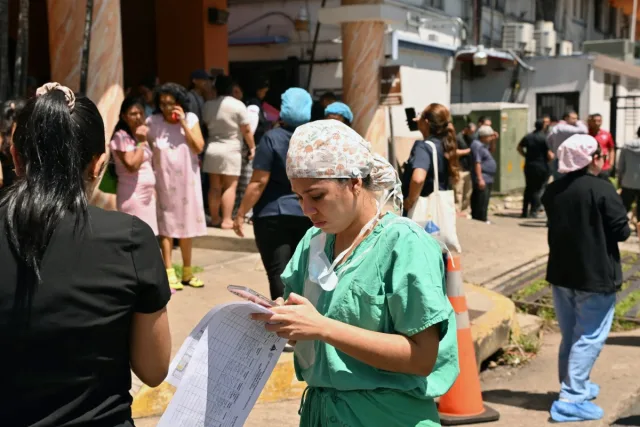
Damage was concentrated in the central provinces of Veraguas, Herrera and Los Santos, according to Omar Smith of the National Civil Protection Service. Video aired by local news outlets showed a Catholic cathedral collapsing and part of a hotel's facade falling onto a car in the city of Penonomé, in the central province of Coclé. Smith confirmed that several injuries have been reported, including one person struck by debris from a partially collapsed structure in the city of Penonomé. He confirmed a partial collapse and cracks at the cathedral in the district’s main square, as well as damage in the governor’s office building and the Dos Continentes hotel. Meanwhile, the capital's hundreds of skyscrapers escaped damage, though visibly shaken residents gathered outside waiting for news.
Panamanian President José Raúl Mulino called for calm on Friday, writing on social media:
Mulino said he has asked Dinoska Montalvo, the minister of government,José Raúl Mulino, President of Panama, via Cbsnews.com
What happened should not be used to cause alarm or disorder,
to report on the effects while calling for calm.The Panama Canal Authority stated that operations were continuing normally along the key global trade route while specialized technical teams inspected facilities for possible damage, prioritizing the safety of employees, vessels and crews. Rosendo Domínguez, a 60-year-old, who is from Herrera province, where the earthquake struck, described the sudden violence of the tremor.
Rosendo Domínguez, resident of Herrera province, via Twincities.com
We felt it very strongly. It knocked things over in the kitchen, but we’re okay, though we’re very scared. Everyone is outside, scared,
Tectonic Complexity and Regional Repercussions
The seismic event was a strike-slip event occurring at a depth of about 7 to 12.6 kilometers. Hough compared the movement to the San Andreas, noting that it was a shallow lateral fault, what we call strike slip. Panama lies along the Ring of Fire, interacting with the Cocos and Nazca plates to the south, the Caribbean plate to the north, and the South American plate to the east. USGS seismologist Paul Earle told Newsweek that while the region experiences large earthquakes, they are generally more common a bit to the west, pointing to historical events such as a magnitude 7.5 in 1934 and a magnitude 7.2 in 1962. This event follows at least three other Latin American earthquakes this year surpassing 7.0 in magnitude, after devastating earthquakes in Venezuela's Guaira in June and a powerful earthquake in western Colombia in August.
International response followed quickly as neighboring nations offered support. Colombian President Abelardo de la Espriella expressed solidarity on X with what he called the brother people of Panama.
The U.S. Embassy in Panama City announced it was "closely monitoring" the aftermath, assessing potential damage and accounting for the welfare and whereabouts of visitors and personnel. The embassy did warn U.S. citizens in the area to avoid damaged structures, as well as the coast, and to monitor local emergency broadcasts for updates. Following the main shock, the USGS recorded multiple aftershocks, including two measuring 5.8 and 5.5, with experts warning that strong aftershocks could follow.Abelardo de la Espriella, President of Colombia, via Twincities.com
Panama is not alone! You can count on Colombia’s support and our full willingness to provide whatever assistance is needed,