Senate confirms Jay Clayton as director of national intelligence
The U.S. Senate confirmed Jay Clayton as director of national intelligence in a 51-47 party-line vote following months of scrutiny.
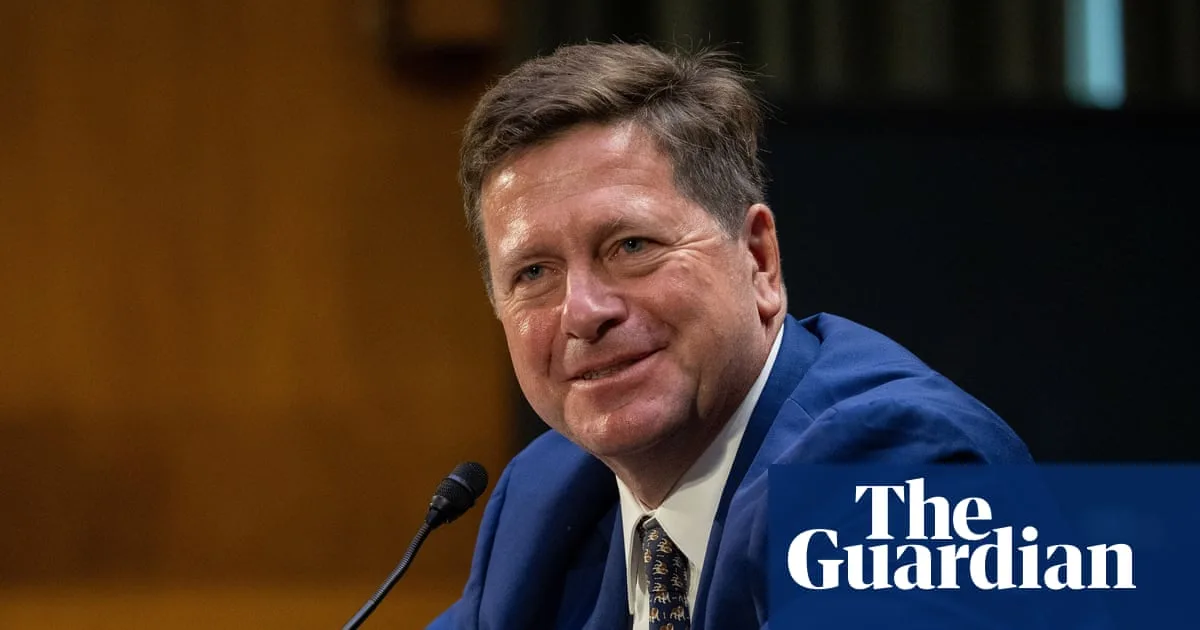
The U.S. Senate confirmed Jay Clayton as director of national intelligence on Tuesday, July 29, 2026, in a 51-47 party-line vote, according to multiple sources including *The Guardian*, *CBS News*, and *The Hill*. The confirmation, which followed months of scrutiny, marks a shift in leadership for the nation’s 18 intelligence agencies, with Clayton replacing Tulsi Gabbard, who resigned earlier this year, and acting director Bill Pulte, a Trump loyalist criticized for his lack of intelligence experience and controversial actions.
Clayton, a former Securities and Exchange Commission chair and U.S. attorney for the Southern District of New York, was nominated by President Donald Trump and faced intense questioning during his confirmation hearing over his stance on the 2020 presidential election. He repeatedly refused to explicitly state that Joe Biden won, instead asserting that Biden had been “certified” as the winner. This evasiveness drew sharp criticism from Democrats, who warned of the risks of politicizing the intelligence community. Senate Intelligence Committee Vice Chair Mark Warner expressed “serious reservations” about Clayton’s willingness to resist political pressure, while Senator Adam Schiff accused him of failing a “foundational, statutory test” for the role due to his lack of national security expertise, according to *The Guardian* and *The Hill*.
The vote came amid tensions over the role of intelligence agencies under Trump’s administration. Clayton’s confirmation follows reports that Trump has sought to use classified information to support unfounded claims of election fraud, as noted in *english.aawsat.com* and *The Guardian*. The president, who praised Clayton on Truth Social as “outstanding in every way,” has repeatedly challenged the legitimacy of the 2020 election, a stance that has alarmed lawmakers across the aisle. Clayton’s appointment also coincides with ongoing efforts to renew Section 702 of the Foreign Intelligence Surveillance Act, a warrantless surveillance authority that expired in mid-June. Republicans argued that his confirmation could break the stalemate, but Democrats remained wary, citing concerns over executive overreach, as reported by *CBS News* and *The Hill*.
Clayton’s tenure as U.S. attorney drew scrutiny for its aggressive prosecutorial tactics, including subpoenas issued to *New York Times* journalists investigating security concerns around Trump’s Qatari-gifted Air Force One. Those subpoenas were later withdrawn after a federal judge criticized their handling, according to *The Hill* and *The Guardian*. The Justice Department’s reversal fueled accusations that Clayton’s office prioritized political objectives over journalistic integrity. Meanwhile, the Steady State, a group of former intelligence officials, condemned his nomination as a threat to the “intersection of secrecy and accountability,” warning that his leadership could erode the independence of the intelligence community, as detailed in *The Hill*.
The confirmation also highlights the turbulent leadership transitions within the intelligence apparatus. Gabbard’s resignation, attributed to family reasons after her husband’s cancer diagnosis, followed reports of disagreements with Trump over the Iran conflict, according to *The Guardian*. Pulte, who served as acting director since June, faced criticism for overseeing staff cuts and political prosecutions, including the targeting of New York Attorney General Letitia James. His tenure, marked by allegations of “political retribution,” had driven Democrats to oppose a bipartisan deal to reauthorize Section 702, a move that Republicans blamed for the surveillance law’s expiration, as noted in *The Hill*.
Despite Democratic objections, Republicans framed Clayton as a more qualified alternative to Pulte, emphasizing his experience in financial crime and national security cases. Senate Majority Leader John Thune argued that Clayton’s confirmation was critical amid “heightened threats,” while noting that even some Democrats had initially praised his record, according to *CBS News* and *The Hill*. However, the narrow vote underscored the deepening polarization surrounding Trump’s influence on national security institutions.
Clayton’s formal appointment remains pending presidential approval, but his confirmation signals a continuation of Trump’s efforts to reshape the intelligence community. The new director will inherit an agency grappling with leadership instability, staffing reductions, and questions about its independence. As Section 702’s reauthorization remains stalled, the outcome of Clayton’s tenure could have lasting implications for the balance between national security and democratic accountability.
Dateline Wire is dedicated to independent, evidence-backed reporting. This briefing was synthesized from primary source reporting, corroborated across independent newsrooms, and verified against our Editorial Standards.