Ex-Congress MP Sajjan Kumar, serving life term for 1984 riots, dies at 80
Former Congress MP and 1984 anti-Sikh riots convict Sajjan Kumar died at the age of 80 while serving life sentences at Safdarjung Hospital.
- Headline: Ex-Congress MP Sajjan Kumar, serving life term for 1984 riots, dies at 80
- Dispatch Summary: Former Congress MP and 1984 anti-Sikh riots convict Sajjan Kumar died at the age of 80 while serving life sentences at Safdarjung Hospital.
- Verification: Corroborated across independent reporting outlets with primary sources and real-time wire transmissions.
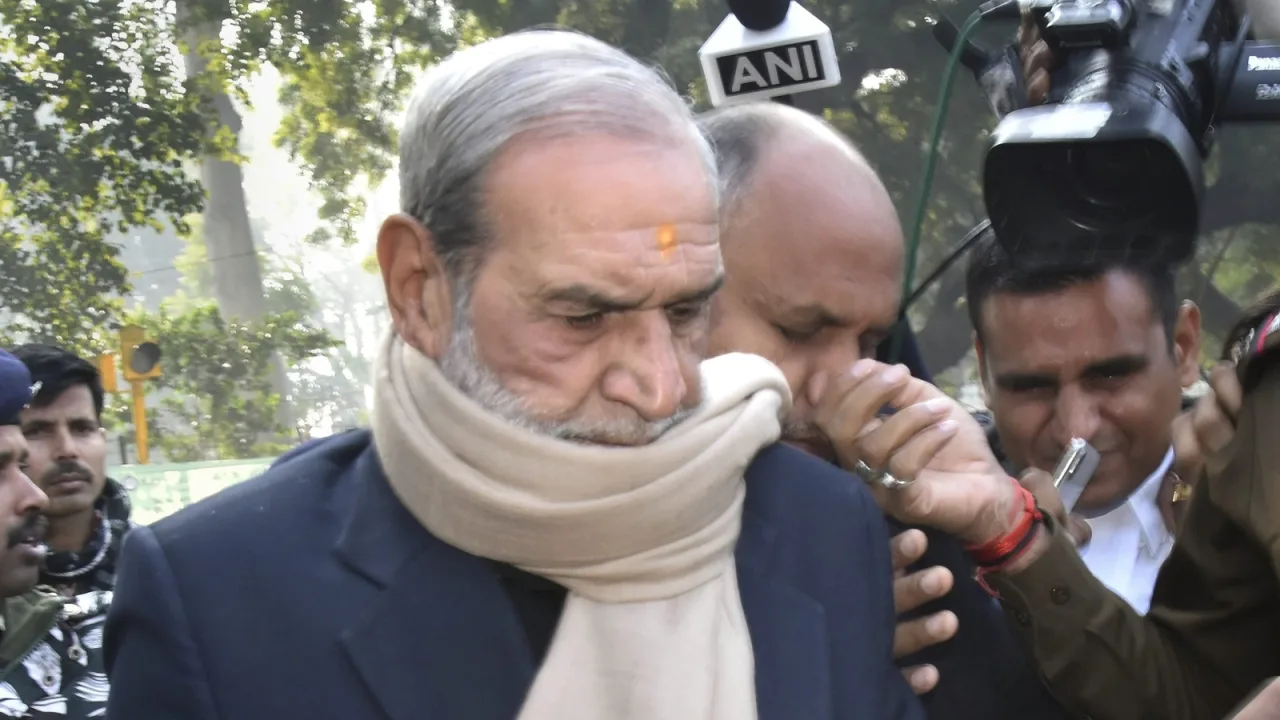
Ex-Congress MP Sajjan Kumar, a former three-time Lok Sabha member from Delhi who was serving life sentences for his role in the 1984 anti-Sikh riots, died at 80 on Thursday, August 20, 2026, at Safdarjung Hospital in Delhi. Hospital sources reported that Kumar was brought in an unresponsive condition, though the cause of death remains undisclosed. His death marks the end of a decades-long legal and political saga tied to one of India’s most traumatic episodes.
Kumar’s legal troubles stemmed from his alleged involvement in the violence that followed the assassination of Prime Minister Indira Gandhi by her Sikh bodyguards on October 31, 1984. The riots, which spread across Delhi and other parts of northern India, saw widespread attacks on Sikh communities, with estimates of fatalities ranging from 3,000 to higher figures cited by survivors. Kumar, a prominent Jat leader and former councillor, became a focal point of investigations decades later, after a Special Investigation Team (SIT) was formed in 2015 to re-examine closed cases.
The first major conviction against Kumar came in December 2018, when the Delhi High Court overturned a 2013 acquittal in the Raj Nagar case. He was sentenced to life imprisonment for his role in the killing of five Sikhs and the burning of a gurdwara in Palam Colony. The court described the 1984 violence as “crimes against humanity” and found Kumar guilty of criminal conspiracy and abetment. His conviction in this case led to his resignation from the Congress party, which had withdrawn his election tickets in 2009 amid political pressure.
Kumar’s legal battles continued through multiple courts. In February 2025, a Delhi court handed him a second life sentence for his involvement in the Saraswati Vihar case, where a father and son, Jaswant Singh and Tarundeep Singh, were allegedly burned alive. The court spared the death penalty, citing his age, health, and conduct in jail. However, he remained incarcerated while other cases against him lingered. In January 2026, a Delhi court acquitted him in the Janakpuri-Vikaspuri violence case, where three people were killed, after finding insufficient evidence to convict him. Despite this acquittal, he continued serving his life sentences in the Raj Nagar and Saraswati Vihar cases.
Kumar’s political career, which began in the 1970s, was deeply intertwined with his legal entanglements. He represented Delhi’s Outer Delhi constituency for three terms, from 1980 to 1996, and was a key figure in local Jat politics. However, his convictions effectively ended his active political life. The Congress party distanced itself from him after his 2018 sentencing, and he was largely absent from the party’s mainstream after 2009. During his imprisonment, Kumar repeatedly sought bail on medical grounds, though his requests were denied.
The 1984 riots remain a deeply sensitive chapter in Indian history, with victims’ families and advocacy groups demanding justice for decades. Kumar’s case highlighted the challenges of prosecuting long-past crimes, as legal proceedings stretched over three decades. His convictions and acquittals reflected the complexities of India’s judicial system, where outcomes varied across courts and cases. The Delhi High Court’s 2018 ruling in the Raj Nagar case was a landmark moment, but Kumar’s appeal against it remained pending before the Supreme Court at the time of his death.
As Kumar’s body was prepared for cremation, his death reignited discussions about accountability for the 1984 violence. While the sources do not explicitly mention public reactions, the prolonged legal processes and unresolved nature of his cases underscore the enduring debates over the 1984 riots. The absence of a definitive cause of death at Safdarjung Hospital added to the unresolved nature of his final chapter, mirroring the ongoing legal and historical debates surrounding the events of 1984.
How significant is this wire dispatch?
Cast your anonymous vote to register reader consensus across journalism and intelligence sectors.
Dateline Wire is dedicated to independent, evidence-backed reporting. This briefing was synthesized from primary source reporting, corroborated across independent newsrooms, and verified against our Editorial Standards.