Democrats seize Congress in sweeping midterm repudiation of Trump
Democrats swept the midterm elections, seizing control of both the House and Senate in a historic rebuke of President Donald Trump and Republican leadership.
- Headline: Democrats seize Congress in sweeping midterm repudiation of Trump
- Dispatch Summary: Democrats swept the midterm elections, seizing control of both the House and Senate in a historic rebuke of President Donald Trump and Republican leadership.
- Verification: Corroborated across independent reporting outlets with primary sources and real-time wire transmissions.
By Wednesday, 4 November 2026, roughly 2,100 counties across the United States had reported their preliminary tallies, revealing a monumental political shift in the midterm elections. In an electoral wave, the Democratic Party seized control of both the Senate and the House of Representatives, securing sweeping victories in Republican strongholds. Exit polls conducted by SSRS on behalf of a consortium of US media outlets — including major television networks and the Associated Press — showed that three-quarters of voters surveyed were angry or dissatisfied with the way the country was headed. Half of all respondents explicitly viewed the vote as an opportunity to rebuke President Donald Trump.
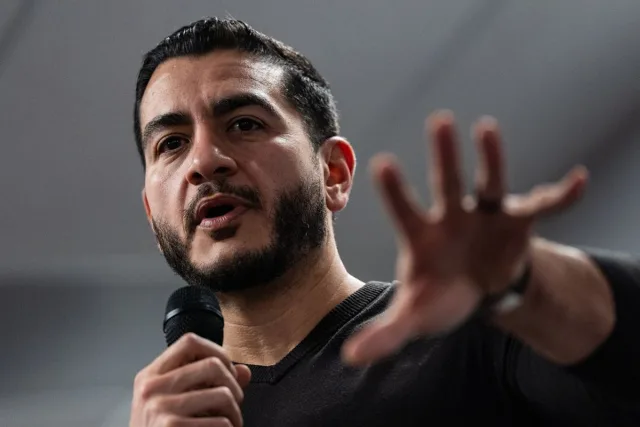
That widespread discontent translated into historic upsets. In Texas, Democrats ended a decades-long losing streak, winning a Senate seat and ousting three-term Governor Greg Abbott. Kansas elected its first Democratic senator since the Great Depression nearly a century ago. In South Carolina, a state Trump carried by nearly 18 points in 2024, voters turned aside the president's hand-picked candidate, political neophyte Darline Graham. Meanwhile, Maine Republican incumbent Susan Collins saw her 30-year Senate career end on Tuesday, and in Michigan, progressive Democrat Abdul El-Sayed won an open Senate seat to become the first Muslim elected to the chamber.
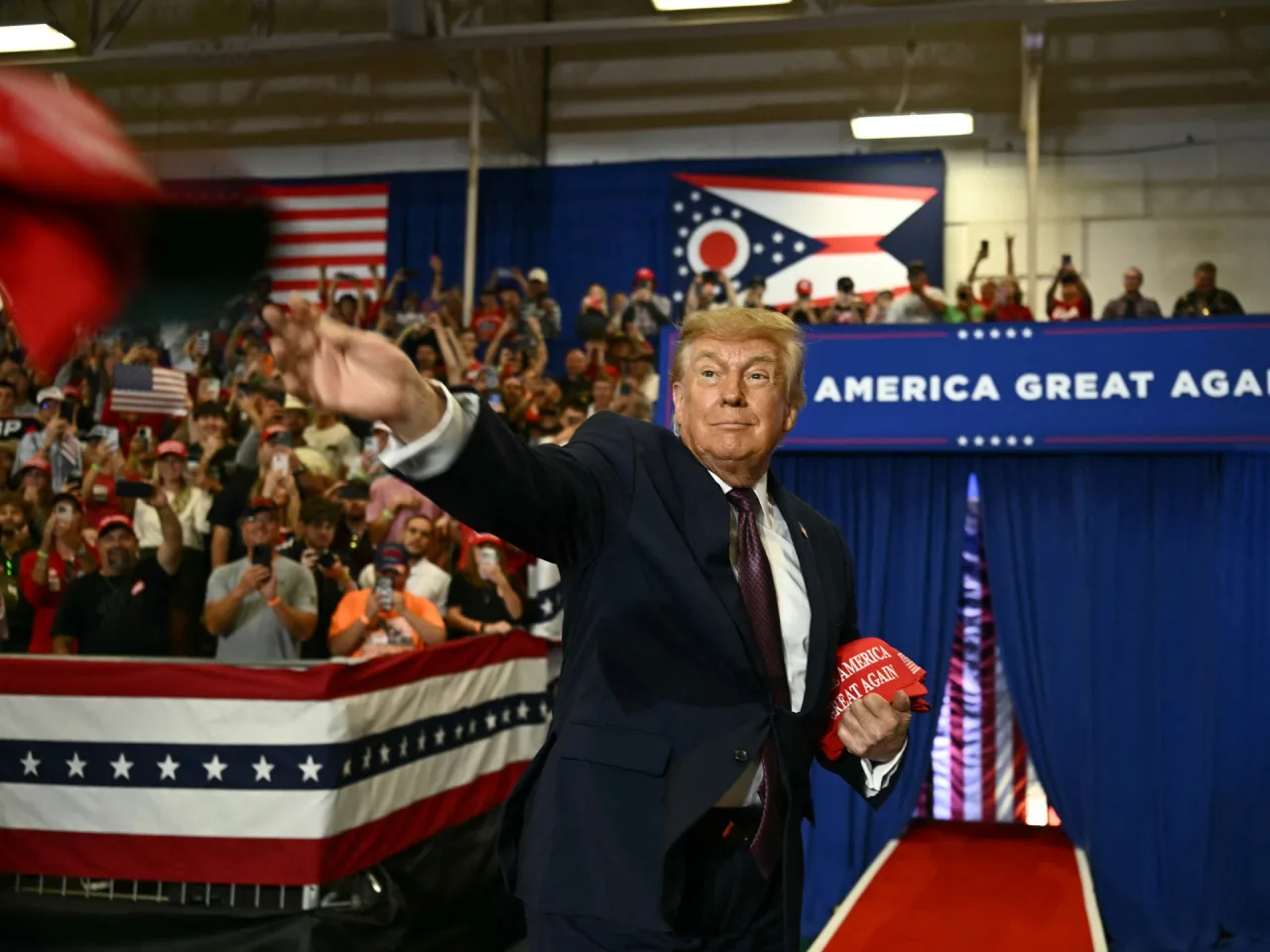
That outcome leaves the Republican Party wrestling with the fallout of a campaign strategy tied entirely to the president's brand. Trump had spent the final weeks urging supporters in dozens of rallies to treat the contest as a personal referendum on his leadership. In a virtual campaign rally for South Carolina candidates on November 2, he told voters, Get out and vote tomorrow and pretend I'm on the ballot,
an appeal he repeated more than 41 times. Yet when the returns confirmed the wipeout, Trump pivoted instantly, arguing on Truth Social that his absence from the ballot was the sole cause of the defeat. I wasn't on the Ballot and if I was, we would have won IN A LANDSLIDE!
he wrote in a post reported by Axios.
The president's calculation ignores the brutal economic and geopolitical realities that drove voters to the polls. An ABC News-Washington Post-Ipsos survey published on October 20 found that only 33 per cent of Americans approved of Trump's overall performance, while 66 per cent disapproved. Just 28 per cent approved of his handling of the economy, and 27 per cent supported his approach to the war with Iran. Voters made it clear that pocketbook anxiety, fueled by tariff policies and soaring living costs, mattered far more than culture war grievances.
That economic pain has a direct human cost for millions of households who saw their purchasing power erode under a second Trump administration. Former IMF First Deputy Managing Director Gita Gopinath predicted that the Democratic takeover would restore central bank independence and moderate executive actions, noting on social media: With democrats taking control of Congress I expect (with varying levels of confidence) that: Jay Powell will step out of the Fed as central bank independence will be more secure. Tariff policy will be less insane. Fiscal deficits will remain a problem.
Her assessment points to a modest easing of trade frictions, even though existing tariffs on trading partners like India, which climbed as high as 50 percent in 2025 before being trimmed to 18 percent in February 2026, will not automatically disappear overnight.
Who gained and who loses from the new congressional math?
The Democratic sweep fundamentally alters the balance of power in Washington ahead of the new Congress convening in January 2027. Democrats will secure the gavels of every House and Senate committee, granting them sweeping subpoena power to investigate Trump’s administration, family, and allies. They will also possess the unilateral authority to block presidential nominees and federal judges, should any Supreme Court vacancies arise. Senator Chuck Schumer, the party's Senate minority leader, framed the victory around structural transformation, stating, There is now a generational remake of the Senate map that is going to change America. Americans voted for change, and now Democrats must deliver.
For the White House, the legislative pipeline has slammed shut. Trump’s ability to drive a domestic agenda through Capitol Hill is effectively over, accelerating his descent into a lame-duck status two full years before his term ends in January 2029. Yet history shows that outgoing executives are far from powerless. When faced with a hostile legislature, presidents frequently pivot to autonomous executive powers, issuing executive orders and leaning heavily on the veto pen. Trump signaled this exact strategy by posting an image of a red MAGA hat bearing the single word VETO
and telling Fox News he would block all insane
legislation from Democrats until they came to the negotiating table.
Overriding a presidential veto requires a two-thirds majority in both chambers, a threshold Democrats cannot meet alone. This sets up a tense standoff over national emergencies, federal spending, and border security. In January 2025, when Congress denied full funding for the southern border, Trump declared a national emergency to divert billions toward physical barriers. He can repeat such maneuvers, daring Democrats to mount legal challenges while relying on his veto to shield his actions.
That institutional friction has immediate global repercussions, reverberating far beyond the Potomac. In Tehran, the midterm defeat coincided with the annual anniversary rally marking the 1979 seizure of the US embassy. Demonstrators burned American and Israeli flags while displaying inflammatory placards, including one depicting Trump as a bloodstained bulldog on a leash held by Israeli Prime Minister Benjamin Netanyahu. Yet Iranian officials also registered the democratic shift with pragmatic satisfaction. Mohammad Bagher Ghalibaf, Tehran's chief negotiator in talks with Washington, wrote on X: Conscience or the cost of living, Americans said NO TO WAR, and we endorse this message.
How did Republican leaders react to the congressional wipeout?
Republican leaders attempted to minimize the historic losses by pointing to historical norms and past legislative achievements. House Speaker Mike Johnson acknowledged the well-documented historical difficulties confronting a sitting president's party during midterms, while Senate Majority Leader John Thune defended the party's record. But private recriminations among strategists were harsh. Republican consultant Mike Murphy didn't mince words, describing the election to The Washington Post as a complete repudiation of the party as defined by Donald Trump.
The tension within the party extends to statehouses, where historic milestones fractured traditional party lines. In Georgia, Democrat Keisha Lance Bottoms became the first Black woman elected governor of any US state. Simultaneously, Byron Donalds won Florida's gubernatorial race to become the first Black Republican governor in the country. In Texas, Democrat Gina Hinojosa will become the first Latina governor in Texas, while Xavier Becerra will serve as California's first Latino governor. These results prove that American voters were driven by starkly differing regional dynamics, even as they united around a shared desire to curb executive overreach.
You chose hate, and Michigan chose hope.
Abdul El-Sayed via Bilyonaryo
For everyday Americans, the shift means the next two years will be defined by intense congressional oversight rather than sweeping legislative reform. Investors can anticipate a more independent Federal Reserve and tempered trade policies, while taxpayers will watch whether divided government can successfully tackle stubborn fiscal deficits. Commuters, workers, and families weary of inflation and foreign entanglements finally forced a recalibration in Washington, leaving both parties to navigate an unpredictable political landscape ahead of the 2028 presidential race.
Supreme Leader Mojtaba Khamenei urged the Iranian public not to view the election outcome as a sign that American hostility toward Tehran is about to soften. Writing on X, he stated that the midterm results serve as a guiding light for the path ahead,
emphasizing that the Islamic Republic's firm resistance to Washington will remain entirely unchanged.