Kilmar Abrego Garcia arrives in Spain after self-deporting
Salvadoran national Kilmar Abrego Garcia arrived in Spain after self-deporting from the United States, concluding a lengthy legal conflict over his removal.
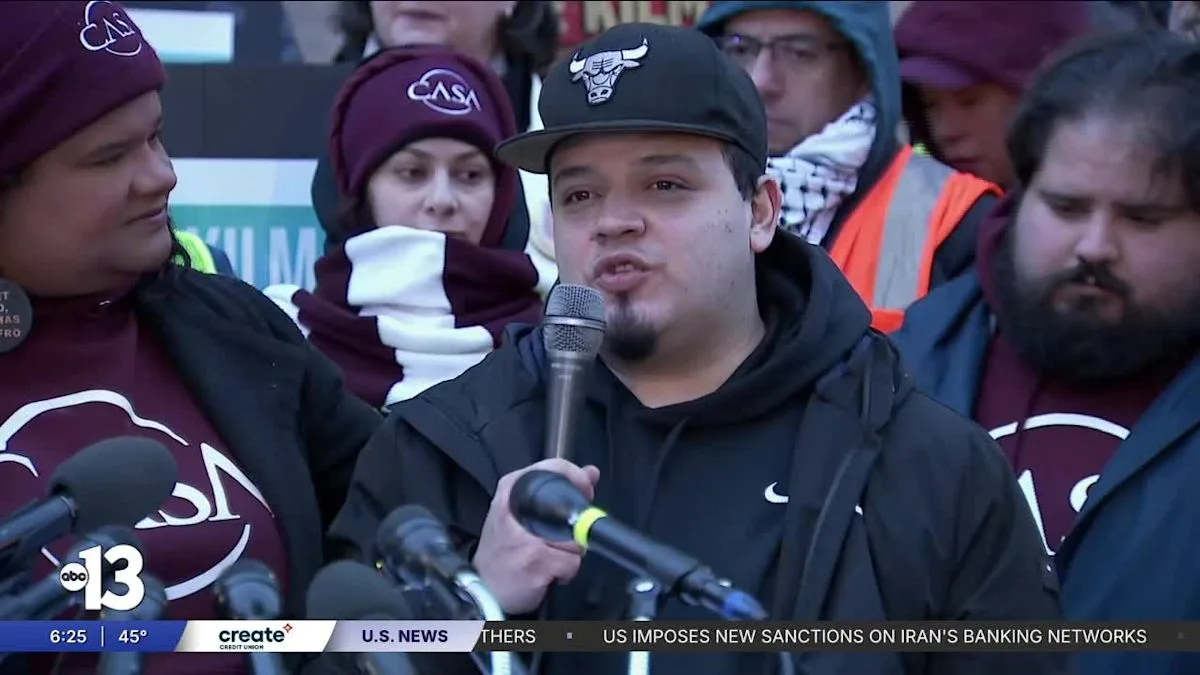
Kilmar Abrego Garcia spent 18 months fighting his removal from the United States before finally arriving in Spain on Wednesday as a free man on a commercial flight. His self-deportation brings a temporary halt to one of the most contentious legal battles of the Trump administration's immigration crackdown, avoiding what his legal team feared would be an involuntary transfer to an African nation.
The 31-year-old Salvadoran national landed in Madrid alongside his American citizen wife, Jennifer Vasquez, his attorney, Simon Sandoval-Moshenberg, and representatives from the advocacy group We Are CASA. Video footage captured prior to his departure showed his Immigration and Customs Enforcement ankle monitor being removed before he boarded the plane. While the Department of Homeland Security maintained that Abrego Garcia departed pursuant to a removal order, paid for his own flight, and received no incentives, his attorney emphasized that choosing Spain allowed him to avoid being shipped in shackles on an ICE Air flight to Liberia.
That outcome reveals a profound split in how the case is understood. To the Trump administration, the departure represents the removal of an individual it characterized as a human trafficker, wife beater, gang member, and child predator, whereas to his defenders it marks the termination of government persecution. This reading suggests that while the executive branch successfully forced Abrego Garcia out of the country, it had to concede control over his destination under judicial pressure, abandoning plans to send him to countries known for human rights abuses in favor of a European nation of his choosing.
Why was Kilmar Abrego Garcia in El Salvador's supermax prison in the first place?
The saga began in March 2025 when immigration authorities arrested Abrego Garcia in Baltimore and mistakenly deported him to El Salvador. Department of Homeland Security officials subsequently acknowledged the action was an administrative error. Once inside his home country, Abrego Garcia was detained at the Terrorism Confinement Center, known as CECOT. That transfer directly violated a 2019 withholding of removal granted by an immigration judge, which barred federal authorities from sending him back to El Salvador due to documented risks of gang persecution.
The ensuing legal fight quickly escalated to the highest levels of government. In April 2025, U.S. District Judge Paula Xinis ordered the Department of Homeland Security to bring Abrego Garcia back to the United States, and the Supreme Court directed the government to facilitate his release from Salvadoran custody. President Trump and Salvadoran leader Nayib Bukele both pushed back against the ruling at the time, arguing it was wrong.
The administration eventually complied, returning Abrego Garcia to the U.S. in June 2025. Yet that return immediately triggered federal criminal charges stemming from a 2022 traffic stop in Tennessee, where prosecutors accused him of human smuggling and membership in the MS-13 gang. Abrego Garcia and his legal team consistently denied gang membership.
How did the legal battle in Maryland and Tennessee collapse?
The criminal case in Tennessee unraveled in May when a federal judge dismissed the charges, determining that the Justice Department's prosecution was vindictive and designed to punish Abrego Garcia for challenging his deportation. Although the Justice Department appealed that dismissal, the civil proceedings overseen by Judge Xinis in Maryland created the immediate pathway for his departure.
The administration had spent months attempting to deport Abrego Garcia to third countries, including Uganda, Eswatini, Ghana, and Liberia. Abrego Garcia had designated Costa Rica as his preferred destination, but that country initially indicated it would not accept him. Tensions peaked as Xinis maintained injunctions barring immigration authorities from detaining him while litigation continued.
An abrupt cancellation of a scheduled hearing before Xinis preceded a sealed order issued Friday, which was unsealed Wednesday. That order directed the Trump administration to lift any detainers, lookouts, alerts, or holds that could cause Abrego Garcia to be questioned or denied boarding, and mandated the removal of his GPS ankle monitor. In an order Wednesday, Xinis officially closed the case and dissolved her previous injunctions after receiving confirmation that he had left the country.
While the Trump Administration had been pursuing their vindictive prosecution against Kilmar and desperately trying to ship him against his will to countries known for human rights abuses, the Administration was forced to come to this agreement that respects Kilmar’s will and the due process rights guaranteed to him and to all in our nation.
Sen. Chris Van Hollen (D Md.), via The Hill
Maryland Democrat Sen. Chris Van Hollen strongly advocated for Abrego Garcia's due process rights and praised the resolution. Conversely, Secretary of Homeland Security Markwayne Mullin expressed satisfaction on Tuesday, reiterating severe allegations against the migrant.
We promised the American people that this human trafficker, wife beater, gang member, and child predator would not remain in our country,
Mullin wrote. This Salvadoran man will no longer terrorize innocent Americans.
ICE officials reiterated on the social platform X that Abrego Garcia will never be allowed back inside the United States.
What are the consequences for his family and his future?
Abrego Garcia leaves behind a wife who is a U.S. citizen and a son who is also a U.S. citizen. Under federal law, because of the length of time he remained in the United States without legal status, he faces a ban preventing his return for at least 10 years.
His attorney acknowledged that the stay in Spain could be temporary. Sandoval-Moshenberg stated that his client intends to wait out the remainder of the Trump presidency in Europe, watching for political shifts in Washington.
We expect that the next administration will prioritize reunifying this family and bringing him back to Maryland,
Sandoval-Moshenberg said in a statement released by his law firm and supplied to NewsNation. Abrego Garcia struck a celebratory tone upon landing, telling supporters he was leaving happy and with his freedom.
Critics of the administration point out that the self-deportation agreement allows the federal government to claim a removal while effectively ending a costly legal embarrassment that drew intense scrutiny from federal judges and international observers. Supporters of the White House view his permanent ban from re-entering the country as a complete vindication of their strict enforcement policies.
What happens next in the remaining court appeals?
Although Abrego Garcia is now residing in Spain, the legal machinery set in motion by his federal criminal indictment remains active. The Justice Department is actively appealing the May federal court decision that dismissed the human smuggling charges in Tennessee as vindictive prosecution.
Arguments before the U.S. Court of Appeals for the 6th Circuit are scheduled for February.
Legal analysts note that the appeal will proceed regardless of Abrego Garcia's physical absence from the country, as the Justice Department seeks to overturn a ruling that rebuked federal prosecutorial discretion. For Abrego Garcia, his wife, and his legal team, the immediate focus shifts to settling into life in Spain while monitoring the federal appeals process and future political developments in Washington.