US Proposes New Tariffs on 14 Partners Over Overcapacity
The Trump administration has proposed new tariffs on 14 major trading partners, targeting industrial overcapacity with rates reaching up to 20% for China and Vietnam.
American shoppers and businesses should expect higher prices on a long list of imported goods, from electric vehicles and solar panels to cement and processed food, after the Trump administration proposed new tariffs on 14 major trading partners. The duties, announced Wednesday, are the latest attempt to rebuild a tariff program that the Supreme Court struck down in February.
The United States Trade Representative's office unveiled the proposals after an eight-month investigation into what it calls structural excess industrial capacity. China faces the steepest rate, a proposed 20% tariff that would sit on top of roughly 25% in duties already imposed during Trump's first term. Vietnam is also proposed at 20%. For allies with existing trade deals, including the European Union, Japan, South Korea and Taiwan, the duties would be capped at 15%. Malaysia faces a 19% ceiling. India would pay 17% if it finalizes a trade agreement and 25% if talks fail. Singapore would receive a 10% cap.
The proposals are not final duties. They must survive a public notice and comment period and a hearing before taking effect, and administration officials said implementation could slip into January.
The Fourteen Partners and Their Proposed Rates
The USTR named China, Bangladesh, Cambodia, the European Union, India, Indonesia, Japan, South Korea, Malaysia, Singapore, Switzerland, Taiwan, Thailand and Vietnam as the economies subject to the new duties. Mexico and Norway were investigated but left off the list for now, with officials saying reviews of those two countries remain under way.
The rate structure depends heavily on whether a country has already signed a trade deal with Washington. The European Union, Japan, South Korea and Taiwan would remain inside a 15% ceiling agreed under existing arrangements. Malaysia's cap is 19%. Singapore's is 10%. India and Vietnam, which do not have finalized deals, face higher exposure if negotiations collapse.
| Partner | Proposed capped rate | Condition or note |
|---|---|---|
| China | 20% | Added to roughly 25% in first-term duties; could rise to 40% if the Busan trade truce unravels |
| Vietnam | 20% | Capped at 20% if a trade agreement is reached; 35% if negotiations fail |
| Malaysia | 19% | Ceiling under existing trade deal |
| European Union | 15% | Within the 15% cap agreed with Washington |
| Japan | 15% | Including existing Most Favored Nation duties |
| South Korea | 15% | Including existing Most Favored Nation duties |
| Taiwan | 15% | Including existing Most Favored Nation duties |
| Switzerland | 15% | Including existing Most Favored Nation duties |
| Cambodia | 18% | Proposed capped rate |
| Indonesia | 18% | Proposed capped rate |
| Thailand | 18% | Proposed capped rate |
| Bangladesh | 18% | Proposed capped rate |
| India | 17% or 25% | 17% if a deal is finalized; 25% if talks fail |
| Singapore | 10% | Capped tariff rate |
Washington's legal theory is that these countries promote production and capacity divorced from the realities of demand and market principles, using industrial policies, subsidies and components imported from non-market economies. The administration says this burdens or restricts US commerce and contributes to a hollowing out of American manufacturing.
That framing matters because it is the second time in months the administration has turned to Section 301 of the Trade Act of 1974 after losing its emergency-powers tariffs in court. Trade lawyer Ryan Majerus said he expected this probe to be among “the most important” actions for the Trump administration, given its underlying concern that factories with excess capacity start operations abroad and never get turned off, even if there’s no demand
.
China, the Busan Truce and the January 10 Deadline
China is the central target of the investigation, and the administration's own officials acknowledge it faces the highest proposed duty. The 20% excess-capacity tariff would be added to the roughly 25% in first-term tariffs still in place. That combined rate complies with a US-China trade truce reached in Busan, South Korea, in October 2025, but only if that truce holds. It expires on January 10. If it unravels, China's rate could rise to 40%.
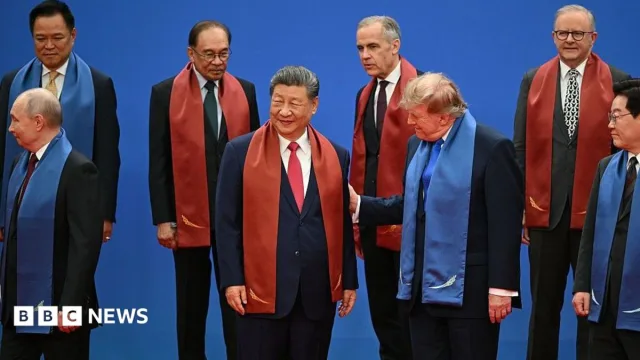
About $30 billion in Chinese imports are under consideration for tariff reductions through a bilateral process called the Board of Trade, and those goods would be exempt from the new duties. The official said Washington does not expect Beijing to retaliate, describing both sides as seeking stability, and called President Trump's meeting with Chinese President Xi Jinping last week “really great”. The official also pointed to progress on Chinese supplies of rare earth minerals.
Beijing has rejected the overcapacity charge from the start. When the investigation opened in March, Chinese Foreign Ministry spokesperson Guo Jiakun called so-called overcapacity a false proposition and said Beijing opposed using it as an excuse for political manipulation. In July, China's Commerce Ministry issued a report arguing that its export strength reflects competitiveness rather than excess production, and said the United States had no authority to unilaterally label its trading partners' output as excess capacity.
The probe also targets Chinese investment in Southeast Asian factories in Vietnam, Indonesia and Cambodia, which Washington sees as a route for Chinese firms to avoid American tariffs by shipping from third countries. Surging exports pushed China's trade surplus to a record of nearly $1.2 trillion last year.
What the EU and Other Allies Are Saying
The European Commission rejected the premise that Europe is a source of structural overcapacity. Commission spokesman Olof Gill said Europe is among those most exposed to overcapacity and regretted the lack of joint action with the United States. The Commission would continue engaging with Washington on implementing a tariff deal struck in 2025 that caps Trump's duties on the bloc at 15%.
We will study the findings,
Gill said. At the same time we strongly reject the premise that Europe is a source of structural overcapacity. To the contrary, Europe is among those most exposed to overcapacity.
The EU expects any measure from this investigation to respect the 15% cap in full, including when combined with existing duties. For close allies, the immediate impact may be limited because the proposed rates fall within ceilings they already negotiated. But the move adds a new legal basis for those tariffs after the Supreme Court ruling cast doubt on the authority behind them, and it keeps pressure on governments still bargaining with Washington.
South Korea, Japan and Taiwan are in the same position, with rates capped at 15%. India and Vietnam, lacking finalized deals, face the sharper end of the proposal. India would pay 17% if an agreement is finalized and 25% if talks fail. Vietnam would face 20% if it reaches an agreement and 35% if negotiations fail.
What Readers Can Check and Do
The duties are proposals, not final taxes. The USTR will publish country-by-country rates, the products covered and the deadlines for public comment in a Federal Register notice. A hearing is scheduled before the duties can take effect, and implementation could slip into January. Consumers and businesses that import affected goods should watch that notice for the comment window and consider whether to place orders before any new duties are imposed.
US consumer inflation came in at 3.7% year-on-year in September, close to a three-year high. Federal Reserve policymakers, responsible for keeping inflation to a long-term 2% target, say most price effects of the previous tariff rollout have passed through the economy, but any new levies could push prices up further. A Reuters/Ipsos opinion poll after the November midterm elections showed 62% of respondents would support efforts to repeal the tariffs.
The Political Timing and What Comes Next
The announcement comes at a politically sensitive moment. Republicans lost control of both chambers of Congress in this month's midterm elections, and affordability was a key issue in those results. The new tariffs could add pressure on US businesses already squeezed by earlier duties, with firms likelier to pass costs to consumers already frustrated with the high cost of living.
Stock markets reacted on Wednesday. Major US indexes opened down more than 1%, with the tech-heavy Nasdaq composite down more than 3%. ING analysts wrote that while the legal justification for tariffs keeps changing, US protectionism is becoming increasingly difficult to unwind.
The official said the new duties were expected to result in more trade agreements being negotiated and finalized, possibly at a G20 leaders' summit in Miami in December. The US-China trade truce expires on January 10, and the public comment and hearing process will determine how quickly the duties can take effect.
China's Foreign Ministry has called the overcapacity claim a false issue and urged stable relations, stopping short of threatening retaliation. The senior US official said Washington does not expect Beijing to retaliate against the new excess-capacity duties.
The proposed tariffs will not stack on top of sector-specific tariffs on items like automobiles and steel, nor on the 10% and 12.5% forced-labor duties imposed in July on 60 economies. Where both apply, the higher rate would prevail.
The administration has briefed congressional committees and notified all 14 trading partners of the proposed actions. The Federal Register notice is expected to set out the rates, products and comment deadlines.
Guo Jiakun said the so-called overcapacity is a false issue, and China opposes using it as an excuse for political manipulation.